Most yoga teachers would probably agree that yoga can help improve balance. Spend enough time practising Tree Pose, Warrior III or Half Moon and, unsurprisingly, you will probably become better at balancing in those poses. What I’ve become more interested in recently is the much bigger leap we sometimes make from “yoga improves balance” to “yoga helps prevent falls”. If someone becomes better at standing on one leg in a predictable yoga pose, does that necessarily make them better at staying upright when they catch their foot on a kerb, slip on a wet floor or lose their balance while turning?
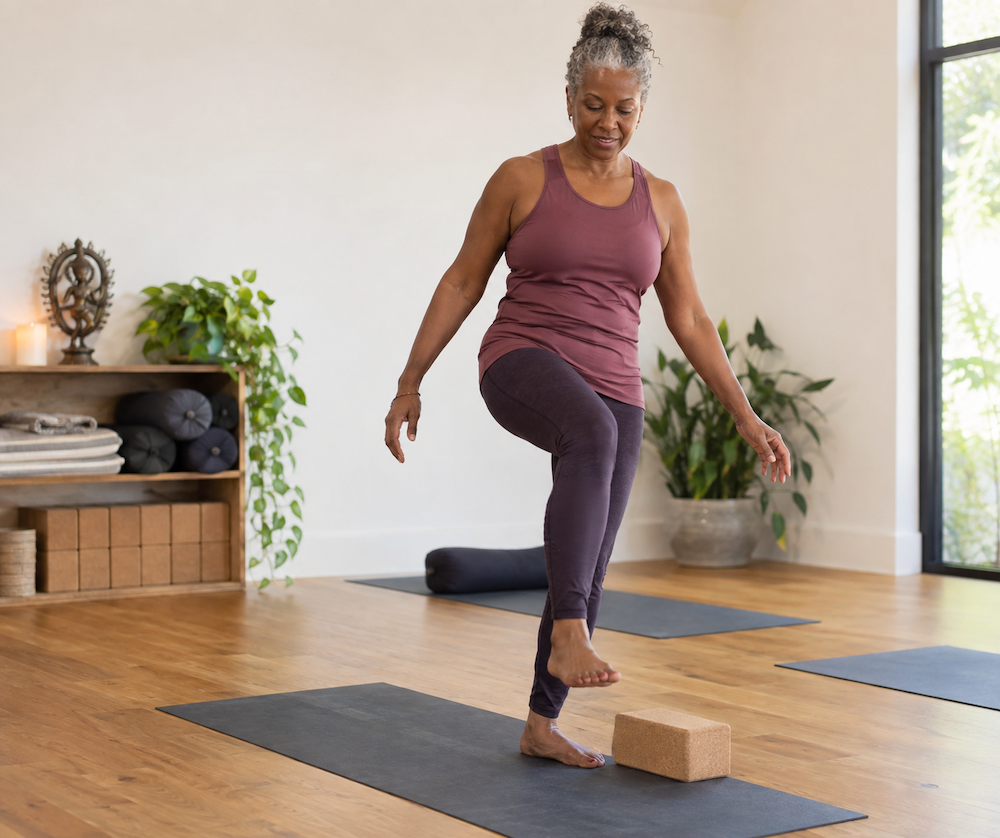
Balance isn’t just one thing
When we talk about balance in yoga, we’re often thinking about static balance, the ability to maintain control while remaining relatively still. Tree Pose is an obvious example. But navigating the world requires other forms of balance too. Dynamic balance involves maintaining control while moving, such as walking, turning or transitioning between positions. Anticipatory balance describes the adjustments we make in preparation for a movement, while reactive balance is our ability to recover when something unexpectedly disturbs us. We can also think about dual-task balance, maintaining balance while our attention is occupied by something else, such as walking while having a conversation.
These abilities overlap, but improving one doesn’t guarantee an equivalent improvement in another. Balance training appears to be fairly task-specific: we tend to improve most at the balance tasks we actually practise, with less transfer when the task changes substantially (Kümmel et al., 2016). This doesn’t make static balance training unhelpful. It simply makes me more cautious about what we infer from it. If someone can hold Tree Pose for 60 seconds, we know something about their ability to maintain that particular position. We know much less about how effectively they could recover from an unexpected trip.
This distinction matters because falls rarely occur while we’re deliberately standing still and concentrating on our balance. They happen while we’re walking, changing direction, stepping over something or responding to an unexpected disturbance. Preventing the fall might require a rapid step or producing enough force quickly enough to regain control. The physical problem has suddenly become quite different from the one we encounter in Tree Pose.
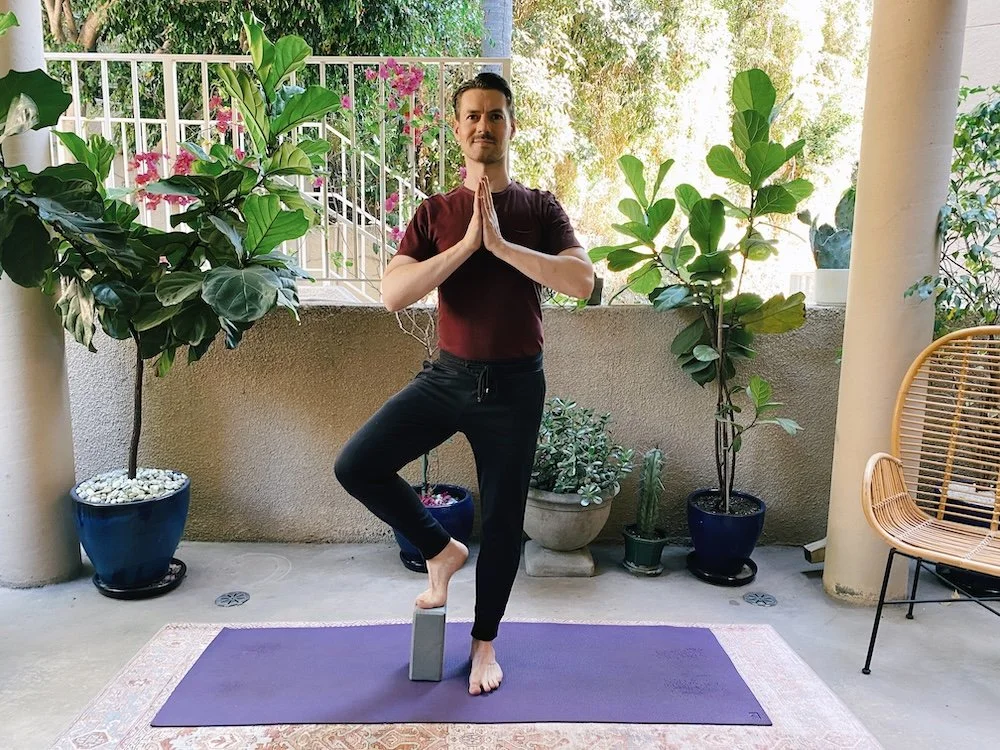
Yoga can improve balance, but does it prevent falls?
A 2025 systematic review examined 18 randomised trials involving 1,408 participants and found that yoga generally improved measures of balance compared with no intervention. However, the studies used 24 different balance assessments and varied considerably in the yoga they investigated. The pooled evidence suggesting a large improvement was specifically for static balance, the certainty of the evidence was considered low, and findings for actual falls were much less consistent (Bajaj et al., 2025).
Then came a study that really caught my attention. The SAGE trial, published in The Lancet Healthy Longevity in 2025, followed 700 independently living adults aged 60 and over. Participants were randomly assigned to either an Iyengar-based yoga exercise programme or a seated yoga relaxation programme. The exercise programme was substantial, with 80 supervised one-hour classes over 12 months, and included familiar standing poses such as Tree and Warrior.
If yoga improves balance, we might expect the yoga exercise group to experience fewer falls. They didn’t. The fall rate was actually higher in the exercise group, at 0.87 falls per person-year compared with 0.64 in the relaxation group (Oliveira et al., 2025). I’d be very cautious about turning this into the claim that yoga causes falls. This was one particular programme, much of it had to be delivered online because of the pandemic, and one study cannot tell us what every form of yoga might do. But there was another finding I found fascinating: participants in the yoga group reported greater confidence in their balance despite not experiencing fewer falls. One possibility is that greater confidence in movement encouraged participants to be more active, giving them more opportunities to experience a fall. That wasn’t established by the study, but it is a useful reminder that feeling more confident and improving certain measures of balance do not necessarily translate directly into fewer falls.
The researchers wondered whether the type of balance being trained might help explain the result. Their programme included considerable static standing balance, whereas successful fall-prevention programmes tend to place greater emphasis on dynamic balance and functional movement. Improving balance and preventing falls may not be quite the same goal.
Strength matters too
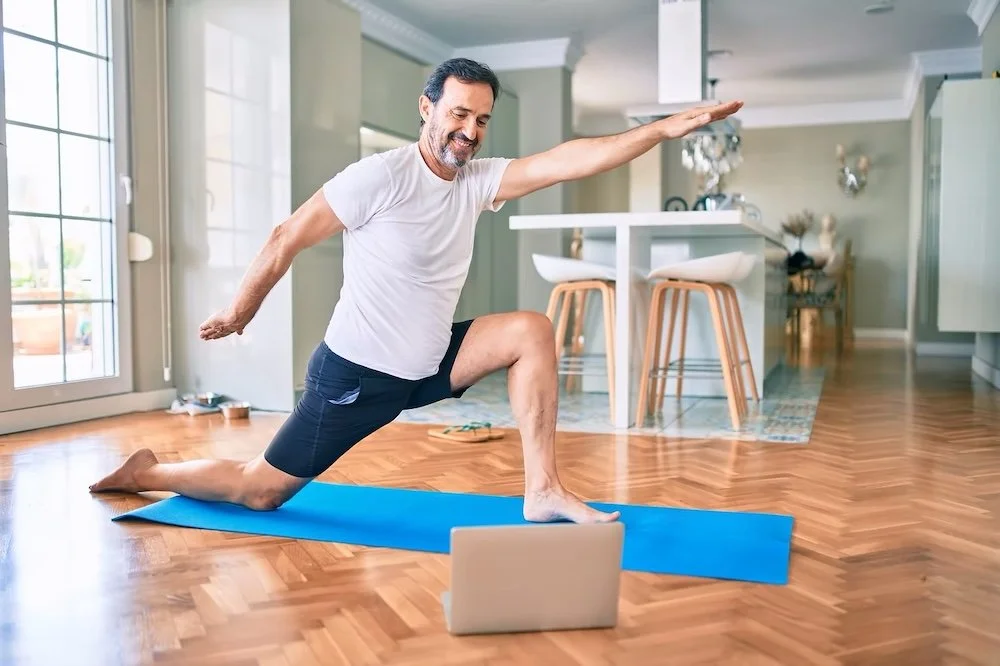
We often assume that getting stronger will improve balance. And there is good reason to see strength as part of the picture. If we lose our balance, having sufficient lower-limb strength and power may help us produce the movement needed to recover. But improving strength alone doesn’t necessarily improve all aspects of balance, nor does strength training by itself appear to provide the complete answer when it comes to preventing falls.
Some of the strongest fall-prevention evidence comes from programmes that challenge balance and functional movement, often alongside strength training. Current World Health Organization guidance recommends that older adults undertake multicomponent physical activity emphasising functional balance and strength on three or more days each week. Reviews of fall-prevention programmes similarly support combining challenging balance exercise with functional movement and strength training rather than relying on resistance training alone (WHO, 2020; Sherrington et al., 2019).
There is also growing interest in training that more closely resembles the circumstances in which falls happen. Perturbation-based balance training (practising how to recover when balance is deliberately disturbed) has been shown to reduce falls, although certainty in the evidence remains limited (Sharma et al., 2026). That doesn’t mean yoga teachers should start unexpectedly pushing students over. These interventions require appropriate safety measures and progression. But the principle is interesting: if we want people to become better at recovering their balance, there may be value in safely practising some of the skills involved in recovering balance.
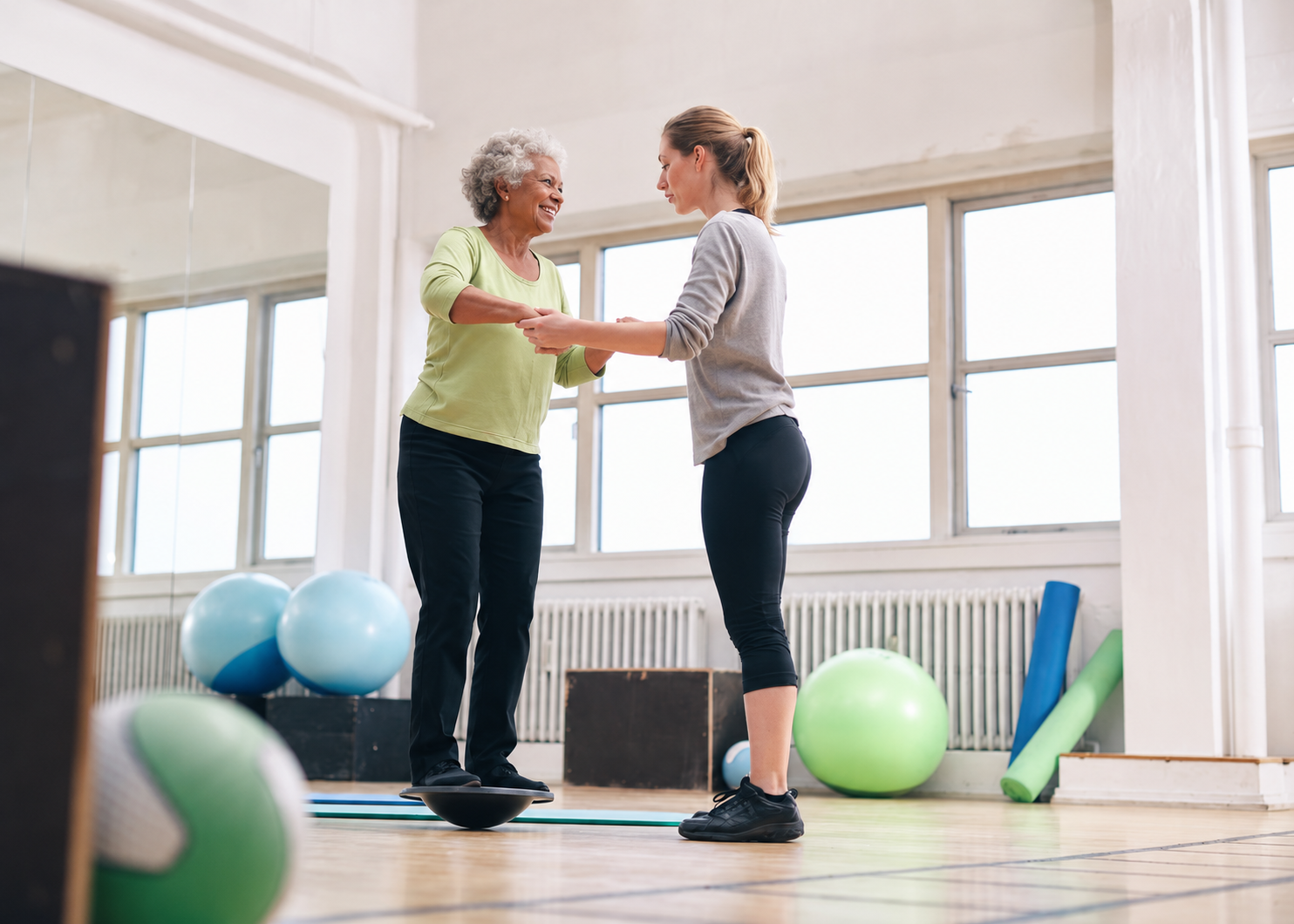
If we want yoga to contribute meaningfully to fall prevention, what might we need to include?
This is the question I find much more useful than simply asking whether yoga prevents falls.
A yoga class can already contain many relevant ingredients. Standing poses can challenge the base of support. Repeated transitions can develop lower-limb strength and control. Moving from standing towards the floor and back again asks considerably more of us than holding a single position. We can explore stepping forwards, backwards and sideways; reaching in different directions; changing direction and speed; moving the head and eyes; and progressively making balance tasks more demanding.
We might also consider how much strength challenge we’re actually providing. Yoga can certainly strengthen the lower limbs, particularly for someone relatively new to exercise, but progressively developing strength may eventually require more load than some yoga practices provide. For a student particularly concerned about maintaining physical function and reducing their risk of falling, resistance training may therefore be a useful complement to yoga.
There are interesting possibilities within yoga itself. Instead of only asking students to hold Tree Pose, we might sometimes explore moving slowly into and out of it. Instead of treating a wobble as a failure, perhaps recovering from the wobble is part of the exercise. We might include more transitions that change the base of support, controlled stepping and sequences where students continually have to reorganise themselves rather than finding one stable position and staying there. The appropriate challenge will, of course, depend enormously on the individual, particularly when working with someone already at increased risk of falling.
None of this makes Tree Pose pointless. I still think it can be a useful way to challenge balance. I’m simply becoming less convinced that our ability to hold a yoga balance tells us as much about fall prevention as we sometimes assume.
Perhaps, rather than asking “Does yoga improve balance?”, we could start noticing something more specific in our teaching: what kind of balance are we asking students to practise, and how closely does it resemble the balance they need outside the yoga studio?
References:
Bajaj, P., Nagendra, L., Bajaj, A., Samuel, M., & Chandran, M. (2025). Effect of yoga on balance, falls, and bone metabolism: A systematic review of randomized controlled trials in healthy individuals. Osteoporosis International, 36(2), 193–224. https://doi.org/10.1007/s00198-024-07307-x
Kümmel, J., Kramer, A., Giboin, L.-S., & Gruber, M. (2016). Specificity of balance training in healthy individuals: A systematic review and meta-analysis. Sports Medicine, 46(9), 1261–1271. https://doi.org/10.1007/s40279-016-0515-z
Oliveira, J. S., Sherrington, C., Lord, S. R., et al. (2025). The effect of an Iyengar yoga-based exercise programme versus a seated yoga relaxation programme on falls in people aged 60 years and older (SAGE): A pragmatic, two-arm, parallel randomised controlled trial. The Lancet Healthy Longevity, 6(9), 100749. https://doi.org/10.1016/j.lanhl.2025.100749
Sharma, S., Szabo, I.-Z., Danielsen, M. B., et al. (2026). Perturbation-based balance training reduces falls and fall injuries in older people: Insights on mechanisms and training parameters from a systematic review. Journal of the American Medical Directors Association, 27(8), 106316. https://doi.org/10.1016/j.jamda.2026.106316
Sherrington, C., Fairhall, N. J., Wallbank, G. K., et al. (2019). Exercise for preventing falls in older people living in the community. Cochrane Database of Systematic Reviews, 2019(1), CD012424. https://doi.org/10.1002/14651858.CD012424.pub2
World Health Organization. (2020). WHO guidelines on physical activity and sedentary behaviour. World Health Organization. WHO guidelines