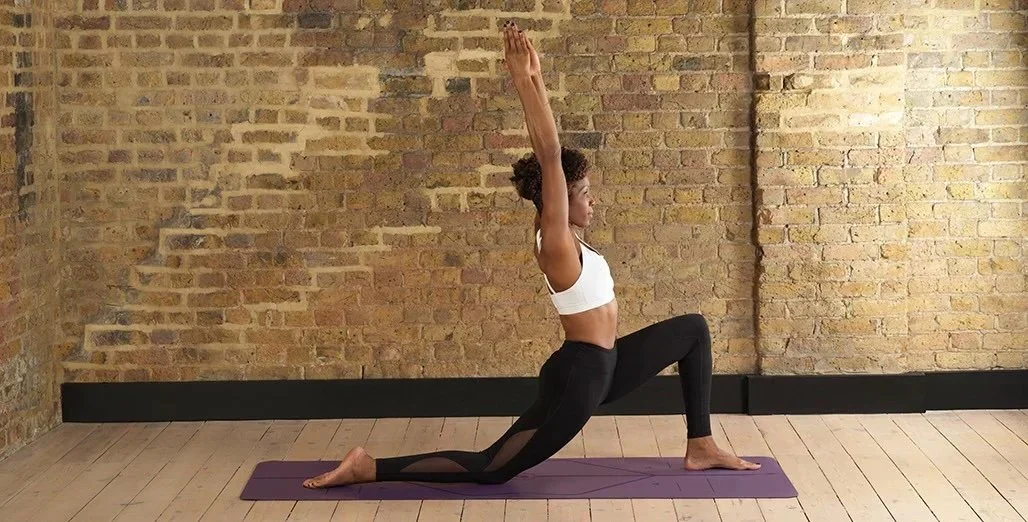
Most of us have probably experienced some version of a “release” somewhere in our bodies. Maybe you spend some time in a Low Lunge and the front of the hip suddenly feels more open. Perhaps your range of movement increases, or an uncomfortable area feels easier. Or somebody works around the front of your hip during massage or bodywork and afterwards the whole area feels completely different. I have no reason to doubt any of those experiences. Something clearly changed. What I have become increasingly curious about is the next part of the explanation: what exactly was released?
In a recent post, I questioned the idea that sitting for long periods necessarily causes the psoas to become chronically shortened. But if the psoas has not shortened, what changes when stretching, massage or movement around this area genuinely makes somebody feel looser?
A change does not necessarily reveal its mechanism:
The word “release” describes an experience rather well. Something that previously felt restricted, uncomfortable or tense now feels easier. The difficulty comes when the description of that experience quietly becomes a physiological explanation. “My hip feels released” becomes “my psoas was tight and now the muscle has been released”. Those are very different claims.
Stretching can certainly increase range of movement, sometimes very quickly. But this does not necessarily mean that a muscle has suddenly become structurally longer. A recent systematic review examining why static stretching improves range of motion found that several mechanisms may contribute, including changes in stretch tolerance (how much stretching sensation someone is comfortable experiencing) and changes in the mechanical behaviour of the muscle and tendon (Ingram et al., 2025).
There is another finding I find particularly interesting. Stretching one part of the body can sometimes increase range of movement somewhere else. A systematic review of 11 studies found that passive stretching of one muscle group produced increases in range of motion at non-stretched joints too (Behm et al., 2021). Local tissues still matter, of course, but findings like these suggest that increased flexibility cannot always be explained simply by physically lengthening whichever muscle we stretched.
The same caution applies to massage and other forms of manual therapy. Touch can produce meaningful changes in pain, movement and how an area feels, but there may be several contributors to those changes. A large review published in 2025 found evidence for responses across several body systems, while concluding that considerable uncertainty remains about exactly which mechanisms explain improvements (Keter et al., 2025).
So, when somebody says, “That really released my psoas”, perhaps we can separate two things: experiencing a change and knowing what caused that change.
So, what might be changing?
Someone holding a Low Lunge may gradually become more comfortable with the sensation of stretch. Muscle activity may change. Their breathing may slow. Their attention may shift. Expectations and previous experiences may also influence how they respond. There probably is not one mechanism that explains every experience of “release”.
I also don’t think we should replace “the muscle was released” with an equally tidy explanation that “it was just the nervous system”. Muscles and connective tissues can respond mechanically to stretching, while sensation, breathing, attention and context may contribute too. In an individual person, we often cannot confidently determine how much each factor mattered.
And there is another issue when we talk specifically about the psoas: how sure are we that the psoas itself is responsible?
A Low Lunge does not selectively stretch one muscle. The position involves several muscles and other tissues around the hip, pelvis and thigh. Likewise, pressing into the abdomen or front of the hip occurs in an anatomically complex area. Feeling a strong sensation where we believe the psoas lies does not necessarily identify the tissue producing that sensation.
This does not make the practice meaningless. A beneficial practice simply does not prove the proposed mechanism. Someone can genuinely feel better after stretching, massage, breathing or movement without demonstrating that a chronically tight psoas has physically been “released”.
What does this mean for yoga teachers?
I think this gives us more freedom as teachers. If a student tells you that a Low Lunge helps their hips feel wonderful after a day at their desk, you do not need to talk them out of it. If they leave a practice feeling that their hips move more freely, that seems like useful information. We can value the experience without needing to identify a dysfunctional muscle that we have just fixed.
Our language can reflect this. Instead of telling somebody, “Your psoas is really tight, so we need to release it”, we might ask what they notice. Does anything change after spending some time in the position? Does it feel helpful? Would another movement produce something similar?
I think this distinction matters because when we confidently tell somebody that a deep muscle is chronically tight, stuck or in need of release, we give them a story about their body. Sometimes that story may be reassuring. Sometimes it may leave them believing there is a persistent problem that requires repeated fixing.
And the stories surrounding the psoas can go considerably further. Some people report crying, memories surfacing, profound relaxation or a feeling of emotional release during psoas-focused stretching, movement or bodywork. I see no reason to dismiss those experiences. But once again, the experience itself does not necessarily tell us why it occurred.
Perhaps the most interesting thing about “psoas release” is not whether people feel different afterwards. Many clearly do. The more interesting question is how confidently we can explain why.
References:
Behm, D. G., Alizadeh, S., Hadjizadeh Anvar, S., Drury, B., Granacher, U., & Moran, J. (2021). Non-local acute passive stretching effects on range of motion in healthy adults: A systematic review with meta-analysis. Sports Medicine, 51(5), 945–959. https://doi.org/10.1007/s40279-020-01422-5
Ingram, L. A., Tomkinson, G. R., d’Unienville, N. M. A., Gower, B., Gleadhill, S., Boyle, T., & Bennett, H. (2025). Mechanisms underlying range of motion improvements following acute and chronic static stretching: A systematic review, meta-analysis and multivariate meta-regression. Sports Medicine, 55(6), 1449–1466. https://doi.org/10.1007/s40279-025-02204-7
Keter, D. L., Bialosky, J. E., Brochetti, K., Courtney, C. A., Funabashi, M., Karas, S., Learman, K., & Cook, C. E. (2025). The mechanisms of manual therapy: A living review of systematic, narrative, and scoping reviews. PLOS ONE, 20(3), e0319586. https://doi.org/10.1371/journal.pone.0319586