There is a widespread belief that inverting the body in asanas such as Headstand has many potential physiological benefits, including increasing blood flow to the brain, stimulating the pineal gland and lowering our blood pressure.
But does science back up these claims?
This newsletter is adapted from my book The Physiology of Yoga, which explores what is actually happening inside the body when we practise yoga. And inversions are a particularly interesting example, because some of the explanations we hear repeated in yoga spaces sound intuitively convincing until we look a little more closely at the physiology.
Does Headstand increase blood flow to the brain?
The brain has the very important ability to maintain relatively constant blood flow despite changes occurring elsewhere in the body. In healthy adults, changes in blood pressure do not necessarily translate into equivalent changes in cerebral blood flow. This mechanism, known as cerebral autoregulation, is vital because the brain is very sensitive to receiving too much or too little blood (Paulson, Strandgaard and Edvinsson, 1990).
So simply putting the head below the heart does not mean that blood suddenly floods into the brain. In fact, a small study published in 2019 measured blood flow through the internal carotid artery, one of the major arteries supplying the brain, while people performed Headstand. Rather than finding an increase, the researchers measured a significant decrease in arterial blood flow during the posture, which returned to baseline afterwards (Minvaleev et al., 2019).
This is a useful reminder that our circulation is considerably more sophisticated than a simple model of gravity pulling blood towards whichever part of the body happens to be lowest.
So why does our face sometimes become red or flushed when we invert? Because more blood can accumulate in the blood vessels of the face and scalp. But this circulation is separate from circulation within the brain itself.
It is reassuring to know that whether you regularly invert your body or not, your brain has sophisticated mechanisms for regulating its own blood supply.

What about the pineal gland?
Another claim sometimes associated with inversions is that they stimulate, cleanse or even “decalcify” the pineal gland.
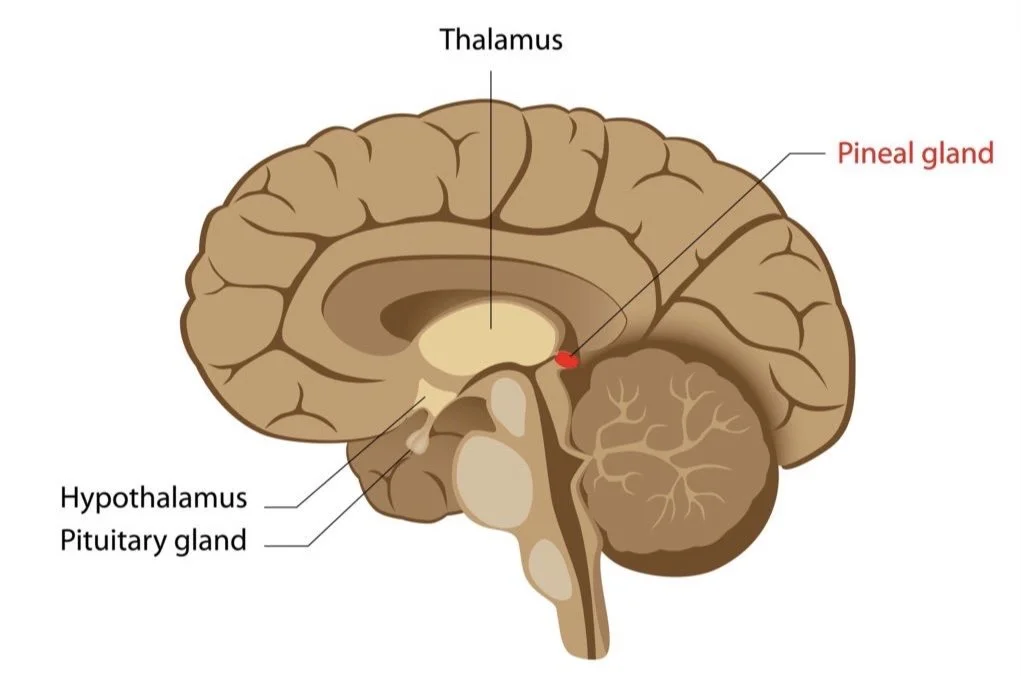
The pineal gland has a fascinating history. It has sometimes been referred to as the “third eye”, and the French philosopher and mathematician René Descartes famously regarded it as the seat of the soul.
It is a tiny endocrine gland located deep within the brain and is best known for producing melatonin, a hormone involved in regulating our sleep-wake cycle. The pineal gland also has a relatively high rate of calcification, and researchers have explored whether this may affect its ability to produce melatonin (Tan et al., 2018).
Like other endocrine organs, the pineal gland doesn’t simply need more blood flow to become more active. Endocrine function is carefully regulated through chemical and neural signals, and the pineal gland is strongly influenced by information about light and darkness reaching it through the nervous system.
There is currently no good evidence that Headstand, or yoga more generally, decalcifies or specifically stimulates the pineal gland.
Do inversions lower our blood pressure?
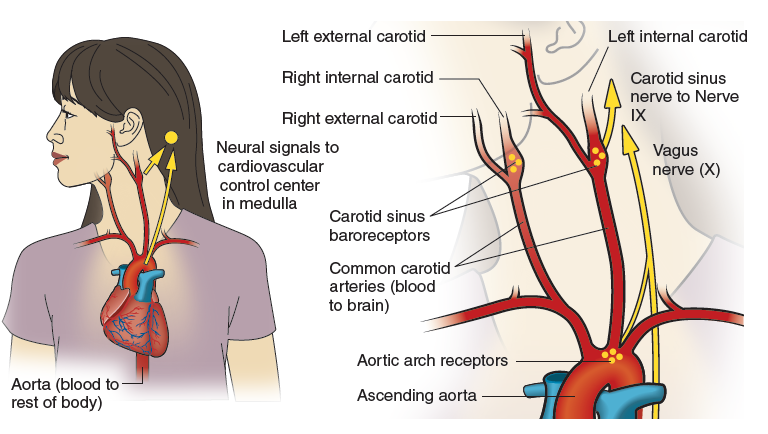
Our bodies have a sophisticated way of constantly monitoring blood pressure. Specialised sensory receptors called baroreceptors detect changes in pressure within certain blood vessels and communicate this information to the nervous system, allowing cardiovascular function to be continually adjusted.
You may have heard that inverted yoga postures specifically stimulate this baroreceptor reflex and therefore lower blood pressure over time. There is a plausible physiological reason why changing our position relative to gravity affects baroreceptor activity, and older research has explored the relationship between posture and the baroreflex (Cole, 1989). But that is not the same as demonstrating that regularly practising Headstand or Shoulderstand lowers resting blood pressure.
The research specifically investigating this claim remains surprisingly limited. And during an inversion itself, blood pressure does not necessarily decrease. Older experimental work involving complete head-down inversion has actually measured increases in blood pressure during the inverted position.
This distinction is important. Yoga practice as a whole may influence cardiovascular health in many ways, but evidence that yoga can affect blood pressure does not tell us that inversions are responsible, or that they achieve this through some unique stimulation of the baroreceptors.
Gravity does make a difference elsewhere:
There is one circulatory effect of inversion for which the explanation is much more straightforward: venous return.
Blood is relatively easily pumped from the heart towards our lower limbs through arteries. Returning that blood towards the heart is a different challenge. By the time blood has travelled through arteries, smaller vessels and capillaries before entering the veins, much of the pressure generated by the heart has dissipated.
When we are upright, the venous system in our legs is also working against gravity. Muscle contractions, breathing and one-way valves within many veins all help blood make its way back towards the heart.
When we invert the body, gravity temporarily changes sides. Research involving vertical head-down suspension has demonstrated a transient increase in venous return, accompanied by an increase in the amount of blood pumped from the heart with each beat (Haennel et al., 1988).
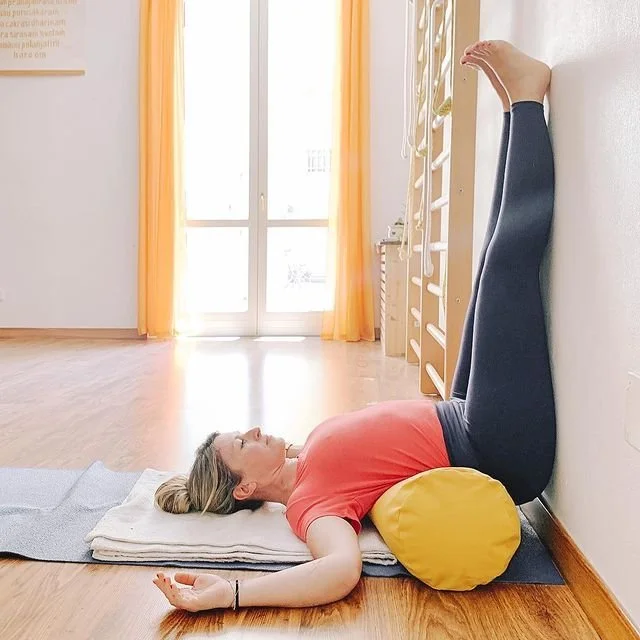
We do not necessarily need to perform a Headstand to experience this change. More accessible postures such as Supported Bridge Pose or Legs-Up-the-Wall can also place the legs above the heart and temporarily make it easier for blood to return from the lower limbs.
Why were inversions considered so important?
Headstand and Shoulderstand have sometimes been described as the King and Queen of yoga asanas, reflecting the particularly important place these postures came to occupy in some modern yoga traditions.
Some of the explanations for the importance of inversions also have much older roots. In traditional haṭha yoga physiology, a substance called amṛta, often translated as the “nectar of immortality”, was believed to reside in the head and gradually drip downwards from bindu, a subtle point associated with the back of the head. This nectar was thought to be consumed by the digestive fire below, contributing to ageing and eventually death. Inverted practices such as viparīta karaṇī were therefore used in an attempt to prevent this precious nectar from being lost.
Of course, this belongs to a traditional yogic model of the body rather than our modern understanding of anatomy and physiology. But I find it fascinating to consider how these older ideas may have contributed to the exceptional status given to inversions, and perhaps to some of the physiological claims that continue to surround them today.
What does this mean for yoga teachers?
I don't think any of this makes inversions less interesting or less valuable.
Someone might enjoy the challenge of learning Headstand, the sense of focus it requires, the experience of seeing the room from a completely different perspective, or simply the fact that it can be a fun experience. Someone else may find Legs-Up-the-Wall wonderfully restful at the end of a class.
Those experiences do not need an elaborate physiological explanation to make them worthwhile.
Where I think we need to be more careful is when a pleasant or meaningful experience becomes evidence for a very specific biological claim. A flushed face does not demonstrate increased blood flow to the brain. The existence of the pineal gland does not mean that Headstand stimulates it. And the fact that changing our relationship to gravity influences the cardiovascular system does not establish that inversions lower our resting blood pressure.
References:
Cole, R. J. (1989). Postural baroreflex stimuli may affect EEG arousal and sleep in humans. Journal of Applied Physiology, 67(6), 2369–2375. https://doi.org/10.1152/jappl.1989.67.6.2369
Haennel, R. G., Teo, K. K., Snydmiller, G. D., Quinney, H. A., & Kappagoda, C. T. (1988). Short-term cardiovascular adaptations to vertical head-down suspension. Archives of Physical Medicine and Rehabilitation, 69(5), 352–357.
Minvaleev, R. S., Bogdanov, R. R., Bahner, D. P., & Levitov, A. B. (2019). Headstand (Sirshasana) does not increase the blood flow to the brain. Journal of Alternative and Complementary Medicine, 25(8). https://doi.org/10.1089/acm.2019.0060
Paulson, O. B., Strandgaard, S., & Edvinsson, L. (1990). Cerebral autoregulation. Cerebrovascular and Brain Metabolism Reviews, 2(2), 161–192.
Tan, D. X., Xu, B., Zhou, X., & Reiter, R. J. (2018). Pineal calcification, melatonin production, aging, associated health consequences and rejuvenation of the pineal gland. Molecules, 23(2), 301. https://doi.org/10.3390/molecules23020301