If you teach or practise Yin Yoga, you’ve probably heard several explanations for what happens when we stay in a pose for several minutes. Perhaps we lengthen our muscles. Perhaps we gradually load and remodel our fascia. Perhaps the tissues themselves don’t change very much and we simply become more comfortable with the sensation of stretching. How confidently we can actually say what is changing?
We know that regularly stretching can increase range of motion. The much harder question is why. And if we regularly spend several minutes in a stretch, as we might in Yin Yoga, there’s an even more intriguing question: what evidence do we actually have that long-held stretches change our fascia?
Before we explore this, there’s an important distinction to make. Much of the research I’m going to discuss investigates static stretching rather than Yin Yoga itself. We can use this research to help us think about what might be happening during long-held Yin poses, but we shouldn’t assume the two are interchangeable. The positions, intensity, use of props and overall experience of a Yin practice may be quite different from a laboratory stretching protocol.
Why does our range of motion increase?
Imagine someone can reach their fingertips to their shins in a forward bend. After several months of regular stretching, they can comfortably place their palms on the floor. Something has clearly changed. But what?
One possibility is stretch tolerance. As we repeatedly experience the sensations associated with stretching, we may become more comfortable moving further before deciding that we have reached our limit. There can also be changes in the mechanical properties of the tissues, including reductions in stiffness. Both appear to contribute to increases in range of motion.
A 2025 systematic review and meta-analysis brought together 65 studies involving more than 1,500 adults. The researchers found that regular static stretching increased stretch tolerance and produced a small reduction in stiffness. Interestingly, they did not find a significant overall change in muscle fascicle length (Caldwell et al., 2025).
A fascicle is a bundle of muscle fibres, so fascicle length gives researchers one way of investigating whether the architecture of a muscle has actually changed. If our student can now place their palms on the floor, it doesn’t necessarily follow that their muscles have simply become longer.
But this is where things get interesting.
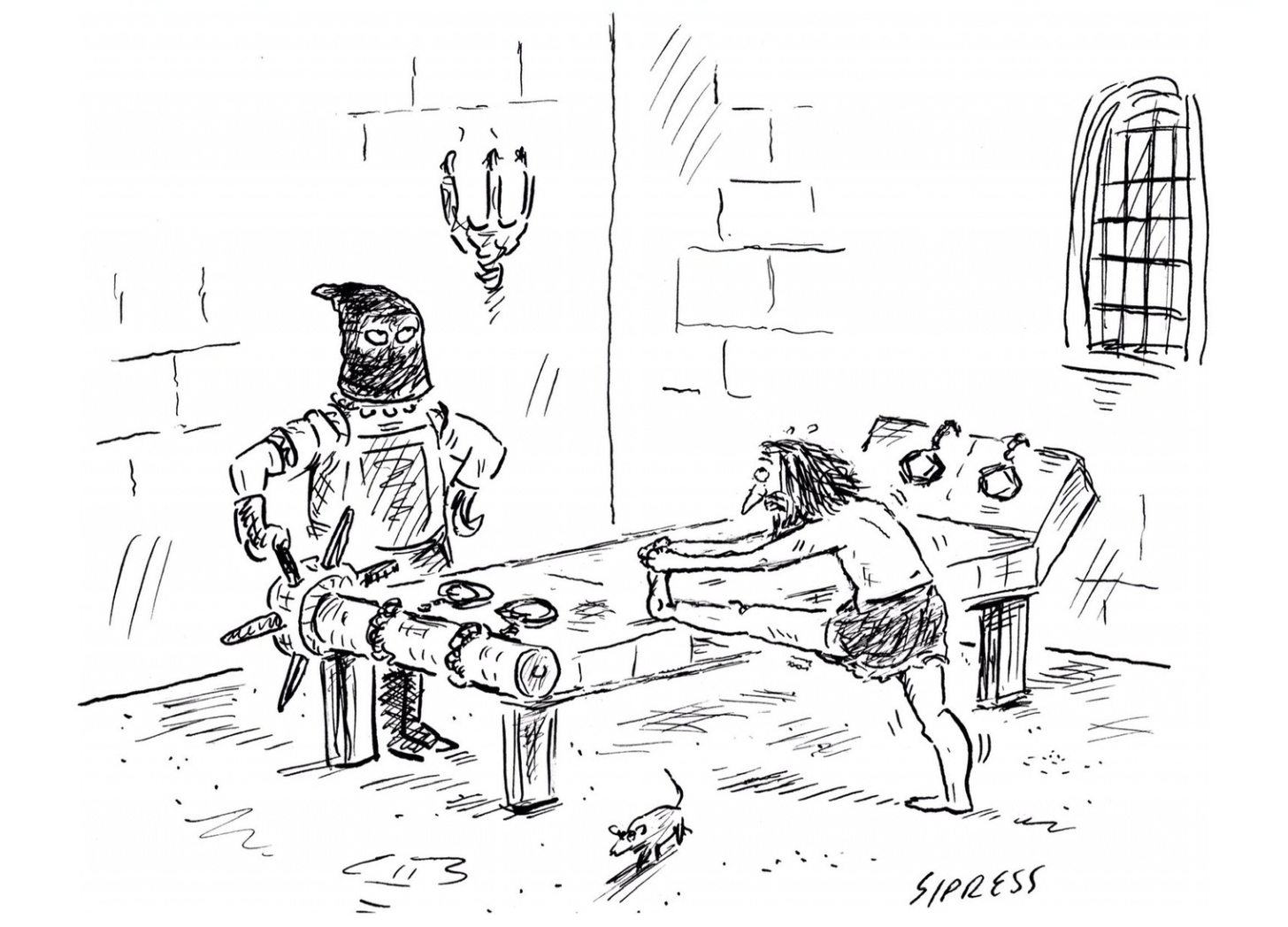
Can stretching actually change muscle architecture?
A systematic review published just two years earlier reached a somewhat different conclusion. Panidi and colleagues (2023) analysed 19 studies and found small increases in fascicle length following static stretching. More importantly, the changes appeared to depend on how much stretching people did and how intensely they stretched. Higher volumes and intensities were associated with greater changes, while lower-volume stretching did not produce significant changes.
I find this fascinating because it reminds us how difficult it is to answer a seemingly simple question such as, “Does stretching make muscles longer?”
Depending on which studies we examine, how stretching is performed and how muscle architecture is measured, the answer may look different. The more recent and substantially larger review found no significant change in fascicle length overall, so I don’t think we can currently say with confidence that regular stretching generally lengthens muscle fascicles. But I wouldn’t conclude that structural adaptation is impossible either.
Some particularly striking experiments have investigated stretching doses that bear very little resemblance to a typical yoga class. In one study, participants stretched their calf muscles continuously for one hour every day for six weeks, using a stretching device. The researchers reported increases in flexibility, strength and muscle thickness that were comparable in some respects to a group performing conventional resistance training (Warneke et al., 2023).
An hour-long calf stretch every day is obviously a very different stimulus from holding a Yin pose for three or five minutes. But that is precisely why I find the study interesting. It suggests that sufficiently prolonged mechanical tension may be capable of stimulating adaptations we don’t normally associate with stretching.
It also makes me cautious about extrapolating those findings directly to Yin Yoga.
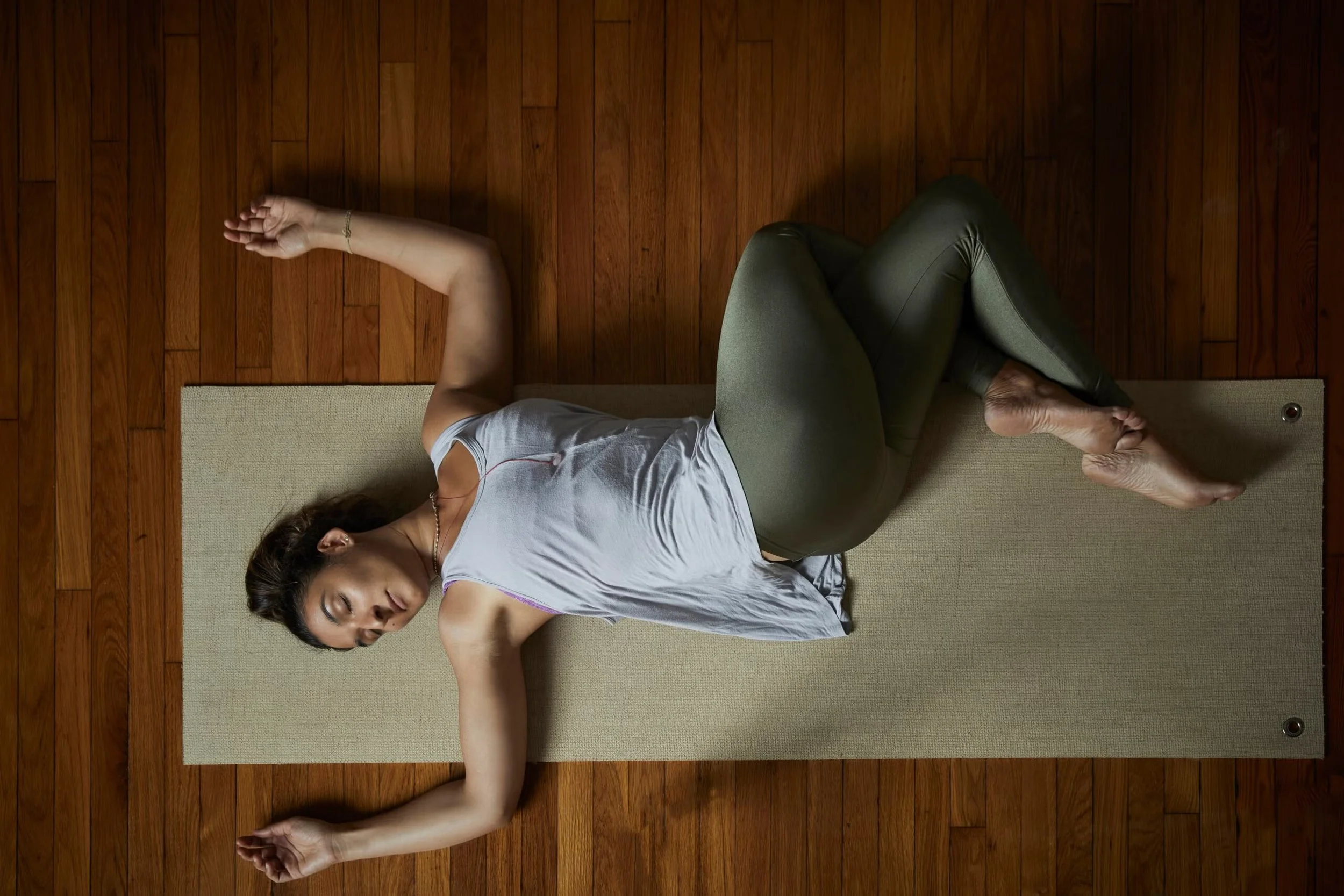
But what about fascia?
So far, you may have noticed that much of the research I’ve discussed has focused on muscle, rather than fascia. That distinction matters. Evidence that sufficiently prolonged stretching can change some properties of muscle doesn’t automatically tell us what is happening to fascia during a long-held stretch.
Fascia is connective tissue, rich in collagen, that surrounds and connects muscles and many other structures throughout the body. It is living, adaptable tissue, so the idea that connective tissue can respond to repeated mechanical loading is not particularly controversial. What is much harder to establish is exactly how a particular yoga stretch changes fascia over weeks, months or years.
You may have heard that shorter stretches primarily affect muscle, while longer holds eventually begin to target fascia. I don’t find that explanation particularly convincing. When you fold forwards, for example, forces are distributed through muscle, tendons, intramuscular connective tissue and other structures. We don’t spend the first minute stretching muscle and then, at some particular point on the stopwatch, switch over to fascia.
Holding a position for longer certainly changes the dose of mechanical loading, and some research suggests that duration does matter. One study found that hamstring muscle-tendon stiffness was significantly reduced after 180 seconds or more of accumulated static stretching, but not after shorter durations (Nakamura et al., 2019). Another found that three minutes of calf stretching increased range of motion and reduced muscle stiffness, while tendon stiffness remained unchanged (Konrad & Tilp, 2020). But this doesn’t mean that three minutes represents a threshold at which we suddenly begin to “target fascia”. These studies investigated acute changes in outcomes such as stiffness and range of motion, not long-term fascial remodelling.
Duration is also only one part of the dose. Intensity, frequency, total stretching volume, the position we choose and the properties of the individual tissues will all influence what happens. So there is an important difference between saying “connective tissue can adapt to mechanical loading” and “holding a Yin Yoga pose for several minutes remodels fascia in a particular way.” The first statement is broadly consistent with what we know about connective tissue biology. The second is much harder to demonstrate.

What does this mean for teaching long-held stretches?
I don’t think any of this means that long-held stretches don’t affect fascia. That would go beyond the evidence in the opposite direction. It simply means that we should be cautious about describing exactly what is happening to fascia during a Yin pose, or suggesting that holding a stretch for a particular length of time specifically targets it. If a student wants to become more comfortable in a larger range of motion, we don’t necessarily need to know whether their progress came from increased stretch tolerance, reduced stiffness, structural changes within muscle, changes in connective tissue or some combination of these.
I also don’t think we need to justify long-held stretches by claiming that they uniquely access fascia. A long-held stretch may feel enjoyable, give someone time to settle into a position and explore sensation, and over time help them become more comfortable in a larger range of motion. Depending on the dose, it may also contribute to changes in the mechanical or structural properties of the tissues. Those are already interesting possibilities. Where I think this research becomes particularly useful for teachers is in the language we use. Saying, “Staying here for several minutes allows us to stretch the fascia” sounds wonderfully concrete, but we probably know less about what is happening inside an individual person than that sentence suggests.
I’d rather leave students with an appreciation of how adaptable their bodies are. Stretching can change our experience of movement and the amount of range available to us. It can change some of the mechanical properties of our tissues and, under sufficiently large and repeated loads, there is evidence that structural adaptations may occur too. Exactly how much each of these contributes during a Yin Yoga practice is still being explored. And I think that makes the question of what happens when we spend five minutes in a stretch more interesting, not less.
References:
Ingram, L. A., Tomkinson, G. R., d’Unienville, N. M. A., Gower, B., Gleadhill, S., Boyle, T., & Bennett, H. (2025). Mechanisms underlying range of motion improvements following acute and chronic static stretching: A systematic review, meta-analysis and multivariate meta-regression. Sports Medicine, 55(6), 1449–1466. https://doi.org/10.1007/s40279-025-02204-7
Konrad, A., & Tilp, M. (2020). The time course of muscle-tendon unit function and structure following three minutes of static stretching. Journal of Sports Science and Medicine, 19(1), 52–58.
Nakamura, M., Ikezoe, T., Nishishita, S., Tanaka, H., Umehara, J., & Ichihashi, N. (2019). Static stretching duration needed to decrease passive stiffness of hamstring muscle-tendon unit. The Journal of Physical Fitness and Sports Medicine, 8(3), 113–116. https://doi.org/10.7600/jpfsm.8.113
Panidi, I., Donti, O., Konrad, A., Dinas, P. C., Terzis, G., Mouratidis, A., Gaspari, V., Donti, A., & Bogdanis, G. C. (2023). Muscle architecture adaptations to static stretching training: A systematic review with meta-analysis. Sports Medicine - Open, 9(1), 47. https://doi.org/10.1186/s40798-023-00591-7
Warneke, K., Wirth, K., Keiner, M., Lohmann, L. H., Hillebrecht, M., Brinkmann, A., Wohlann, T., & Schiemann, S. (2023). Comparison of the effects of long-lasting static stretching and hypertrophy training on maximal strength, muscle thickness and flexibility in the plantar flexors. European Journal of Applied Physiology, 123(8), 1773–1787. https://doi.org/10.1007/s00421-023-05184-6