Why is Slow Breathing so Good for Us?
At the heart of most pranayama practices is something remarkably simple: breathing more slowly.
A normal resting respiratory rate for healthy adults sits between 12 and 20 breaths per minute (Flenady, Dwyer and Applegarth 2017). When we intentionally slow the breath below this range, we are not just changing airflow. We are influencing physiology.
As yoga teachers, it is worth asking a deeper question. Why does slow breathing seem to help so many students feel calmer, clearer, or more grounded? And equally important, when might it not?
Let us unpack what the research actually says.
Breath and emotion are inseparable
Emotions are not confined to the brain. They are whole-body events (Cacioppo et al 2000). When a student feels anxious, their breathing pattern changes. When they feel safe or content, it changes again. These shifts are not incidental. They reflect the close relationship between breathing and the autonomic nervous system (Kreibig 2010).
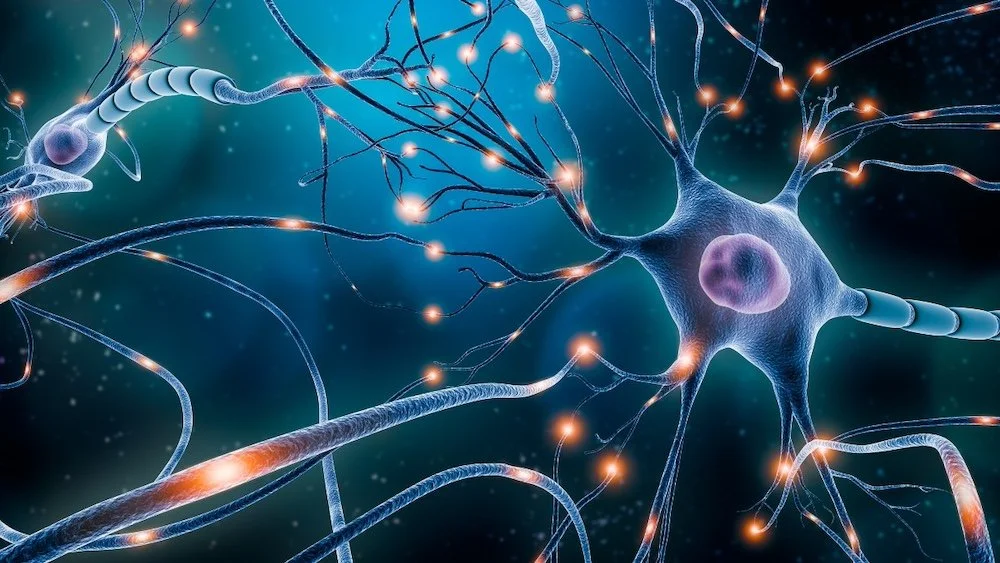
The autonomic nervous system regulates internal organs and involuntary processes such as heart rate, blood pressure, digestion and respiratory rhythm. It has two primary branches:
● The sympathetic branch, which mobilises us for action.
● The parasympathetic branch, which supports restoration and recovery.
Slow breathing appears to tilt this balance toward parasympathetic activity. But importantly, this is not about turning one system off and the other on. It is about increasing flexibility between them.
What systematic reviews tell us
A 2018 systematic review examined slow breathing, defined as 10 breaths per minute or fewer, in healthy participants (Zaccaro et al 2018). Their findings were consistent across multiple studies:
● Increased parasympathetic activity, often measured via heart rate variability.
● Improved emotional regulation.
● Greater psychological flexibility.
● Changes in brain activity associated with attention and emotional control.
Breathing at approximately six breaths per minute showed the most reliable associations with parasympathetic markers and positive psychological outcomes.
Heart rate variability reflects the natural variation in time between heartbeats. Higher variability is generally associated with greater adaptability. In simple terms, a system that can flex is often more resilient.
Earlier work by Seals, Suwarno and Dempsey (1990) showed that certain respiratory manipulations can significantly reduce sympathetic nerve activity. Conversely, irregular, rapid or unstable breathing patterns, especially when paired with breath-holding, may increase sympathetic activation (Leung et al 2006).
For yoga teachers, this has practical implications. The calming effect often attributed to a specific style of pranayama may actually be due to pacing and regularity rather than the style itself.
Zaccaro et al (2018) even suggested that many meditative and slow breathing practices may share similar underlying mechanisms.
The exhale and parasympathetic tone
One of the clearest physiological mechanisms involves the relationship between breathing and heart rate.
During inhalation, heart rate naturally increases. During exhalation, it decreases. This phenomenon is known as respiratory sinus arrhythmia. Parasympathetic activity is particularly active during exhalation.
This means that gently lengthening the exhale can bias the system toward parasympathetic influence.
For teachers, this translates into very simple tools:
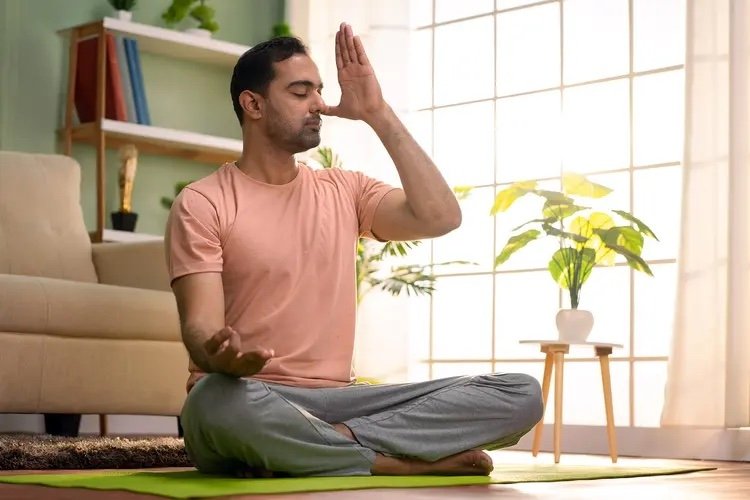
● Inhale for four counts, exhale for six.
● Soft humming or chanting to extend the out-breath.
● Slow, controlled transitions in asana coordinated with longer exhalations.
These are subtle interventions with measurable physiological effects.
Nasal breathing and sensory pathways
Zaccaro and colleagues (2018) also highlighted emerging hypotheses about nasal breathing. The epithelium inside the nostrils contains receptors that may play a role in influencing brain activity and autonomic balance. Both animal and human research suggest that nasal breathing may contribute to the regulatory effects observed in slow breathing practices.
While this area is still developing, it reinforces something yoga has emphasised for centuries: how we breathe matters, not just how much.
What slow breathing is not
As teachers, we must avoid oversimplification.
Slow breathing is not a cure-all. It does not permanently “switch off” the sympathetic system. Nor should it. The sympathetic branch is essential for mobilisation, focus and physical effort.
Regulation is not about constant calm. It is about adaptability.
It is also important to recognise that slow breathing does not feel soothing for everyone. For some students, especially those with anxiety, trauma histories or respiratory conditions, focusing on the breath may initially increase discomfort.
Telling someone to “just breathe” can feel invalidating.
Instead, offer options:
● Soften the breath rather than slow it dramatically.
● Focus on lengthening the exhale only slightly.
● Shift attention to sound, movement or external anchors if breath focus feels activating.
Teaching breathwork is not about imposing a pace. It is about cultivating awareness and choice.
Integrating slow breathing into class
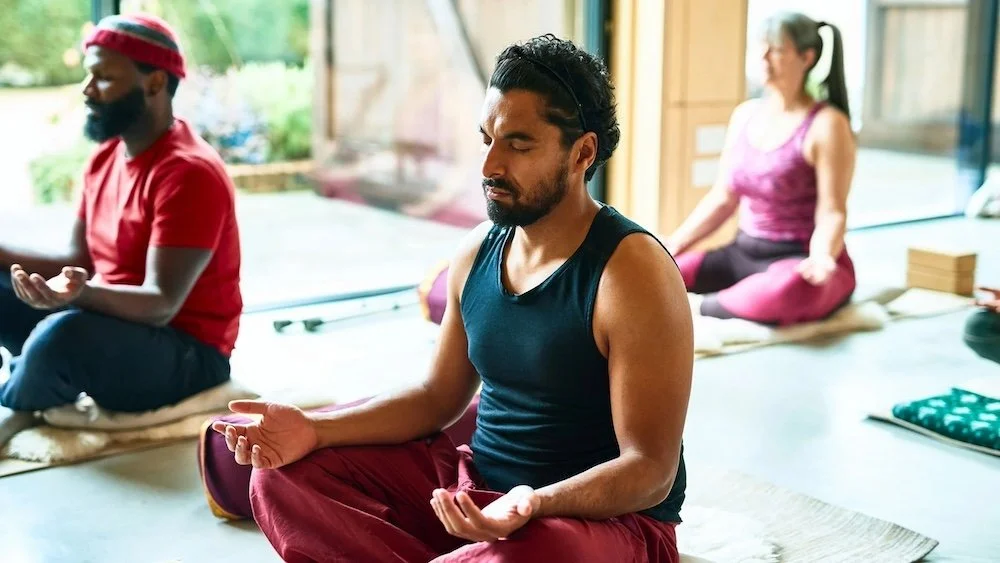
Here are evidence-informed ways to apply this knowledge:
At the beginning of class:
Invite one to two minutes of gentle breath pacing. Emphasise smoothness rather than depth.
During challenging sequences:
Encourage steady breathing rather than breath-holding. Avoid cues that push students to override discomfort.
In restorative or cool-down phases:
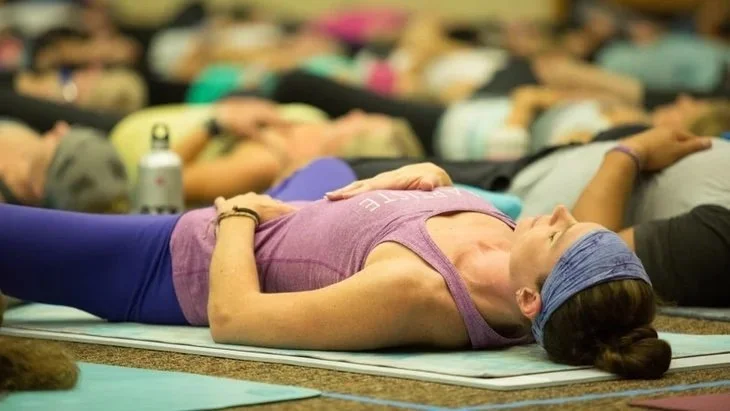
Introduce longer exhalations or humming to gently enhance parasympathetic tone.
In teacher language:
Frame slow breathing as an experiment. For example, “Notice whether slowing the breath slightly changes how you feel.”
This positions breathwork as exploratory rather than prescriptive.
The bigger picture
Slow breathing offers a powerful example of embodied physiology in action. It demonstrates how a simple behavioural shift can influence autonomic tone, emotional regulation and perceived wellbeing.
For yoga teachers, this is empowering. It allows us to teach pranayama not as mystical control of energy, but as a skillful modulation of a deeply integrated physiological system.
When we understand the mechanisms, our teaching becomes clearer, more confident and more responsible.
References:
Cacioppo, J.T., G.G. Bernston, J.T. Larsen, K.M. Poehlmann, and T. Ito. 2000. The Psychophysiology of Emotion. 2nd ed. New York: Guilford Press.
Flenady, T., T. Dwyer, and J. Applegarth. 2017. “Accurate Respiratory Rates Count: So Should You!” Australasian Emergency Nursing Journal 20 (1): 45–47.
Kreibig, S.D. 2010. “Autonomic Nervous System Activity in Emotion: A Review.” Biological Psychology 84 (3): 394–421.
Leung, R.S., et al. 2006. “Respiratory Pattern and Sympathetic Activation.” Sleep Medicine 7 (1): 27–33.
Seals, D.R., N.O. Suwarno, and J.A. Dempsey. 1990. “Influence of Lung Volume on Sympathetic Nerve Discharge in Normal Humans.” Circulation Research 67 (1): 130–141.
Zaccaro, A., A. Piarulli, M. Laurino, et al. 2018. “How Breath-Control Can Change Your Life: A Systematic Review on Psycho-Physiological Correlates of Slow Breathing.” Frontiers in Human Neuroscience 12: 353.