👉Teaching Focus: Embracing Asymmetry
Have you noticed that some yoga postures feel very different from one side to the other? Perhaps reaching your right hand towards the floor in Trikonasana feels natural, but the same movement on the left feels awkward or restricted. Or maybe you can easily bind in Marichyasana I on one side, but struggle to reach on the other.
These differences are normal — and expected. Human bodies are not symmetrical. The shapes of our joints, the positioning of our organs, and the organisation of our fascial and muscular systems all vary slightly from side to side. For example, the thoracic spine sits asymmetrical because of the underlying organs — the heart on the left and the uneven lobes of the lungs.
When teaching, it’s helpful to remind students that asymmetry does not mean imbalance or dysfunction. Instead, it reflects the unique design of everybody.
This is especially relevant in twisting postures such as Ardha Matsyendrasana (Half Lord of the Fishes Pose). The degree of spinal rotation may differ between right and left twists due to structural or functional variations.
Twists strengthen and lengthen the obliques, support balanced mobility through the spine, and can enhance awareness of the relationship between the rib cage, pelvis, and spine. They also engage the muscles around the hips and chest, helping to maintain ease of movement in these areas. Many students find twists invigorating, but for those with limited spinal mobility, tension in the chest or outer hips, or conditions such as osteoporosis, it’s best to approach them gradually and mindfully.
👉Preparation
Warm up with Cat–Cow Pose to mobilise the spine and open the front of the chest. Poses such as Garudasana (Eagle Pose) and Gomukhasana (Cow Face Pose) can also help prepare the hips for twisting.
👉6 Variations of Ardha Matsyendrasana:
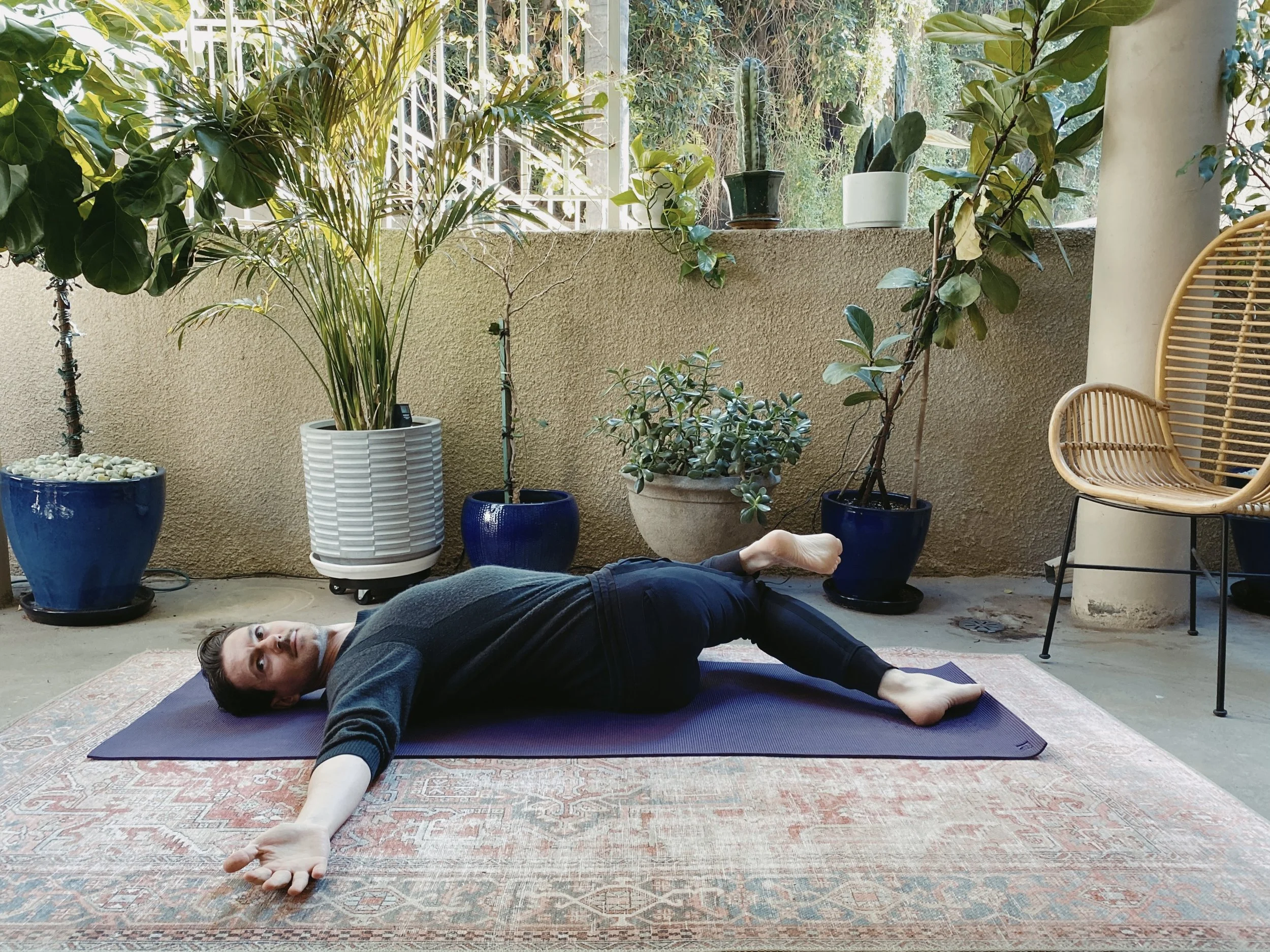
1) Supine Twist
Lie on your back with your arms extended out to the sides. Bend your knees and place your feet on the mat, stepping them towards the edges. Let your knees fall to the left. Optionally, place your left ankle on top of your right outer thigh for more depth. Keep your right shoulder gently grounded. Look up or turn your head to the right.
Teaching tip: Encourage soft, even breathing. The aim is release, not intensity.
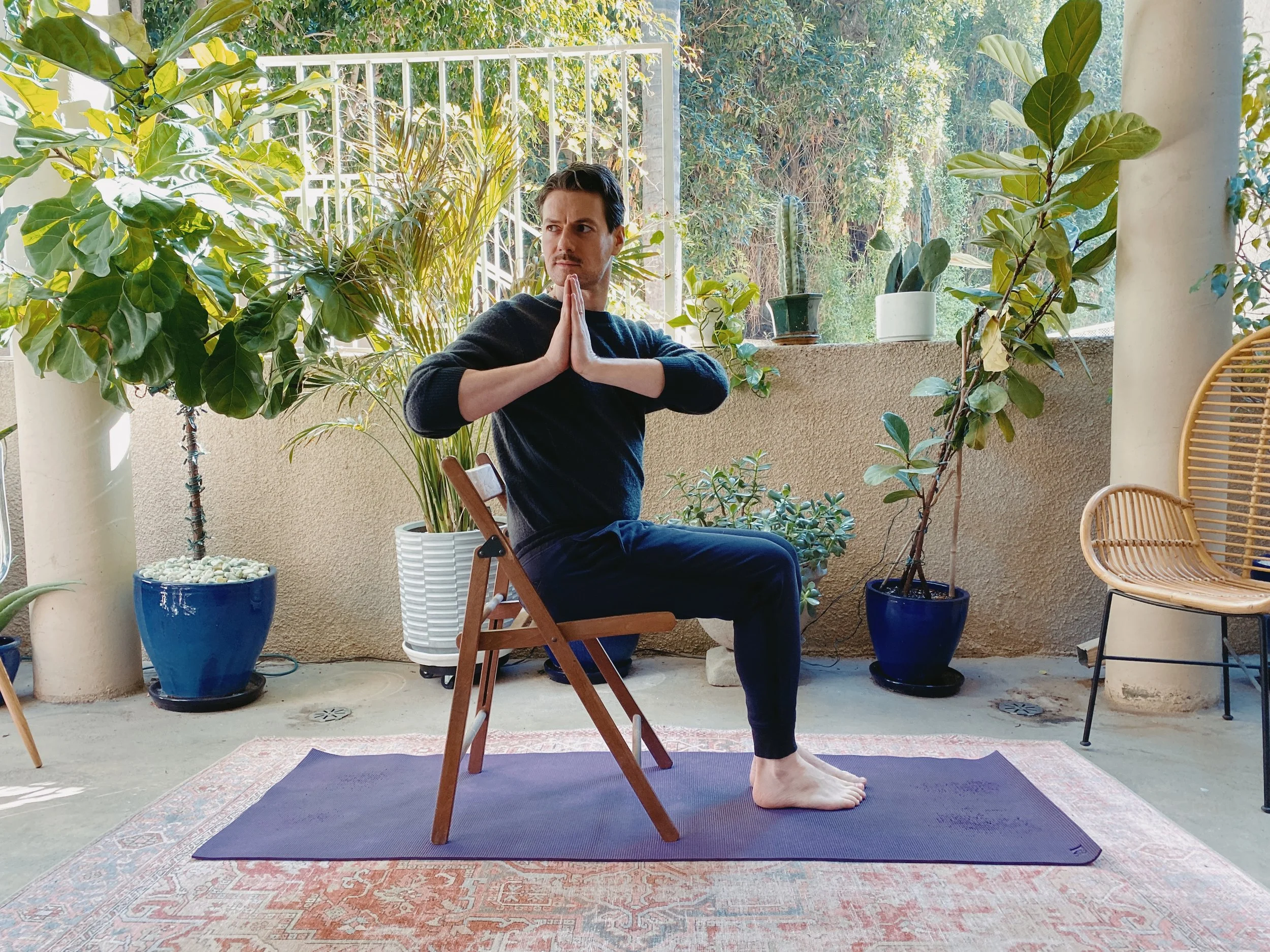
2) Chair Twist without Crossing the Legs
Sit tall with both feet flat under your knees. Turn your ribcage to the right, placing your right hand on the back of the chair and your left hand on your outer right thigh, or bring your palms together at the chest. Keep the rotation gentle and steady, and allow your breath to guide the movement.
Teaching tip: Ideal for students with limited mobility or spinal restrictions.
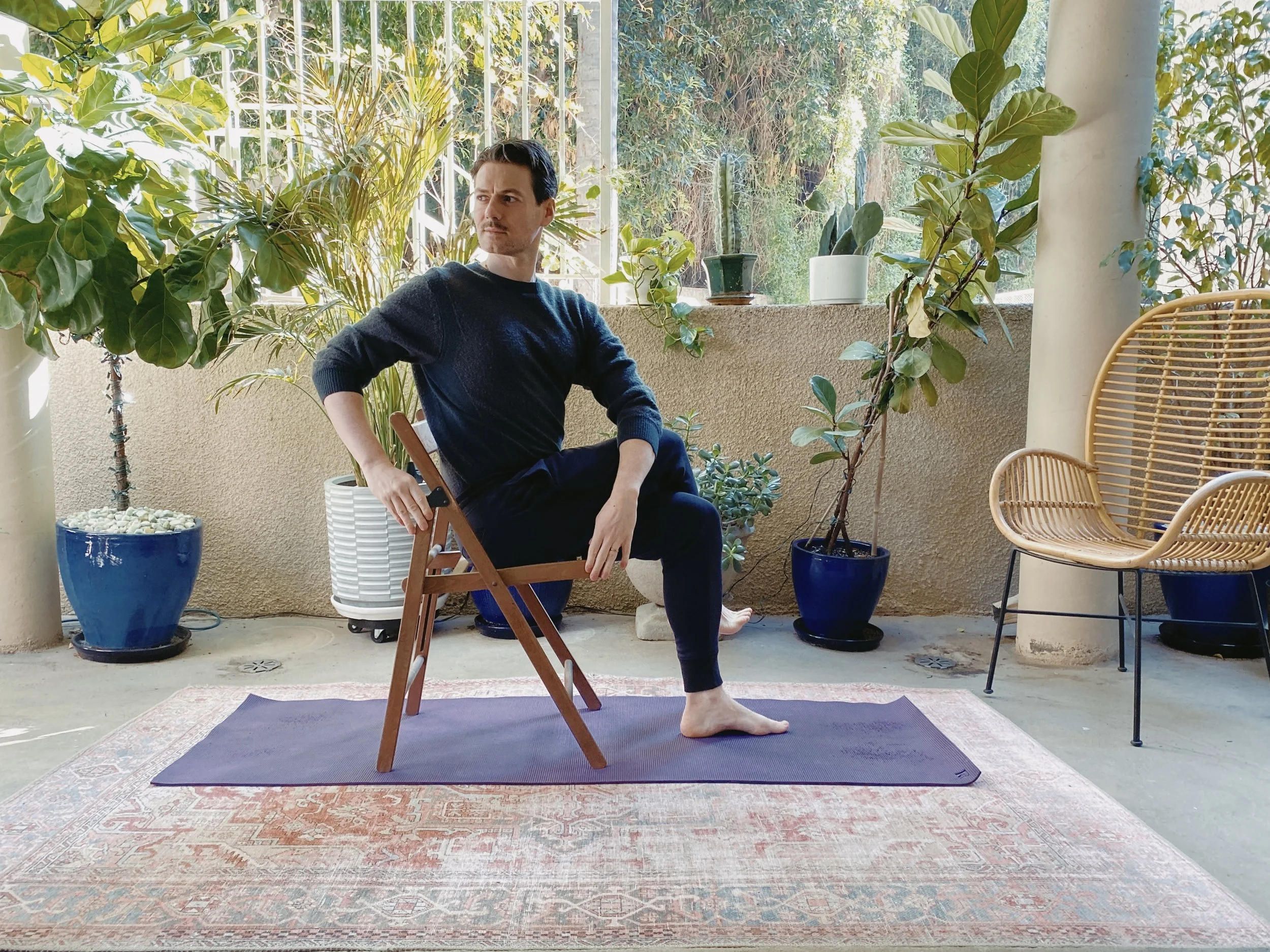
3) Chair Twist with Legs Crossed
Sit with your right leg crossed over your left. Turn your ribcage to the right and either hold the back of the chair with your right hand or place your hands in prayer at the heart. Look over your right shoulder or keep your gaze neutral.
Teaching tip: The cross-legged variation adds a hip stretch while adding some additional support to the pelvis and lower back.
4) Standing Twist
From Tadasana, place a chair a few feet in front of you and rest your right foot on it. Keeping your hips mostly square, turn your ribcage to the right. Place your left hand on the outside of your right knee or bring your hands to prayer.
Teaching tip: This version brings balance and stability work into the twist.
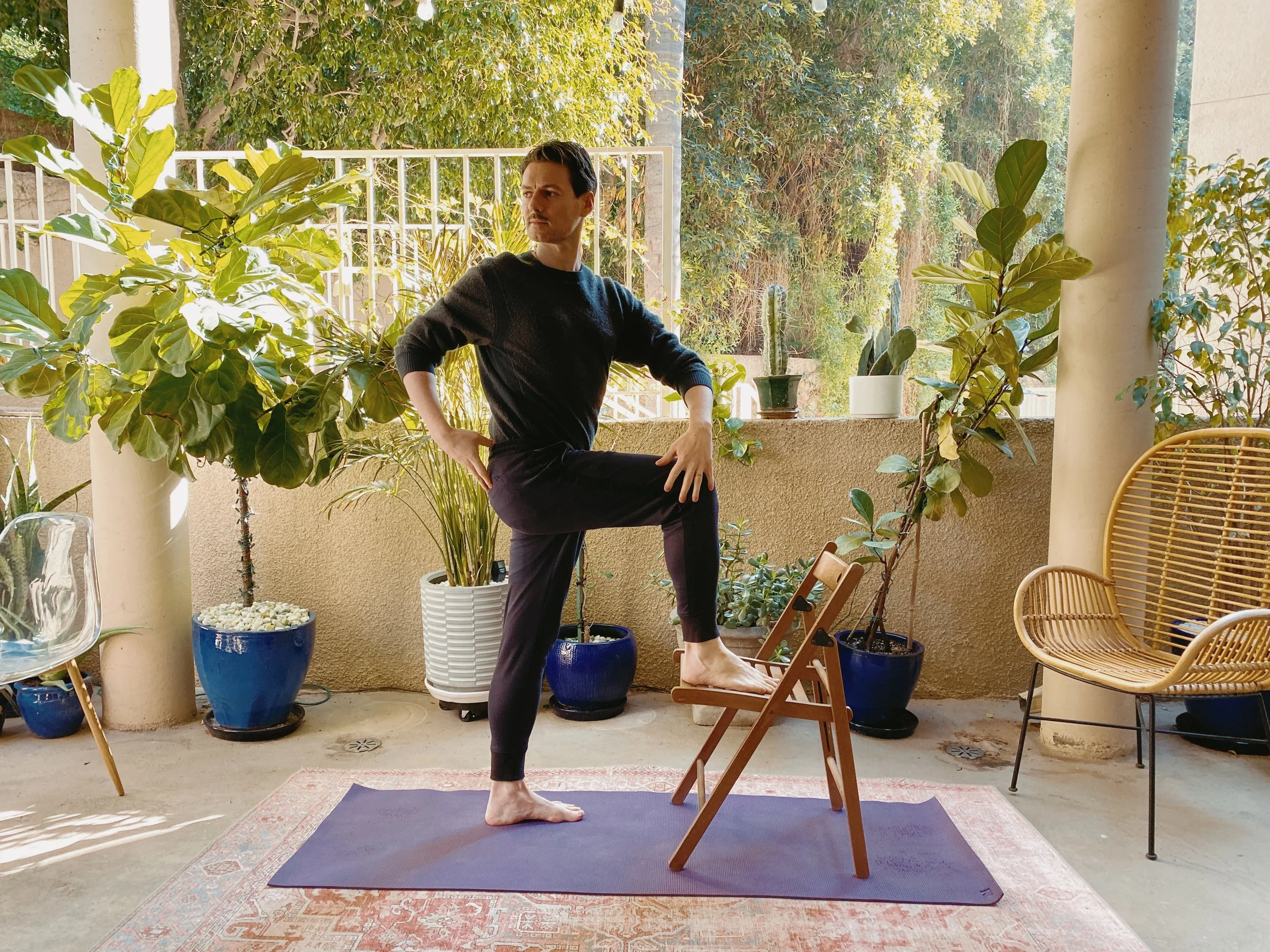
5) Seated Twist without Crossing the Leg Over
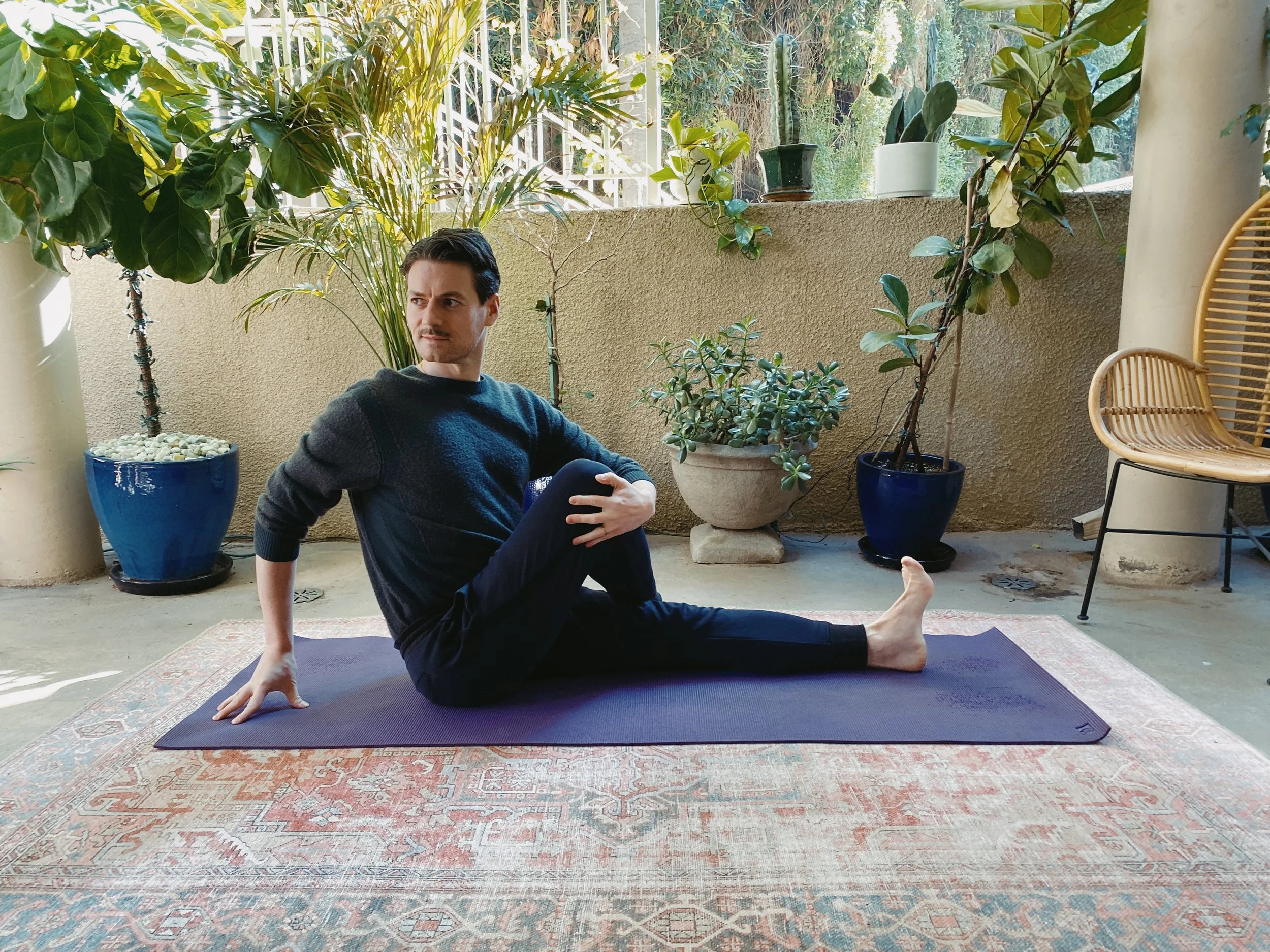
Begin in Dandasana, seated on a folded blanket or block if needed. Bend your right knee and draw your heel in toward your right sit bone placing your foot flat on the mat. Turn your ribcage to the right, placing your right hand behind you and your left hand on your outer right knee.
Teaching tip: Allow the pelvis to follow the twist slightly if the lower back feels strained.
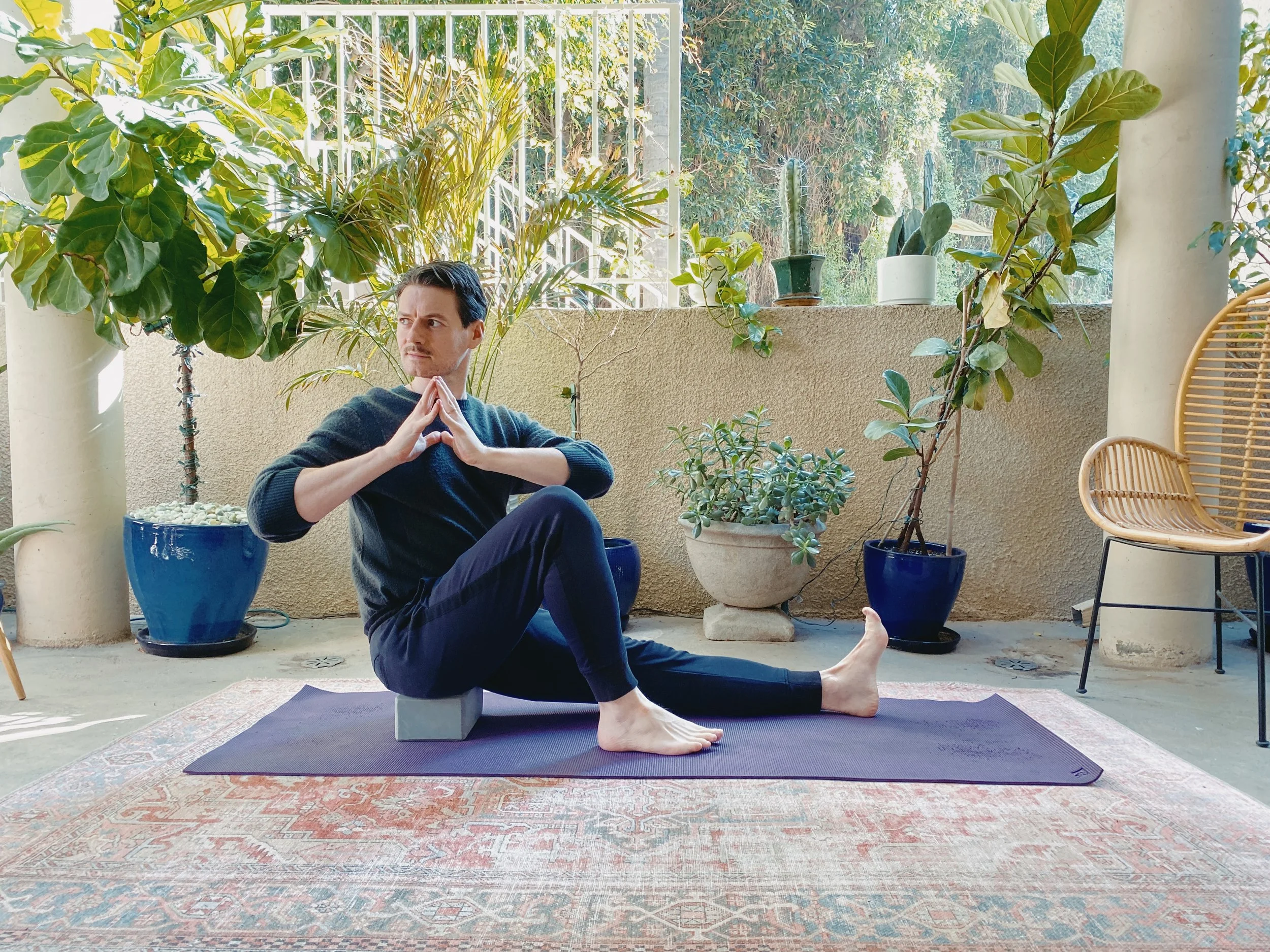
6) Seated Twist with One Leg Crossed Over
From Dandasana, bend your right knee and place your right foot on the outside of your left thigh. As you turn your ribcage to the right, place your right hand behind you and your left hand on your outer right knee, or bring your palms to prayer. Gaze over your right shoulder or keep your head centred.
Teaching tip: Visualise the spine as a spiral staircase — small rotations at the base expanding upward through the thoracic and cervical regions.