Have you ever heard that yoga “improves your circulation”? It’s a common claim, but what’s really happening inside the body when we move, breathe and invert?
Let’s take a look at what the science says in this excerpt from The Physiology of Yoga.
👉Understanding the Circulatory System
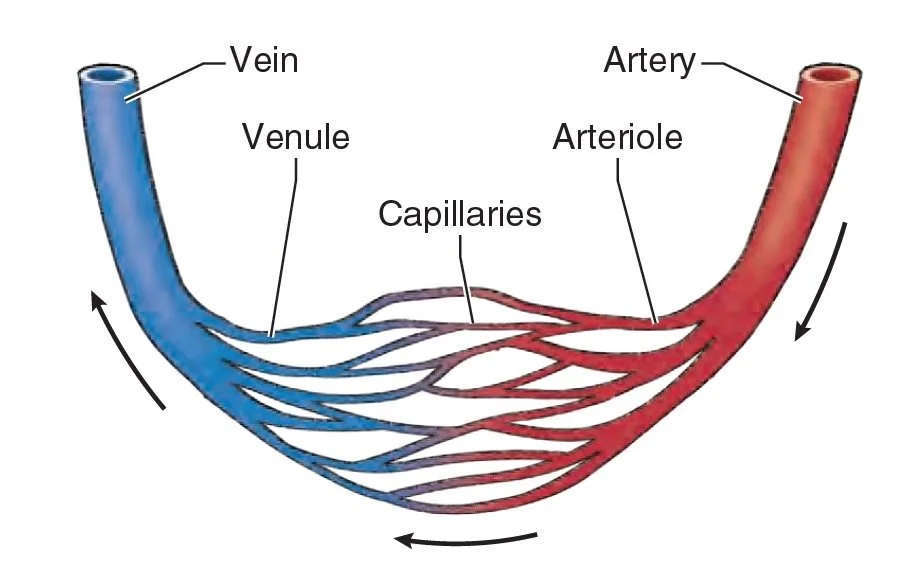
Blood flows through a vast network of vessels called arteries, veins and capillaries. Each vessel has three layers, or tunics:
Inner layer (endothelium): smooth lining that supports healthy blood flow.
Middle layer (smooth muscle): allows contraction and relaxation to change vessel diameter.
Outer layer: made of elastic and collagen fibres that provide structure.
When smooth muscle contracts, the vessel narrows. This is vasoconstriction. When it relaxes, the vessel widens. This is vasodilation.
Arteries close to the heart are highly elastic to handle pressure surges. As blood moves away from the heart, the vessels become more muscular to help control flow.
Muscular arteries branch to distribute blood to the vast network of arterioles, which eventually lead to capillaries. A capillary is a microscopic channel, sometimes so small that there is only a single cell layer that wraps around to contact itself. At the capillary level, oxygen and nutrients diffuse from the blood into the surrounding cells and their tissue fluid, known as interstitial fluid, in a process called perfusion. Waste products that have been produced by the surrounding tissues then enter the capillary system.
Blood returns to the heart through venules and then veins, which have thinner walls, one-way valves and act as reservoirs for most of our blood volume.
👉The Challenge of Venous Return
Sending blood from the heart to the legs is easy. Returning it to the heart (known as venous return) is another story. By the time blood reaches the veins, pressure is low, and the body must work against gravity to return it to the heart. That’s where yoga can help.
👉How Yoga Helps Circulation
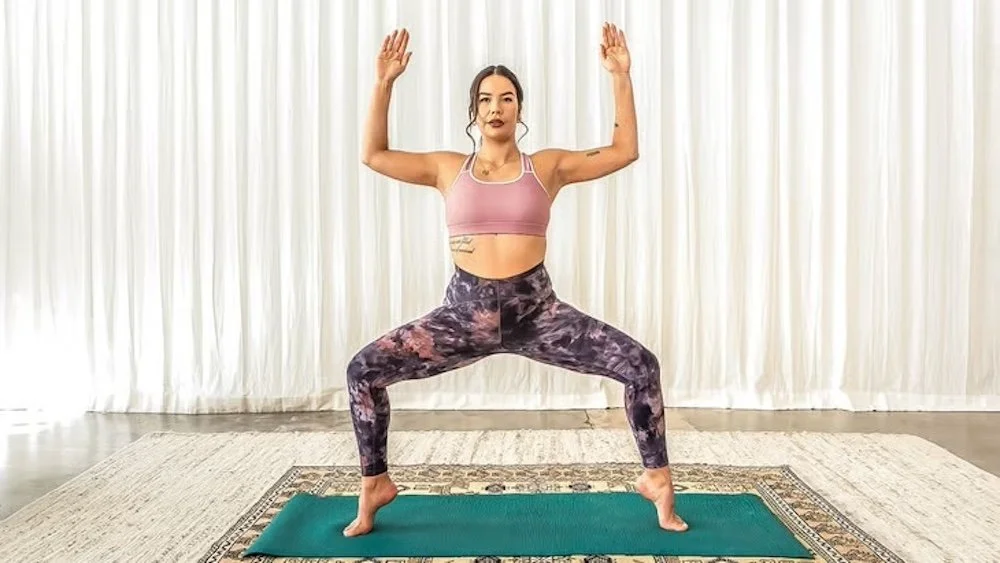
1. Skeletal Muscle Pump
Contraction of lower leg and foot muscles compresses veins, pushing blood upward (Masterson et al., 2006). The calf muscles, largest in this region, are considered the “heart of the legs”. Yoga can strengthen these muscles, improving venous return and reducing heaviness after long periods of standing (Parshad, Richards and Asnani, 2011).
2. Respiratory Pump
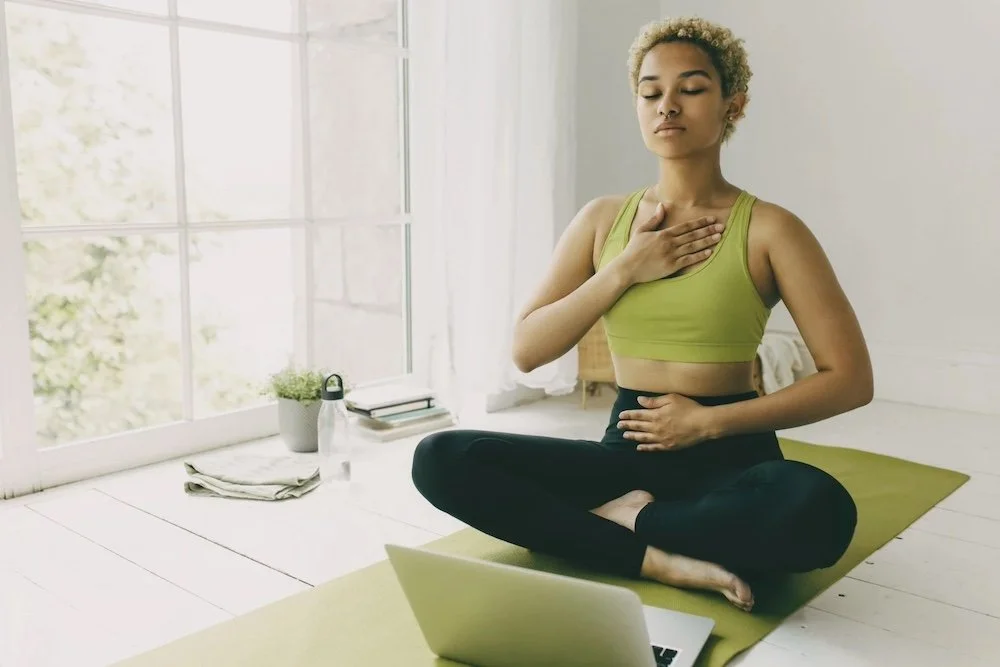
Breathing changes pressure in the chest and abdomen, drawing blood back to the heart. Respiratory muscle pressure is the predominant factor modulating venous return from the legs (Miller et al., 2005). Diaphragmatic breathing enhances this effect, particularly during slow respiration (Byeon et al., 2012). Slow breathing at around six breaths per minute has been shown to increase venous return (Dick et al., 2014).
3. Inversions
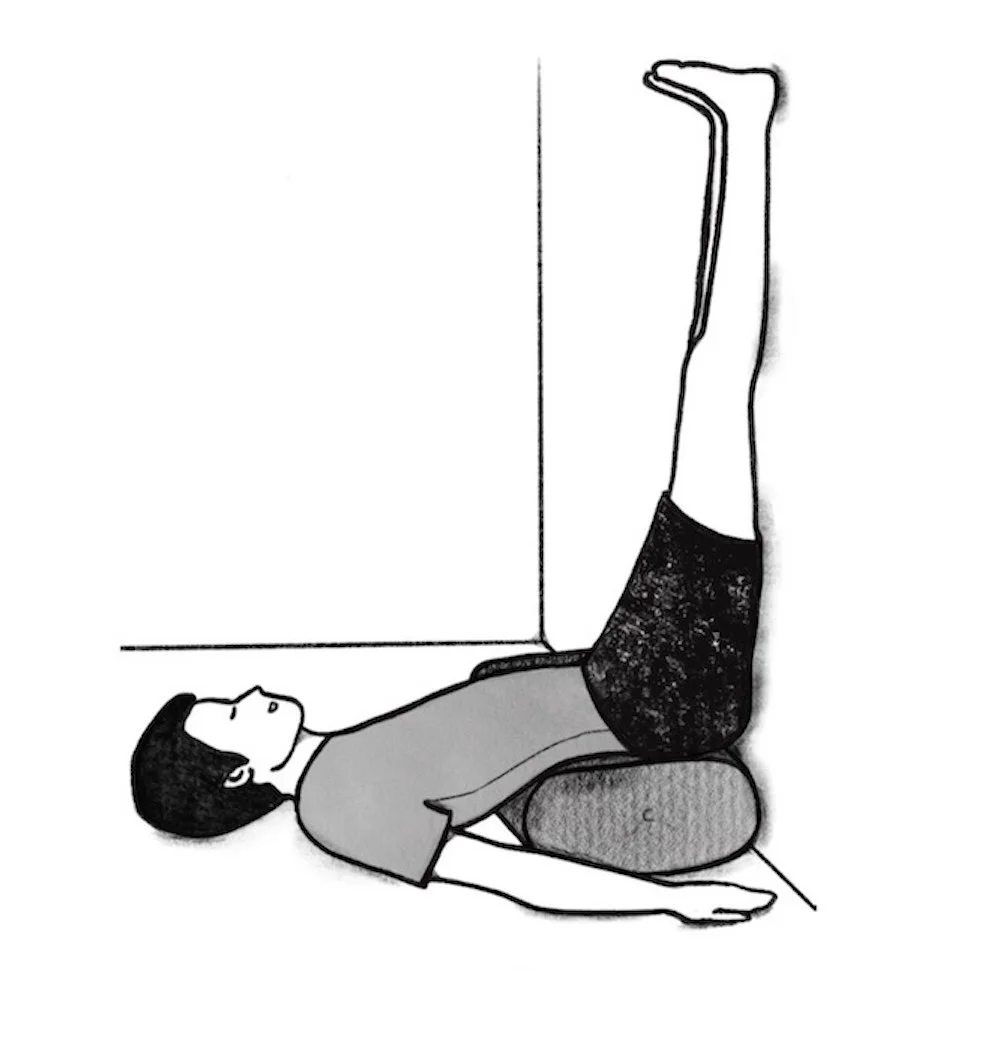
Poses that elevate the legs above the heart, such as Supported Bridge Pose (Setu Bandha Sarvangasana) or Legs-Up-the-Wall (Viparita Karani), temporarily increase venous return (Haennel et al., 1988).
👉In Practice
Encourage your students to notice how movement, breath and position influence how they feel — lighter legs, clearer head, calmer pulse.
Simple cues such as “press through the ball of the foot as you exhale” or “breathe slowly and fully into the ribs” help connect anatomical function with mindful movement.
Yoga doesn’t magically boost circulation. It works because of clear, measurable physiological mechanisms that your students can feel in every class.
References:
Byeon, K., J. Choi, J. Yang, J. Sung, S. Park, J. Oh, and K. Hong. 2012. “The Response of the Vena Cava to Abdominal Breathing.” Journal of Alternative and Complementary Medicine 18 (2): 153-157.
Dick, T., J. Mims, Y. Hsieh, K. Morris, and E. Wehrwein. 2014. “Increased Cardio-Respiratory Coupling Evoked by Slow Deep Breathing Can Persist in Normal Humans.” Respiratory Physiology and Neurobiology 204:99-111.
Haennel, R., K. Teo, G. Snydmiller, H. Quinney, and C. Kappagoda. 1988. “Short-Term Cardiovascular Adaptations to Vertical Head-Down Suspension.” Archives of Physical Medicine and Rehabilitation 69 (5): 352-357.
Masterson, M., A. Morgan, C. Multer, and D. Cipriani. 2006. “The Role of Lower Leg Muscle Activity in Blood Pressure Maintenance of Older Adults.” Clinical Kinesiology 60 (2): 8-17.
Miller, J., D. Pegelow, A. Jacques, and J. Dempsey. 2005. “Skeletal Muscle Pump Versus Respiratory Muscle Pump: Modulation of Venous Return From the Locomotor Limb in Humans.” Journal of Physiology 563: 925‐943.
Parshad, O., A. Richards, and M. Asnani. 2011. “Impact of Yoga on Haemodynamic Function in Healthy Medical Students.” West Indian Medical Journal 60 (2): 148-152.