Have you ever had a “light bulb” moment in a yoga class or workshop? Several years ago, I attended a training in London with Kristin Campbell. One student asked her the best way to practice a particular pose. She simply replied, “The why informs the how.” When we understand why we are practising or teaching a pose, the how becomes much clearer. This insight has guided my teaching ever since.
Savasana is a prime example. The essence of Savasana is to rest deeply at the end of an asana practice, allowing the body and mind to integrate the work we have done. Research shows that supported, restorative positions can activate the parasympathetic nervous system, helping students downregulate and recover from the physical practice (Austin et al., 2020). Even small adjustments, such as bolsters under the knees or a blanket for the neck, can make a significant difference in comfort and engagement.
Not all students are comfortable lying flat. Some experience shortness of breath, lower back or hamstring tightness, limited mobility, or a sense of exposure due to trauma. Offering variations allows all students to experience the essence of Savasana while respecting their individual needs.
Savasana Variations:
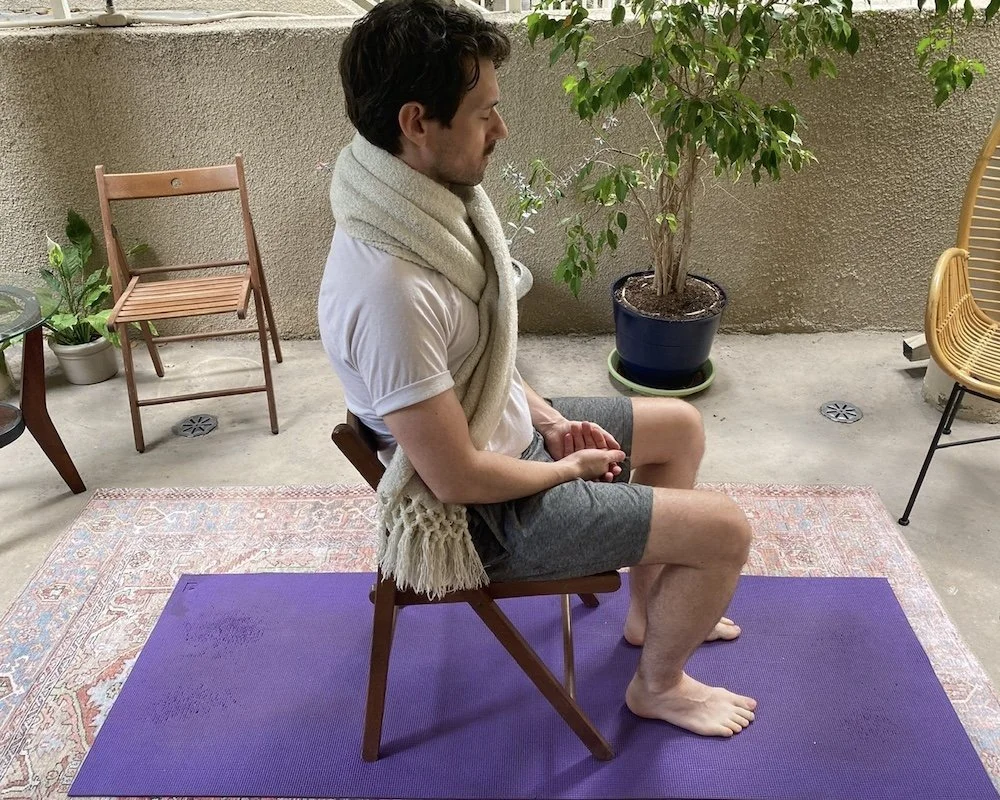
1) Seated Savasana
Sit comfortably in a chair with feet under the knees and shoulders above the pelvis. Wrap a thick scarf or rolled blanket around the back of the neck, cross it over the chest, and tuck the ends between the arms and waist. Rest the hands on the thighs and either close the eyes or soften the gaze.
Cueing: “Feel the support of the chair beneath you. Allow your shoulders to release and your breath to settle.”
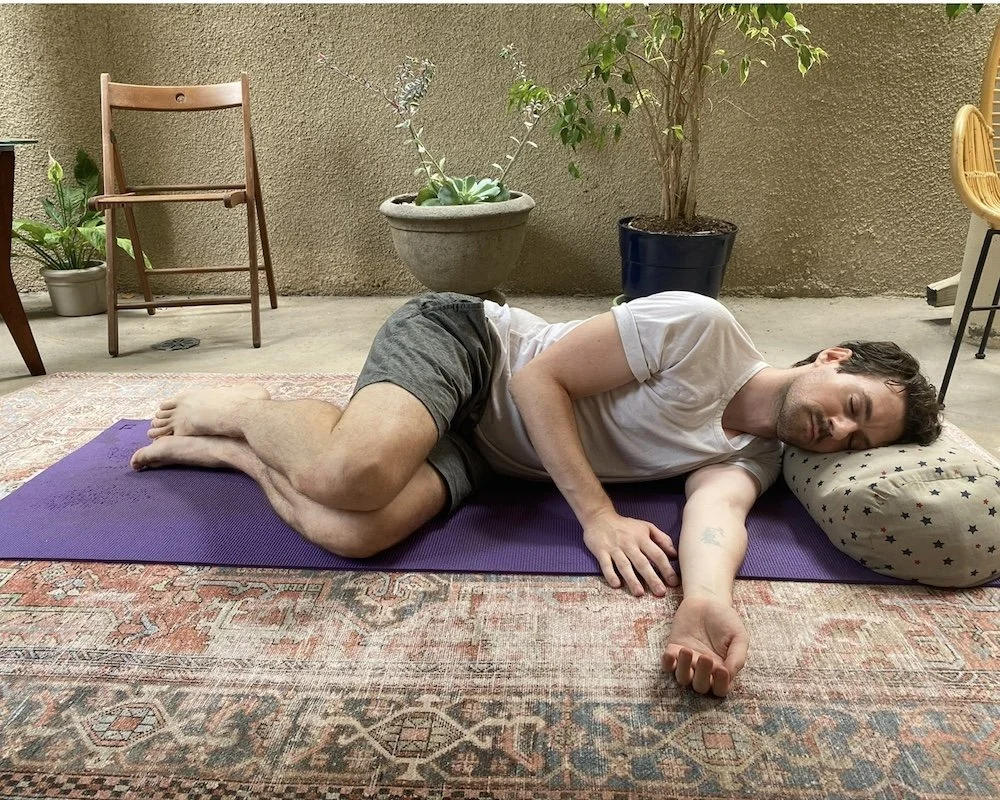
2) Side Savasana
Place a bolster longways along the short edge of the mat. Lie on your side in a fetal position, placing the side of the head on the bolster. Extend the bottom arm along the mat and rest the top arm wherever it feels comfortable. Place a folded blanket between the knees if needed. Close the eyes or soften the gaze.
Cueing: “Notice the gentle support along your side. Allow your hips and spine to soften into the floor or props.”
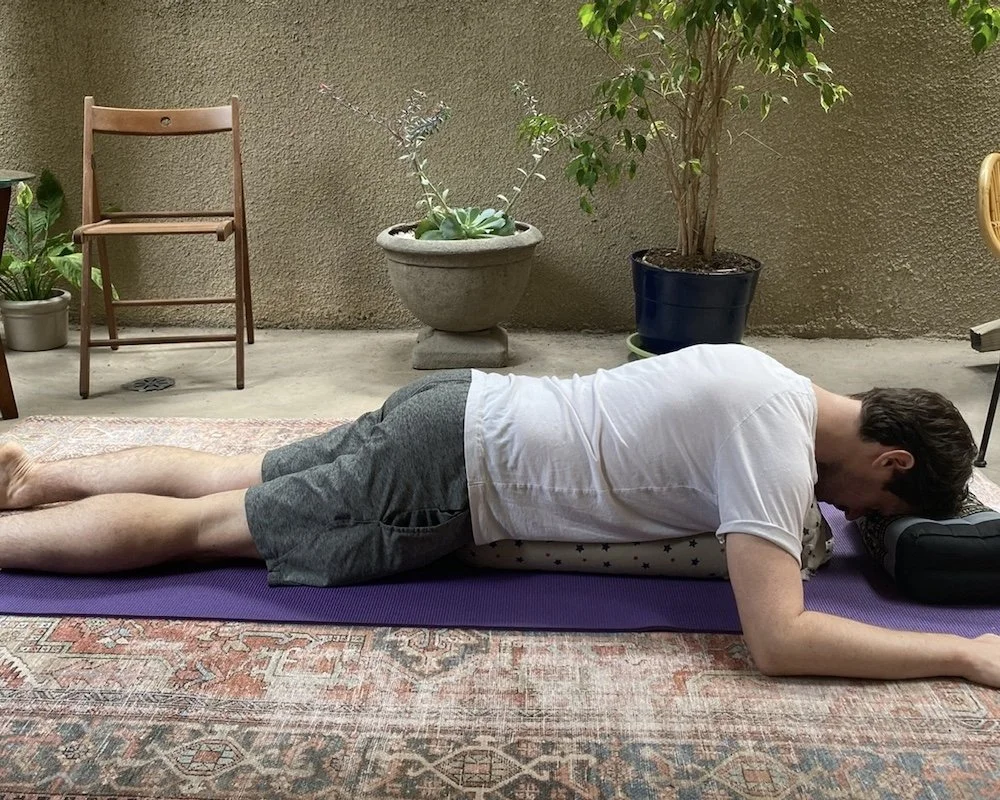
3) Prone Savasana
Place a bolster along the length of the top half of the mat, a foam block or thick cushion about a foot in front of the bolster, and a folded blanket on the bottom half. Kneel on the blanket about two feet behind the bolster and slowly lower the torso onto it. Place the forehead on the foam block or cushion with space for the rest of the face. Use “cactus arms” (upper arms perpendicular to torso, forearms perpendicular to upper arms). Adjust the legs for comfort and choose to close the eyes or soften the gaze.
Cueing: “Allow your chest and shoulders to rest over the support, noticing the length through your spine and the release in your jaw.”
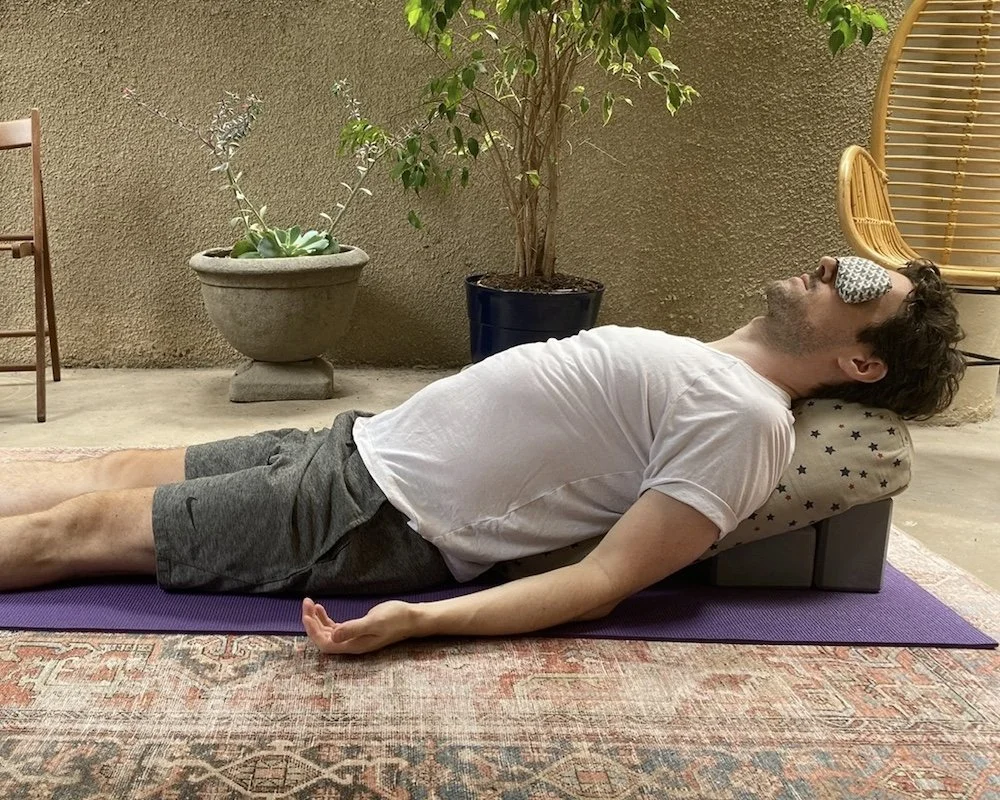
4) Incline Savasana
Create a gentle incline with yoga props. Sit with the back a few inches in front of the incline and knees bent, feet flat on the floor. Slowly lower the torso onto the support and adjust for comfort. Legs can remain bent or extended along the mat. Place an eye bag over the eyes if this feels good.
Cueing: “Notice the gentle lift through your chest and let your arms and legs relax fully into the floor or props.”
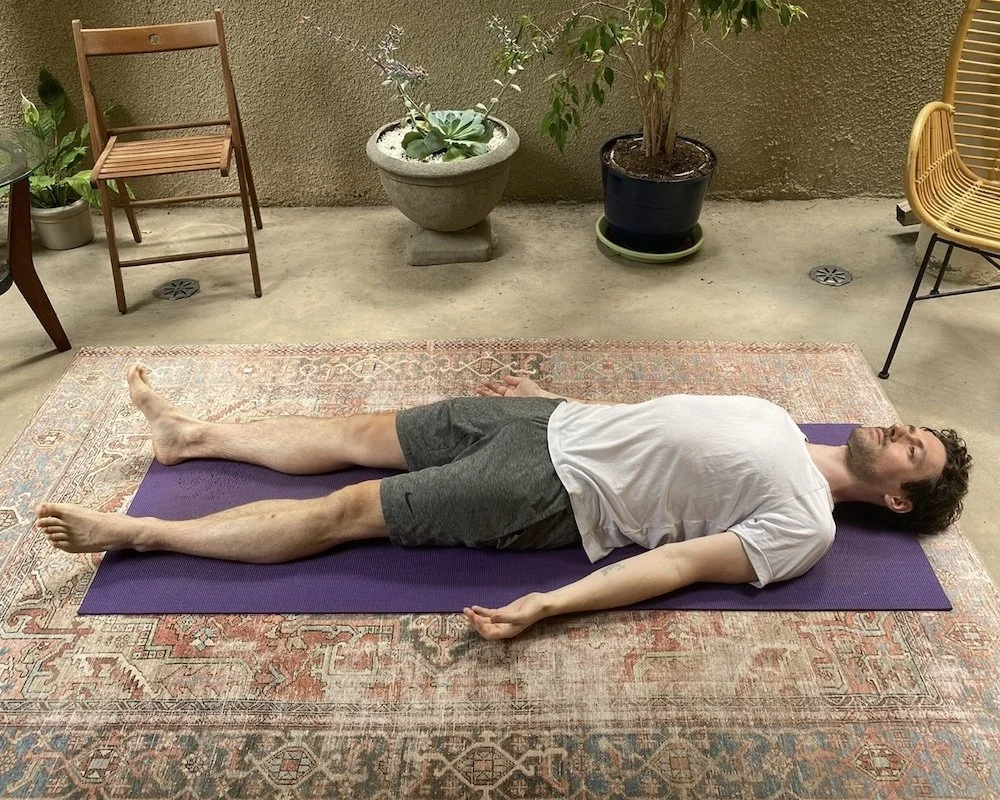
5) Traditional Savasana
Lie flat on the back with legs extended, feet apart, and arms away from the body with palms up, or hands on the belly. Placing a rolled-up blanket under the knees can ease tightness in the lower back or hamstrings. Knees can also be bent with feet flat, either under the knees or wider with inner knees touching.
Cueing: “Invite your body to fully settle into the mat. Allow the breath to soften and the gaze to close or soften as it feels comfortable.”
Teacher Reflection:
Consider your students: who might benefit from a seated, side-lying, or prone Savasana? Could you offer two or three options at the end of class and invite students to choose what feels best? Observing how different students respond can inform future class planning and cueing.
References:
Austin J, et al. Restorative yoga for musculoskeletal comfort and nervous system regulation. Yoga Journal 2020; 15(3): 22–29.
Smith L, et al. Trauma-sensitive yoga: Approaches and outcomes. International Journal of Yoga Therapy 2018; 28(1): 55–64.