Do you notice periods of feeling expansive, sociable, productive, and outward-facing, followed by periods of feeling more introspective, quiet, and less inclined to put yourself or your work into the world? Many of us experience these natural cycles. It is easy to label the expansive phases as positive and the contracted phases as negative, although both states are essential and support one another. The quieter times allow us to reflect, refine ideas, and develop creative projects. The more outward periods help us take action, network, and share our work.
Virabhadrasana III (Warrior 3) provides a clear opportunity to explore these contrasting energies on the mat. The traditional pose is a single-leg balance with the torso, arms, and back leg held in one long line. We draw the limbs and trunk towards the centre while simultaneously reaching the torso and lifted leg in opposite directions. Teaching this balance between contraction and expansion helps students feel that both actions are equally important.
Warrior 3 strengthens the standing leg and the lifted leg, challenges core stability as the torso stays horizontal, and encourages shoulder strength as the arms stay aligned with the spine. The position also helps students develop proprioception, concentration, and stamina.
The traditional version can be demanding, particularly for students with balance difficulties, limited shoulder mobility, pain, or who feel they lack the strength or confidence to enter the full expression. Offering variations allows students to explore the shape and energetic intention of the pose while honouring their needs, abilities, injuries, and mood.
Preparation for Warrior 3
To prepare the legs: Supta Padangusthasana (Reclining Hand-to-Big-Toe Pose), Anjaneyasana (Low Lunge), High Lunge, and Parsvottanasana (Intense Side Stretch).
To prepare the core: Navasana (Boat Pose) and Plank Pose.
To prepare the arms: Utkatasana (Chair Pose) and Virabhadrasana II (Warrior 2).
5 Warrior 3 Variations!
1) Warrior 3 on the floor
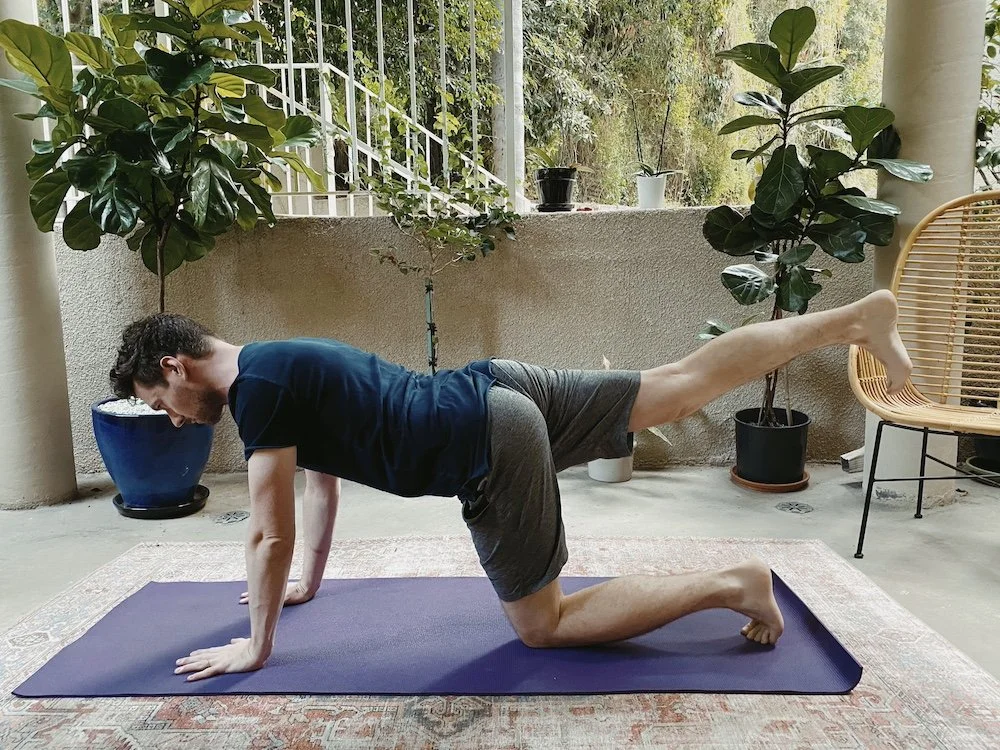
Practising closer to the floor lowers the centre of gravity, which can make balance slightly easier. From Tabletop, keep your hips facing forward as you lift your right leg until it is horizontal. Place a folded blanket under the left knee if needed. Students can keep their palms on the mat, make fists, or lift the left arm until it is in line with the extended leg. Encourage a soft but steady gaze on the floor a couple of feet in front of them.
2) Warrior 3 with a strap
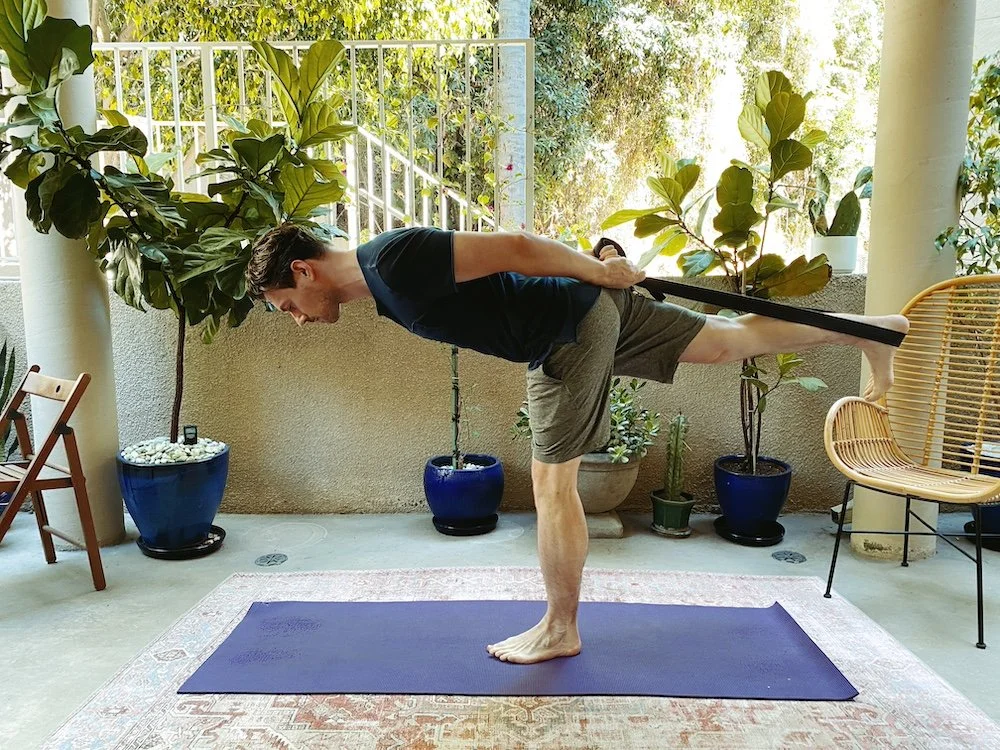
From Tadasana, loop a folded strap over the back of the right heel and hold one end of the strap in each hand. Hinge forward at the hips, lift the right leg, and draw the strap taut. Keep the arms alongside the body as students work towards a horizontal torso and back leg. The strap supports balance and allows students to explore the interplay of contraction and expansion as they reach the leg back while gently drawing it in with the strap.
3) Inclined Warrior 3
From Tadasana, raise the arms overhead so the upper arms are alongside the ears. Hinge forward about 45 degrees so the arms point towards the upper corner of the room. Lift the right leg behind until it aligns with the torso and arms. Students can place a chair in front of them to support the hands as they explore the inclined shape. Keep the gaze steady on a point several feet ahead.
4) Warrior 3 with a chair
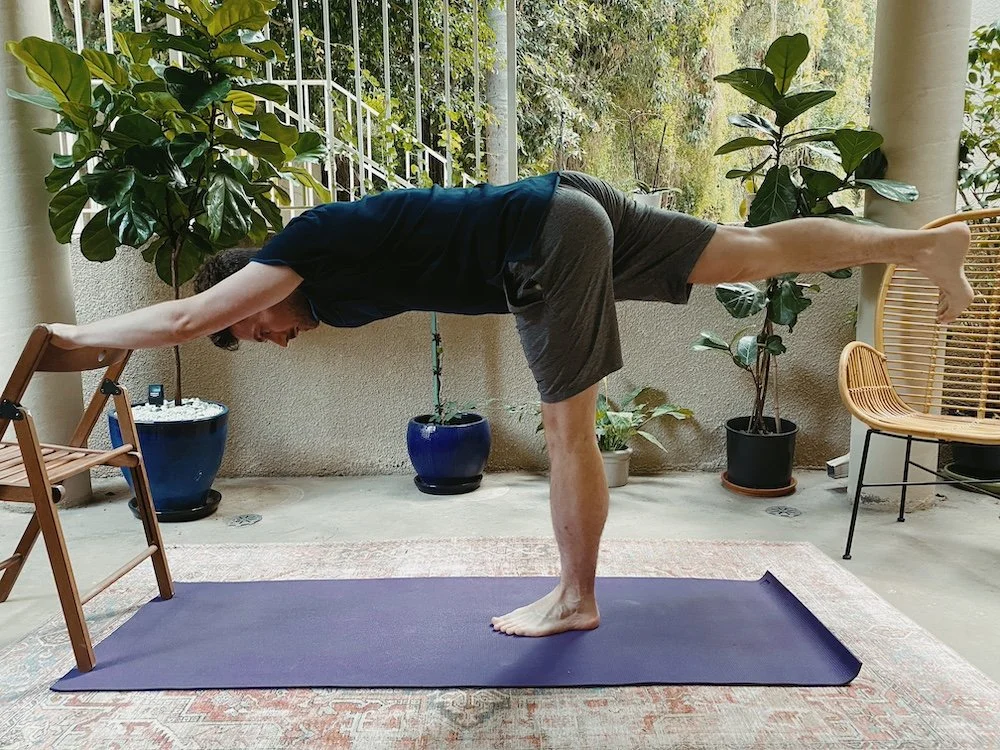
Place a chair 3 or 4 feet in front of the student with the back of the chair facing them. From Tadasana, hinge forward and hold the back of the chair. Lift the right leg behind to hip height, keeping the hips facing forward. The chair reduces load on the shoulders and supports balance, making the pose more accessible to many students.
5) Warrior 3 with two blocks
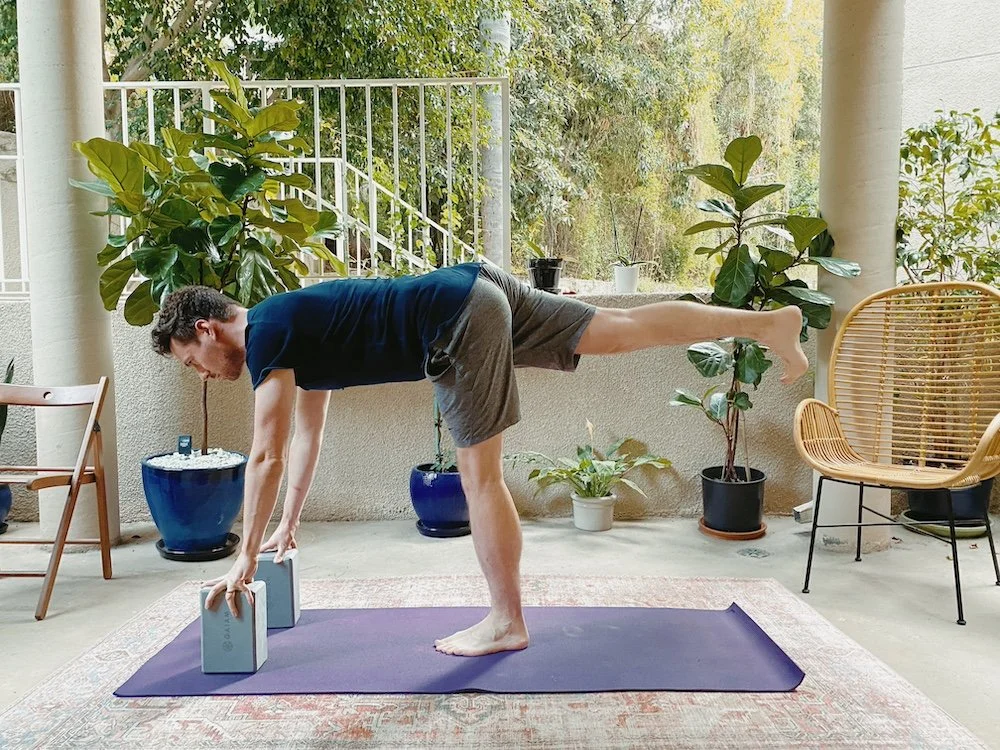
From Tadasana, place two blocks a couple of feet in front of the feet. Hinge forward, place the hands on the blocks, and lift the right leg behind until horizontal. Keep the hips square and maintain a slight bend in the standing knee. Encourage students to draw the limbs towards the midline while reaching the crown of the head and lifted foot in opposite directions. The blocks reduce the range of motion required through the shoulders and provide stability for balance.