Myofascial release, often shortened to MFR, has become increasingly popular since the 1990s. It is typically described as a treatment where a therapist applies a low-load, long-duration stretch to soft tissues, guided by feedback from the recipient’s body.
You might think of it as being gently stretched by someone, with sustained pressure applied along the tissues.
Some osteopathy texts suggest that fascia can become restricted due to factors such as overuse, trauma, inactivity, or even psychogenic causes, and that these restrictions may contribute to pain or reduced movement (DiGiovanna, Schiowitz, and Dowling 2005). MFR is then proposed as a way to “release” these restrictions.
What Does the Research Say?
When we look at the evidence, the picture is less clear than many claims suggest.
Systematic reviews have found some encouraging results, but the overall quality of the research is low, making it difficult to draw firm conclusions (McKenney et al. 2013; Ajimsha, Al-Mudahka, and Al-Madzhar 2015). A later review on chronic pain concluded that it is not known whether MFR is more effective than sham treatments (Laimi et al. 2018).
There is also an argument that MFR may be difficult to study in a standardised way. Kidd (2009) described it as an “art form,” suggesting that outcomes may depend heavily on the skill and experience of the therapist.

What About Foam Rolling and Self-MFR?
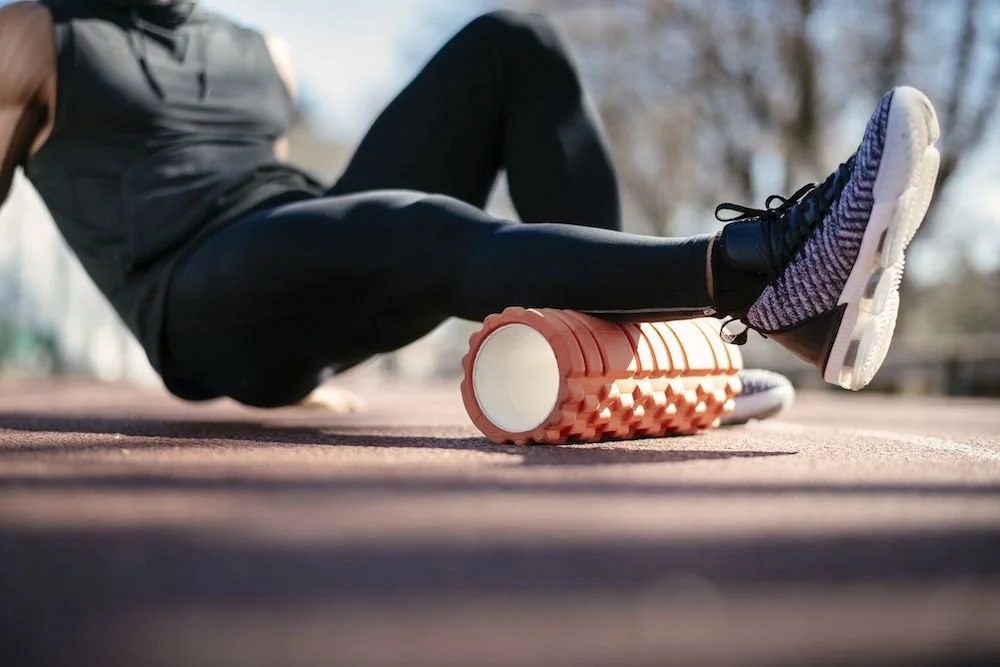
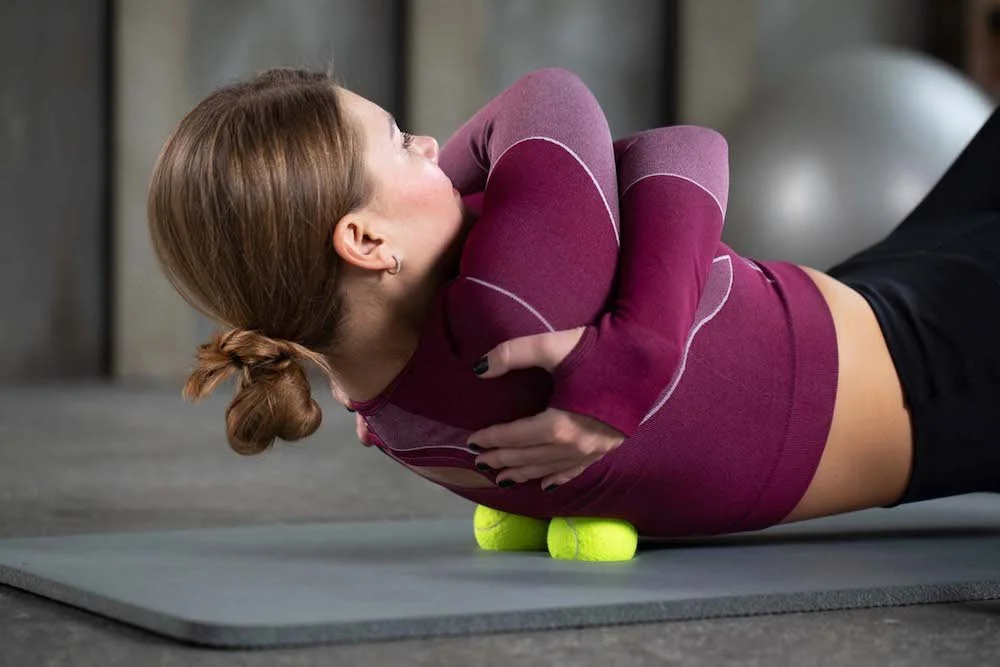
In yoga and fitness spaces, we are more likely to encounter self-MFR, most commonly in the form of foam rolling. Other tools, such as massage balls, sticks, and percussive devices, are also often marketed as ways to release fascia.
However, there is currently little regulation around these claims, and not all products are supported by scientific evidence.
A meta-analysis by Wiewelhove and colleagues (2019) examined the effects of foam rolling on performance and recovery. They found that the effects were generally small, but in some cases relevant, particularly for improving flexibility, slightly enhancing sprint performance, or reducing the sensation of muscle soreness.
The authors suggested that foam rolling may be more useful as part of a warm-up rather than as a recovery tool.
If It Is Not Releasing Fascia, What Is Happening?
A key question is whether foam rolling actually changes the structure of fascia.
A review by Behm and Wilke (2019) explored possible mechanisms. They found that while rolling may influence local blood flow or hydration, the forces involved are unlikely to be sufficient to alter the shape or structure of connective tissue.
Instead, the observed effects may be explained by the nervous system.
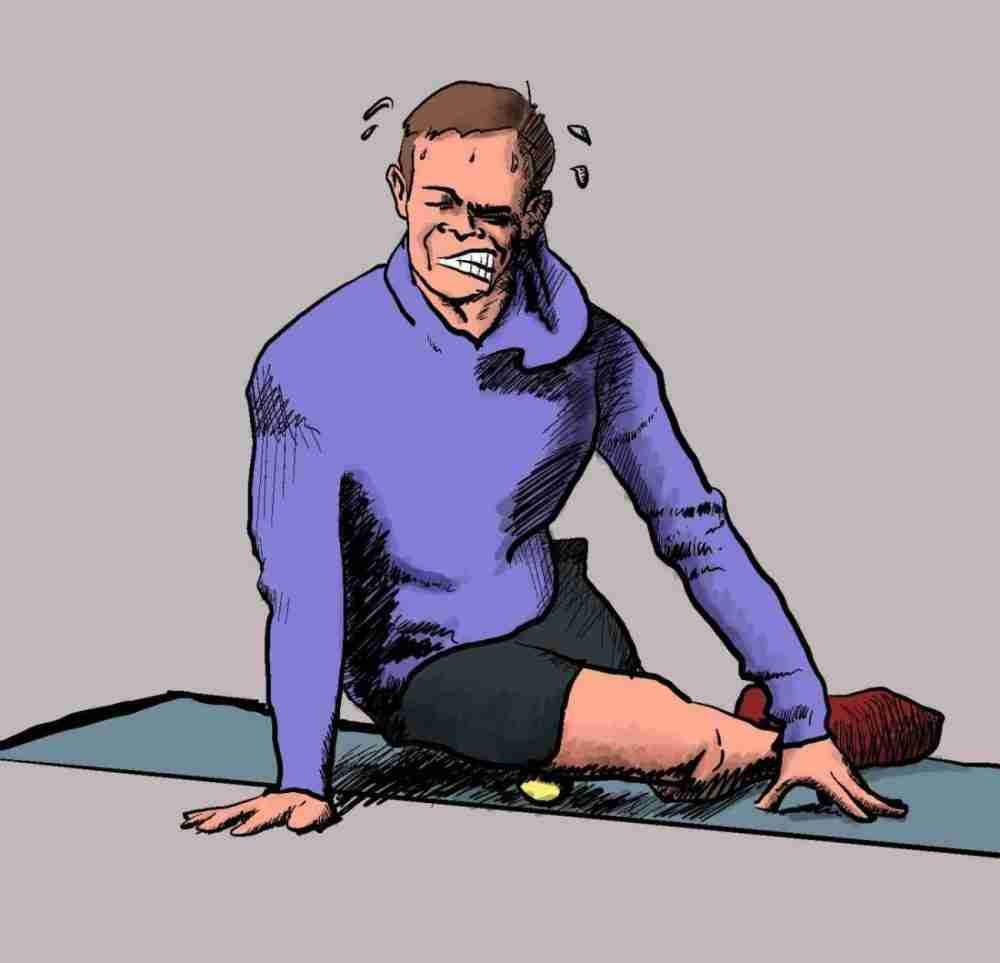
Research suggests that foam rolling can increase stretch tolerance and reduce pain sensitivity, likely through processes such as counterstimulation, where one sensation reduces the perception of another. For example, rubbing your shin after bumping it can reduce the intensity of pain.
They also suggested that increased parasympathetic activity, in other words a shift towards a more relaxed state, may contribute to the effects people experience.
Why Language Matters for Yoga Teachers
Taken together, this suggests that the benefits of foam rolling are more likely related to temporary changes in the nervous system, rather than a physical release of fascial restrictions.
From this perspective, the term “myofascial release” may be somewhat misleading.
For yoga teachers, this creates an opportunity to be more precise with language. Rather than describing foam rolling as breaking up or releasing fascia, it may be more helpful to frame it as a way to explore sensation, reduce discomfort, or prepare the body for movement.
Practical Takeaways
Foam rolling and similar practices may still be helpful for some students, particularly if they improve comfort, reduce pain sensations, or support warm-up routines.
At the same time, the current evidence suggests that the effects are relatively small and likely short-term.
As always, individual experience matters. If a student finds foam rolling helpful, there may be no need to remove it. However, being thoughtful about how we explain these practices can help avoid reinforcing oversimplified or unsupported ideas.
References:
Ajimsha, M.S., N.R. Al-Mudahka, and J.A. Al-Madzhar. 2015. “Effectiveness of Myofascial Release: Systematic Review of Randomized Controlled Trials.” Journal of Bodywork and Movement Therapies 19 (1): 102 to 112.
Behm, D.G., and J. Wilke. 2019. “Do Self-Myofascial Release Devices Release Myofascia? Rolling Mechanisms: A Narrative Review.” Sports Medicine 49: 1173 to 1181.
DiGiovanna, E.L., S. Schiowitz, and D.J. Dowling, eds. 2005. An Osteopathic Approach to Diagnosis and Treatment.Lippincott Williams and Wilkins.
Kidd, R. 2009. “Why Myofascial Release Will Never Be Evidence-Based.” International Musculoskeletal Medicine 31 (2): 55 to 56.
Laimi, K., A. Mäkilä, E. Bärlund, N. Katajapuu, A. Oksanen, V. Seikkula, J. Karppinen, and M. Saltychev. 2018. “Effectiveness of Myofascial Release in Treatment of Chronic Musculoskeletal Pain: A Systematic Review.” Clinical Rehabilitation 32 (4): 440 to 450.
McKenney, K., A.S. Elder, C. Elder, and A. Hutchins. 2013. “Myofascial Release as a Treatment for Orthopaedic Conditions: A Systematic Review.” Journal of Athletic Training 48 (4): 522 to 527.
Wiewelhove, T., A. Döweling, C. Schneider, L. Hottenrott, T. Meyer, M. Kellmann, M. Pfeiffer, and A. Ferrauti. 2019. “A Meta-Analysis of the Effects of Foam Rolling on Performance and Recovery.” Frontiers in Physiology 10: 376.