Many yoga teachers have been told that progressive resistance training is essential for building and maintaining strength and bone health. This is broadly true, but recent updates from the American College of Sports Medicine add an important layer of nuance.
The key shift is that the largest health benefits often come from moving from a sedentary lifestyle to doing some resistance training.
This raises an important question for yoga teachers. Where does yoga fit into this picture, and how should we communicate this to our students?
What do the updated guidelines say?
The ACSM highlights that the greatest improvements in health and strength tend to occur when someone goes from inactive to active. Continued progression can lead to further gains, but the rate of improvement slows over time.
In practical terms, this means that the biggest changes often happen early. Starting and maintaining resistance training already provides meaningful benefits, even if load is not continually increased.
This does not mean progression is unimportant. It simply reframes it as one part of a broader picture, rather than the sole driver of benefit.

What does the research say about bone?
Bone is a dynamic tissue that responds to mechanical loading. Research suggests that resistance training can help slow age-related bone loss, even without continual increases in load (Howe et al., 2011; Zhao et al., 2015). Active individuals also tend to maintain higher bone mineral density than those who are sedentary (Kohrt et al., 2004).
This means that beginning resistance training and maintaining it can shift the trajectory of decline.
However, bone is particularly sensitive to certain types of stimulus. It responds most strongly to higher loads, novel inputs, and varied directions of force. This is where progression becomes more relevant, especially if the goal is to maximise or further improve bone density.

Where yoga fits into this
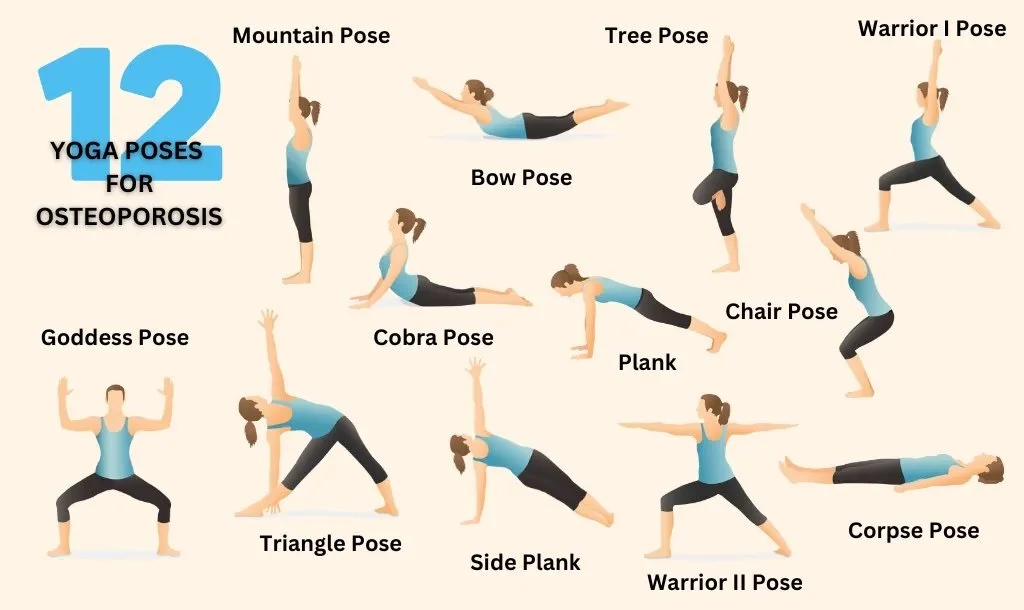
Yoga can absolutely contribute to bone health. It introduces weight-bearing load, supports coordination, and increases overall activity levels. For someone who is currently inactive, starting yoga may represent a meaningful and beneficial shift.
However, most yoga practice relies on bodyweight, emphasises slow and controlled movement, and does not systematically increase load over time. As a result, while yoga may help slow the decline in bone density, it is less likely to provide the type of stimulus needed to optimise bone adaptation on its own.
This is not a limitation of yoga as a practice, but a reflection of the specific demands required to stimulate bone.
What do we mean by “progression” in yoga?
Progression does exist within yoga, but it takes a different form. It may involve practising more frequently, holding poses for longer, exploring more demanding variations, or improving control and range of motion.
These changes can increase the overall demand placed on the body. However, they tend to emphasise endurance and time under tension rather than increases in peak load. Over time, this type of stimulus is likely to plateau in terms of its effect on bone.
In other words, doing more yoga does not always mean providing a stronger signal to bone.

Why this matters for yoga teachers
A common belief among students is that practising yoga once or twice a week is sufficient for all aspects of health, including bone health. The updated evidence allows us to refine this message without dismissing the value of yoga.
It is reasonable to say that moving from inactivity to regular yoga practice is a meaningful and positive step. At the same time, it is also important to acknowledge that additional forms of resistance training may be needed to support optimal strength and bone health.
Framing the conversation in this way avoids oversimplification and supports more informed decision-making.

Practical takeaways
Encourage students to continue practising yoga, as it supports movement, confidence, and general health. Be clear that yoga can contribute to bone health, particularly for those who are currently inactive, but it may not be sufficient on its own for long-term bone adaptation.
Introduce resistance training as a complement to yoga rather than a replacement. Help students understand that progression is not only about doing more, but about changing the nature of the load placed on the body.
A simple way to summarise this for your classes is, yoga can be a valuable foundation, but for bone health, it is only one part of the picture.
References:
Howe, T. E., Shea, B., Dawson, L. J., Downie, F., Murray, A., Ross, C., Harbour, R. T., Caldwell, L. M., and Creed, G. (2011). Exercise for preventing and treating osteoporosis in postmenopausal women. Cochrane Database of Systematic Reviews, (7), CD000333.
Kohrt, W. M., Bloomfield, S. A., Little, K. D., Nelson, M. E., and Yingling, V. R. (2004). American College of Sports Medicine Position Stand, physical activity and bone health. Medicine & Science in Sports & Exercise, 36(11), 1985–1996.
Zhao, R., Zhao, M., and Xu, Z. (2015). The effects of different intensities of exercise on bone mineral density and bone metabolism in postmenopausal women, a meta-analysis. Journal of Bone and Mineral Metabolism, 33(3), 251–259.
American College of Sports Medicine (2022–2024 updates). Resistance training guidelines and position statements.