How many times have you heard the phrase “This pose improves your posture” in a yoga class? The belief that posture is a key to preventing or fixing back pain is deeply ingrained — in yoga and beyond. But does the research actually support that idea?
Let’s take a closer look.
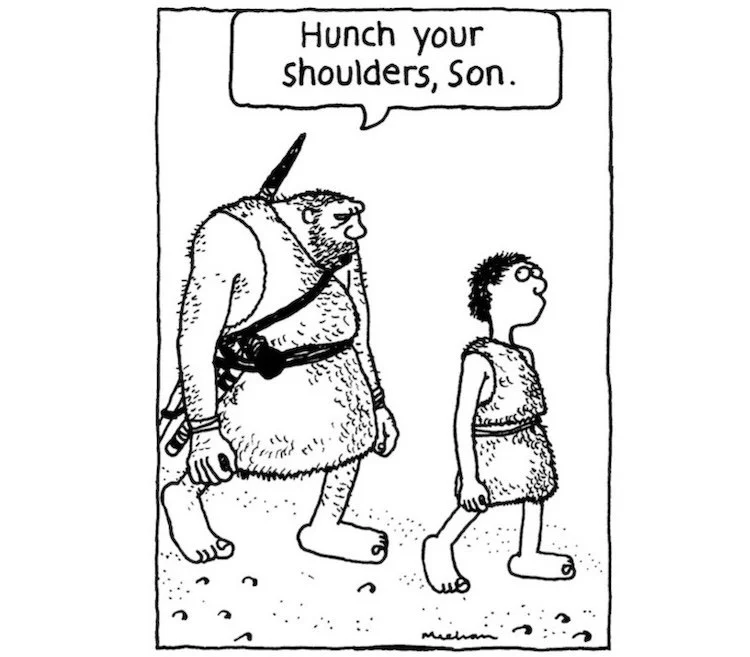
The global posture correction industry is worth billions. It includes everything from ergonomic chairs and “ideal posture” workshops to devices that vibrate when you start to slouch. And of course, yoga often gets pulled into this conversation — with many teachers and students aiming for “perfect alignment” or the “right way” to sit or stand.
But the idea of “good posture” is more cultural than anatomical. As historian Sander Gilman (2014) points out, our modern notion of posture has roots in 16th-century military drills. Standing up straight became a symbol of discipline, respectability, and health — not necessarily because it was better for the spine, but because it looked like good behaviour. By the 1800s, posture was being sold as a marker of morality and wellness, shaping how people literally and figuratively “held themselves.”
Fast forward to today, and that same cultural idea still shapes how we think about our bodies. Yet, when we look at the evidence, the story changes.
Systematic reviews (the gold standard of research) show that ergonomic training and posture advice don’t significantly reduce work-related back pain. In other words, teaching people how to sit or lift “correctly” hasn’t been shown to prevent pain (Driessen et al., 2010; Clemes et al., 2010).
If anything, the real issue might be staying still. Sitting or standing for long periods — no matter how “good” your posture looks — increases the risk of poor health outcomes, including cardiovascular disease and diabetes (Bailey et al., 2019; Li et al., 2022).
So perhaps posture itself isn’t the problem. It’s the lack of movement.
For yoga teachers, this perspective matters. Instead of cueing students toward an “ideal” posture, we might shift toward promoting variety and movement. Every position has its benefits, but none are magic. The healthiest posture is simply your next one.
That doesn’t mean posture is irrelevant — how we position ourselves can influence how we feel and how we breathe. But rather than striving for perfection, our energy might be better spent helping students explore comfortable, sustainable, and varied ways to move throughout the day.
👉 Teaching takeaway: Instead of correcting posture, encourage curiosity. Invite your students to notice how different positions feel, and remind them that movement — not stillness — is what keeps the body resilient.
References:
Bailey, D., Hewson, D., Champion, R., and Sayegh, S. (2019) ‘Sitting Time and Risk of Cardiovascular Disease and Diabetes: A Systematic Review and Meta-Analysis.’ American Journal of Preventive Medicine 57(3): 408-416.
Clemes, S., Haslam, C., and Haslam, R. 2010. “What constitutes effective manual handling training? A systematic review.” Occupational medicine 60(2): 101–107.
Driessen, M., Proper, K.., van Tulder, M., Anema, J., Bongers, P., and van der Beek, A. 2010. “The effectiveness of physical and organisational ergonomic interventions on low back pain and neck pain: a systematic review.” Occupational and environmental medicine 67(4): 277–285.
Gilman, S. 2014. “Stand Up Straight: Notes Toward a History of Posture.” J Med Humanities 35: 57–83.
Li, S., Lear, S., Rangarajan, S., et al. (2022) ‘Association of Sitting Time With Mortality and Cardiovascular Events in High-Income, Middle-Income, and Low-Income Countries.’ JAMA Cardiol 7(8): 796–807.