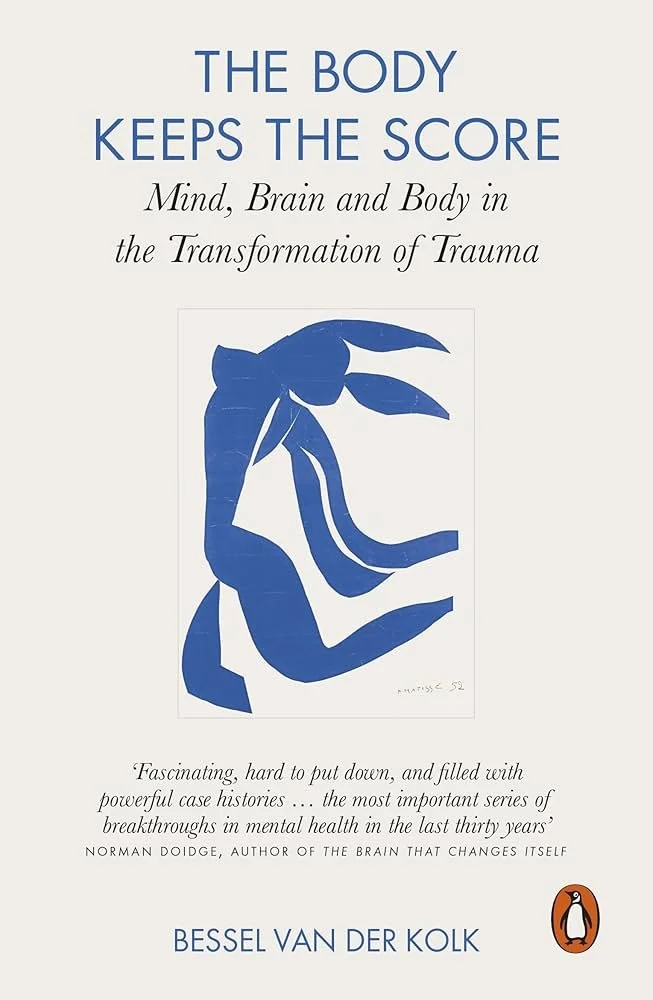
The Body Keeps the Score by Bessel van der Kolk has had a profound impact on how trauma is understood, both within healthcare and in yoga spaces. It has helped shift the conversation towards compassion, embodiment, and the recognition that our past experiences shape how we feel and respond.
For many yoga teachers, this book has been a gateway into trauma-aware teaching.
However, as research evolves, it is worth asking, how literally should we take the idea that the body “keeps the score”?
What is the claim?
The phrase suggests that trauma is somehow stored in the body, often interpreted as being held in muscles, fascia, or the nervous system.
In yoga spaces, this can show up as ideas like:
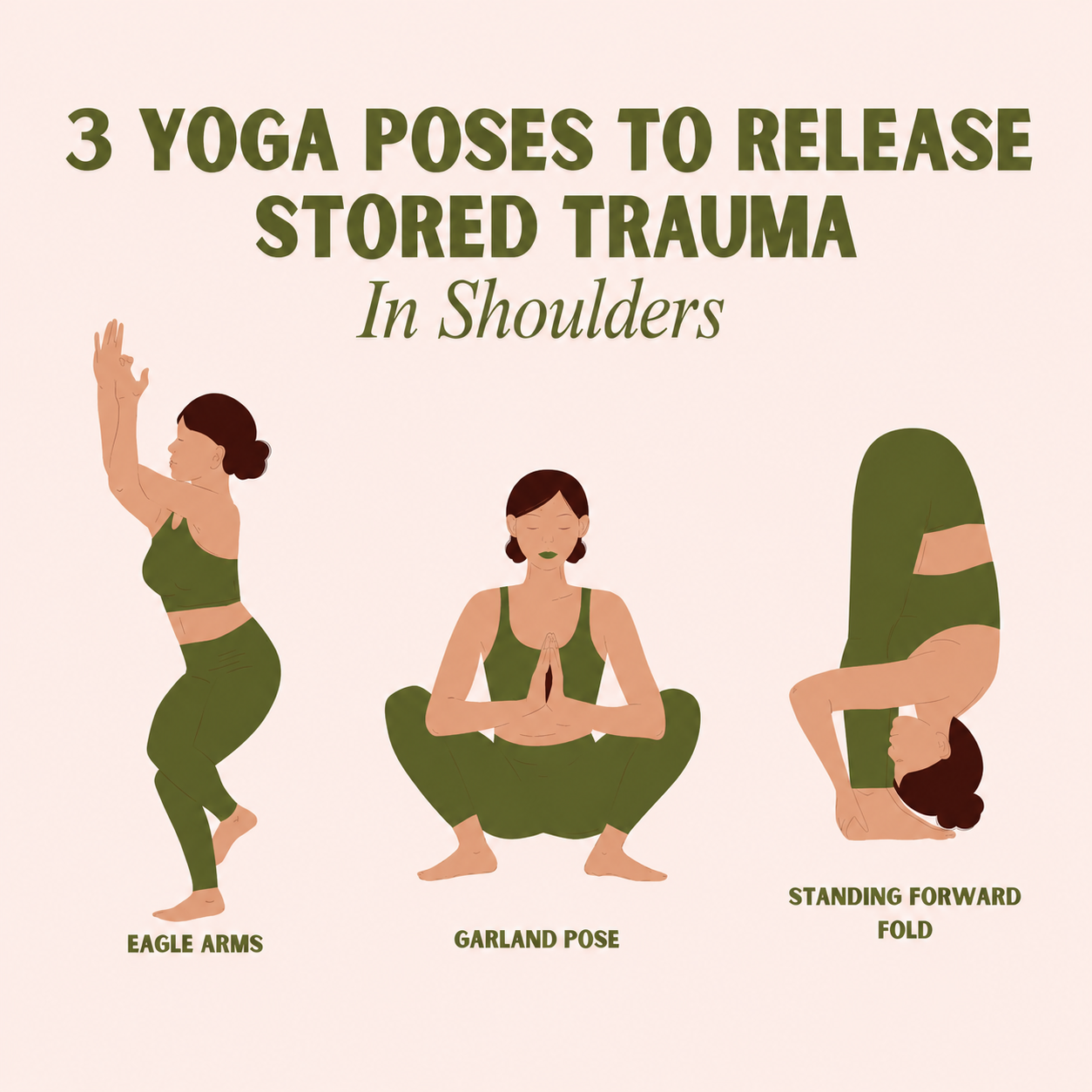
tension being a sign of “stored trauma”
emotional release as trauma “leaving the body”
certain areas of the body holding specific experiences
These ideas can feel intuitive, and at times meaningful. But the science behind them is less clear.
What does the research say?
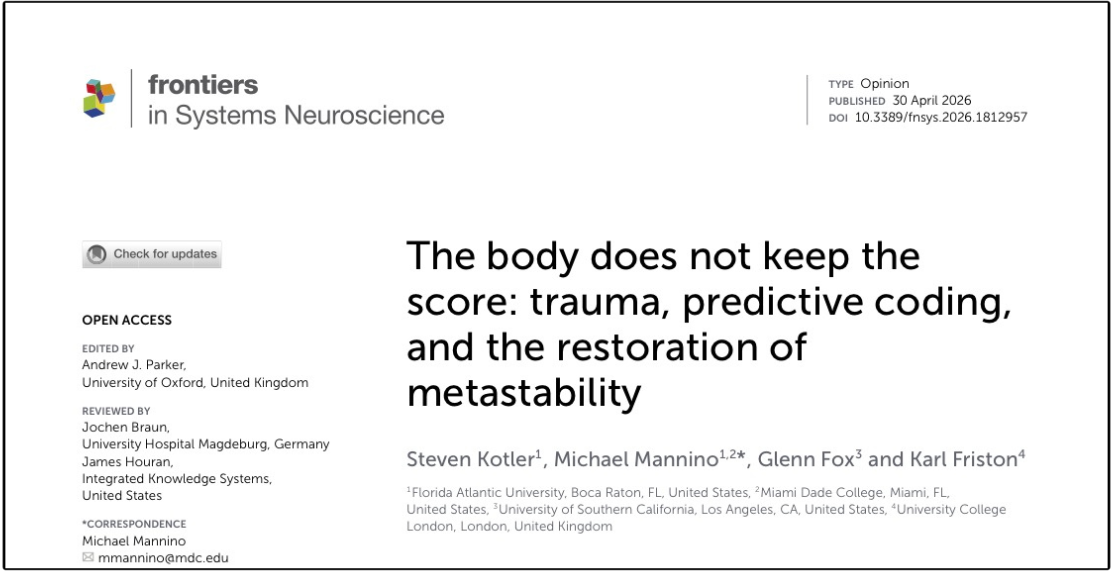
A recent paper by Steven Kotler and colleagues proposes a different framework (Kotler et al. 2026).
Rather than trauma being stored in tissues, the authors suggest that:
Trauma is better understood as patterns of prediction and response within the brain and body system.
This is based on a model called predictive processing, where the brain is constantly:
making predictions about the world
comparing those predictions with incoming sensory information
updating its expectations over time
After trauma, these predictions can become biased towards threat, even in relatively safe environments.
In this model, symptoms such as pain, anxiety, or hypervigilance are not evidence of something being stored in the body. They are active processes shaped by past experience and present context.
What might be happening instead?
The paper introduces the idea of metastability, which refers to the system’s ability to shift between states.
A healthy system is flexible. It can adapt, settle, and respond appropriately to changing situations.
After trauma, the system may become more rigid, more likely to default to protective responses, and less able to shift out of them.
From this perspective, the issue is not that trauma is trapped somewhere in the body. It is that the system has learned patterns that are harder to update.
Recovery, therefore, is not about releasing stored trauma. It is about expanding flexibility, updating expectations, and creating new experiences of safety.

Why this matters for yoga teachers
The language we use shapes how students understand their bodies.
If we tell students that their body is “holding trauma”, this can:
reinforce a sense of fragility
create fear around sensation or discomfort
oversimplify complex experiences
A more helpful framing might be:
Your system is doing its best to protect you, based on past experience. And it can adapt.
This keeps the tone supportive without implying that something is stuck, damaged, or in need of release.
A balanced view of the book
It is important to acknowledge the value of The Body Keeps the Score.
The book helped bring trauma into mainstream awareness. It emphasised that experiences matter, that the body and mind are not separate, and that healing can involve more than talking.
These contributions remain important.
At the same time, newer models suggest we should be cautious about taking the central metaphor too literally. The body does not appear to store trauma in tissues in the way the phrase might suggest.
Practical takeaways
As yoga teachers, we do not need to abandon trauma-informed approaches. We can refine them.
We can move away from language about releasing stored trauma, and towards language that emphasises adaptability and learning.
We can normalise a wide range of experiences in practice, without assigning them a specific meaning.
We can focus on helping students build confidence, tolerance, and flexibility, both physically and psychologically.
And perhaps most importantly, we can remind students that their bodies are not broken. They are responsive, adaptive, and capable of change.
Takeaway
The body may not “keep the score” in a literal sense.
But it does reflect our past experiences through how we predict, respond, and adapt.
And those patterns are not fixed.
References:
Kotler, S., Mannino, M., Fox, G., & Friston, K. (2026). The body does not keep the score: trauma, predictive coding, and the restoration of metastability. Frontiers in Systems Neuroscience, 20, 1812957.
Van der Kolk, B. (2014). The Body Keeps the Score: Brain, Mind, and Body in the Healing of Trauma. Penguin Books.
Clark, A. (2013). Whatever next? Predictive brains, situated agents, and the future of cognitive science. Behavioral and Brain Sciences, 36(3), 181–204.
Seth, A. K. (2021). Being you: A new science of consciousness. Faber & Faber.