One of the most interesting questions that came up during my recent free training was this:
“Can strength training actually improve flexibility?”
For many people, strength training and flexibility training are seen as complete opposites. Yoga and stretching are often associated with mobility and freedom of movement, while strength training is sometimes viewed as something that creates stiffness or “tight muscles”.
But when we look more closely at the research, the picture becomes far more interesting.
In many cases, strength training can improve flexibility surprisingly well, sometimes comparably to stretching interventions (Afonso et al. 2021).
This challenges another deeply rooted assumption in movement culture, the idea that stretching is the only path to becoming more flexible.
What do we mean by flexibility?
Before exploring the research, it helps to clarify what we actually mean by flexibility.
Flexibility is usually defined as the ability to move a joint through a range of motion. Traditionally, stretching has been viewed as the primary way to increase that range.
However, flexibility is not determined by muscles alone.
Range of movement is influenced by many interacting factors, including:
• nervous system sensitivity
• stretch tolerance
• strength
• motor control
• previous experiences
• perceived safety
• joint structure
• connective tissue properties
This is important because it means improving flexibility may not always require physically “lengthening” tissues in a dramatic way.
Instead, the body may become more comfortable, confident, and tolerant within certain ranges of movement.
What does the research say?
Research over the past decade has repeatedly shown that resistance training can improve flexibility, even without dedicated stretching.
A large systematic review by Afonso et al. (2021) found that strength training was often as effective as stretching interventions for improving range of motion.
This may sound surprising at first, but when we think about movement more broadly, it begins to make sense.
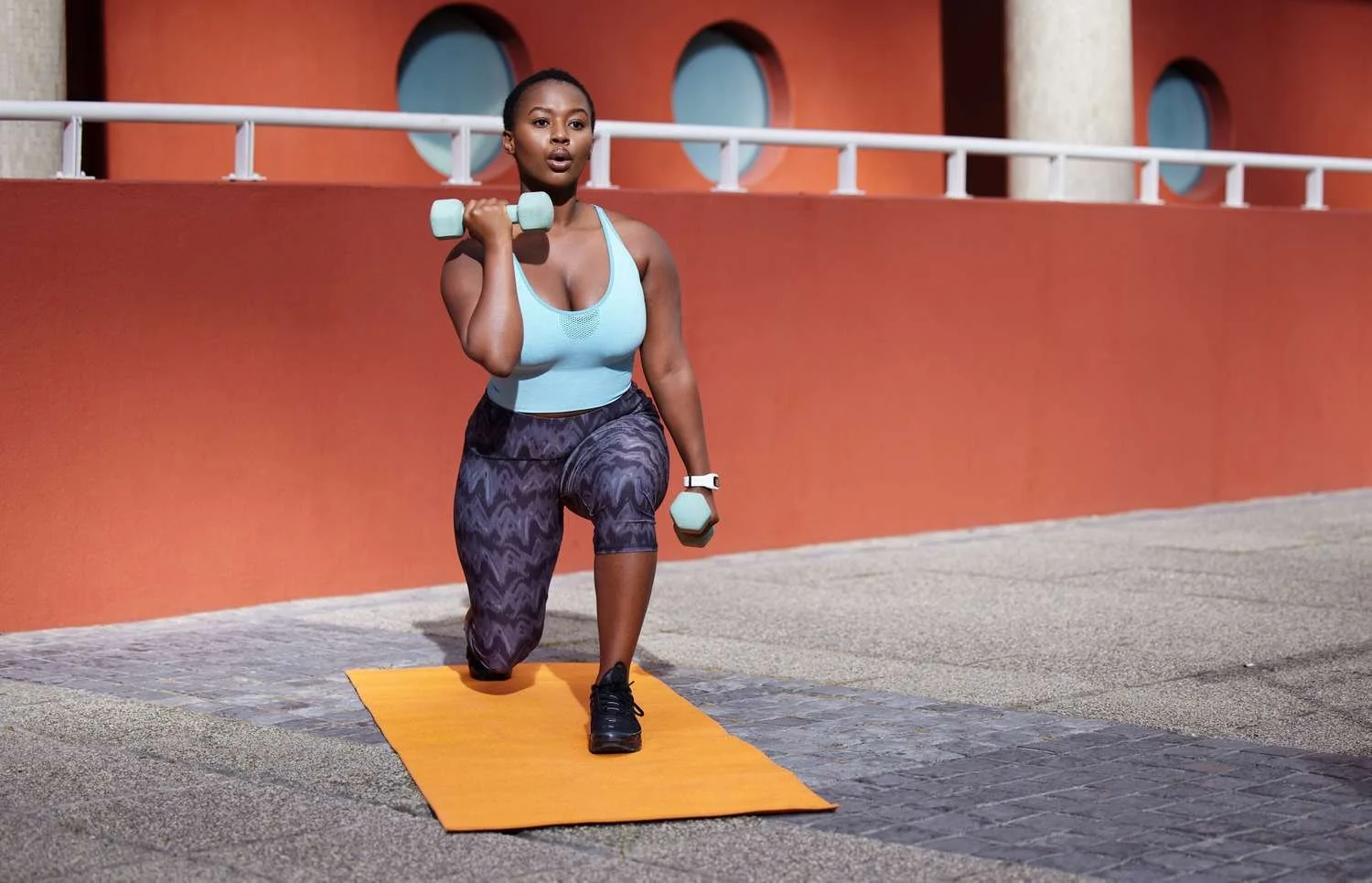
Strength training often involves moving joints through meaningful ranges under load. Over time, this may help the nervous system become more tolerant and confident within those positions.
Strength training may also improve:
• motor control
• coordination
• load tolerance
• proprioception
• confidence at end range
All of these factors may contribute to improved mobility and flexibility.
Importantly, this does not necessarily mean muscles are permanently “lengthening” in a dramatic structural sense. As we discussed during the training, many flexibility changes appear to involve altered sensation and stretch tolerance rather than large physical changes in tissue length alone (Weppler & Magnusson 2010).
Why strength sometimes reduces feelings of tightness
This idea also helps explain why some students report feeling less stiff after beginning strength training.
If the nervous system perceives greater support, control, and capacity around a joint, it may reduce protective muscular tension or guarding.
This does not mean strength training magically “switches off” tightness. Human movement and sensation are always more complex than that.
However, for some people, developing strength can create a greater sense of ease within movement.
This is particularly relevant for students who constantly stretch but still feel restricted afterwards.
In some cases, the missing ingredient may not be more passive flexibility work, but rather improved strength and confidence within the ranges they already have.

Does this mean stretching is unnecessary?
Not at all.
Stretching can still be extremely valuable. Many people find stretching relaxing, enjoyable, calming, and psychologically beneficial. Stretching may also help expose people to ranges they do not regularly explore in daily life.
The important point is simply that stretching is not the only option.
The conversation becomes much more useful when we move away from: “Which method is best?”
and instead ask: “What does this particular student need right now?”
Some students may genuinely benefit from more passive stretching. Others may benefit more from progressive loading and strength work. Many will likely benefit from a combination of both.
Why this matters for yoga teachers
This conversation matters because yoga teachers often work with students who feel intimidated by strength training or assume it will make them “tight”.
At the same time, many yoga students spend years pursuing flexibility while struggling with persistent sensations of stiffness, instability, or discomfort.
Understanding that strength training can support mobility allows for a far more balanced conversation around movement.
Strength and flexibility are not opposites.
In reality, strength may help students feel more supported and capable within their available range of movement. This can be particularly valuable for hypermobile students or students who frequently feel unstable at end range.
It also helps shift the conversation away from endlessly trying to “open” or “release” the body. Sometimes students do not need more range. Sometimes they need more confidence, control, and capacity within the range they already possess.

Practical takeaways
Strength training can improve flexibility and range of motion, sometimes comparably to stretching interventions.
Flexibility is influenced by far more than muscle length alone. The nervous system, strength, motor control, and stretch tolerance all play important roles.
Strength training may help reduce feelings of stiffness by improving support, confidence, and load tolerance around joints.
Stretching is still valuable and enjoyable for many students, but it is not the only pathway to improved mobility.
Strength and flexibility are not opposites. In many cases, they may support one another.

References:
Afonso, J., Ramirez-Campillo, R., Moscão, J., Rocha, T., Zacca, R., Martins, A., Mil-Homens, P., & Clemente, F. M. (2021). Strength training versus stretching for improving range of motion: A systematic review and meta-analysis. Healthcare, 9(4), 427.
Magnusson, S. P., Simonsen, E. B., Aagaard, P., Dyhre-Poulsen, P., McHugh, M. P., & Kjaer, M. (1996). Mechanical and physiological responses to stretching with and without preisometric contraction in human skeletal muscle. Archives of Physical Medicine and Rehabilitation, 77(4), 373–378.
Weppler, C. H., & Magnusson, S. P. (2010). Increasing muscle extensibility: A matter of increasing length or modifying sensation? Physical Therapy, 90(3), 438–449.