Chaturanga Dandasana is one of the most recognisable postures in modern yoga. Often included as part of Sun Salutations, it is frequently taught as a transition rather than a pose in its own right.
Yet Chaturanga is also one of the most physically demanding movements found in many yoga classes. It requires upper body strength, shoulder stability, trunk control and coordination, all while supporting a large proportion of the body's weight through the hands.
For many students, this combination can feel overwhelming. The good news is that Chaturanga is highly adaptable.
By adjusting the amount of loading or support involved, we can help students explore the same movement pattern while matching the challenge to their current capacity.
What is Chaturanga asking for?
Rather than thinking of Chaturanga as a fixed shape, it can be helpful to break it down into its main components:
● Supporting a large proportion of the body's weight through the hands
● Maintaining a relatively neutral trunk
● Controlling the lowering phase with strength and stability
● Maintaining shoulder stability
● Coordinating several actions at once
Each of these demands can be scaled up or down depending on the student.
What might be happening instead?
When students struggle with Chaturanga, it is easy to assume they simply need stronger arms.
More often, the reasons include:
● Upper body strength
● Confidence bearing weight through the hands
● Shoulder stability
● Coordination of multiple actions
● Wrist or shoulder discomfort
● Fatigue
This is where thoughtful variation becomes invaluable.
Six ways to teach Chaturanga:
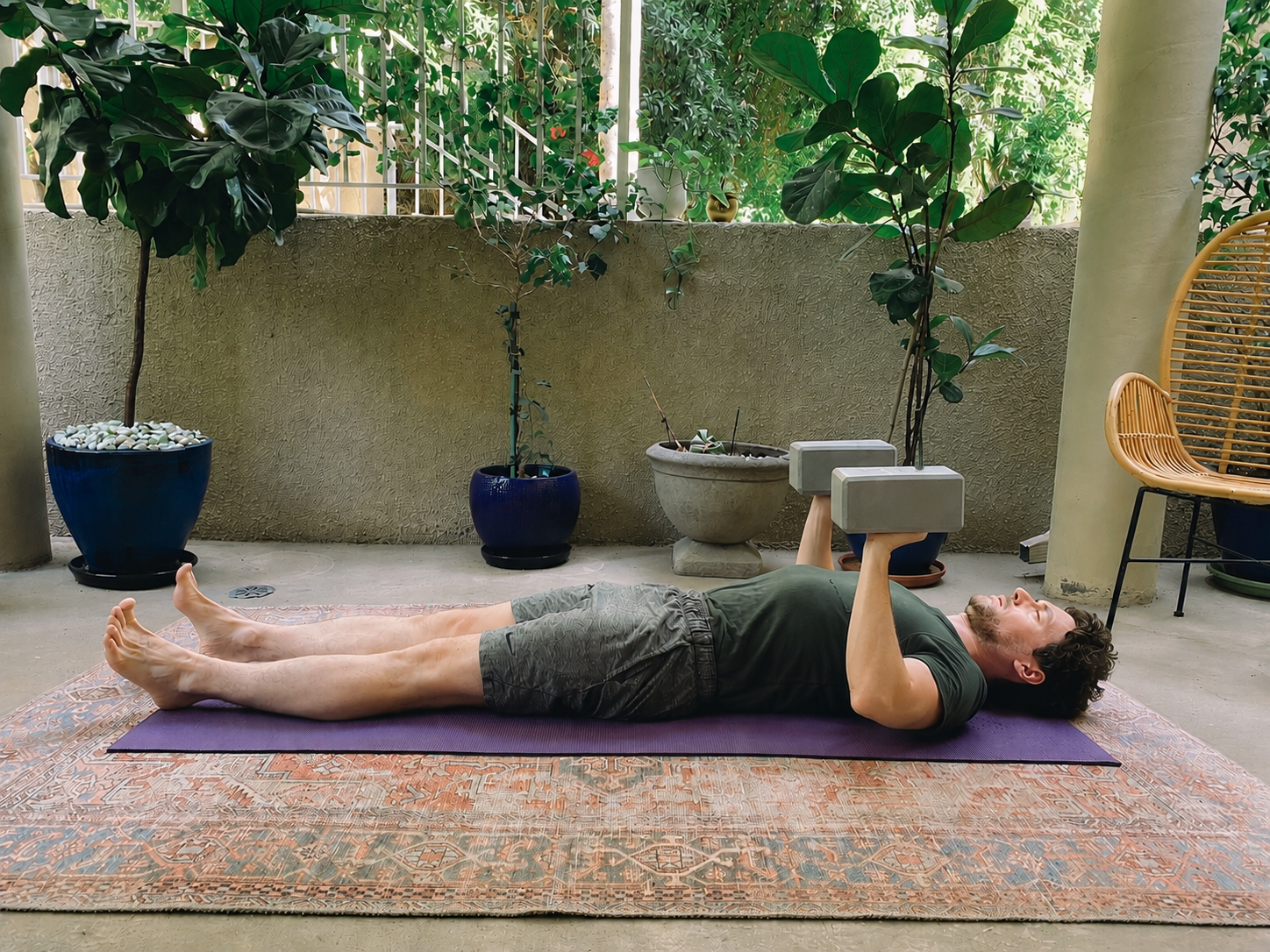
1. Supine Chaturanga
This is the most accessible version because it removes the need to support your own body weight.
● Lying on the back allows students to explore the arm movement without supporting themselves.
● Holding blocks encourages active wrist positioning throughout the movement.
● Ideal for introducing the movement pattern or for students who cannot comfortably bear weight through their hands.
This variation allows students to become familiar with the movement before supporting their own body weight.
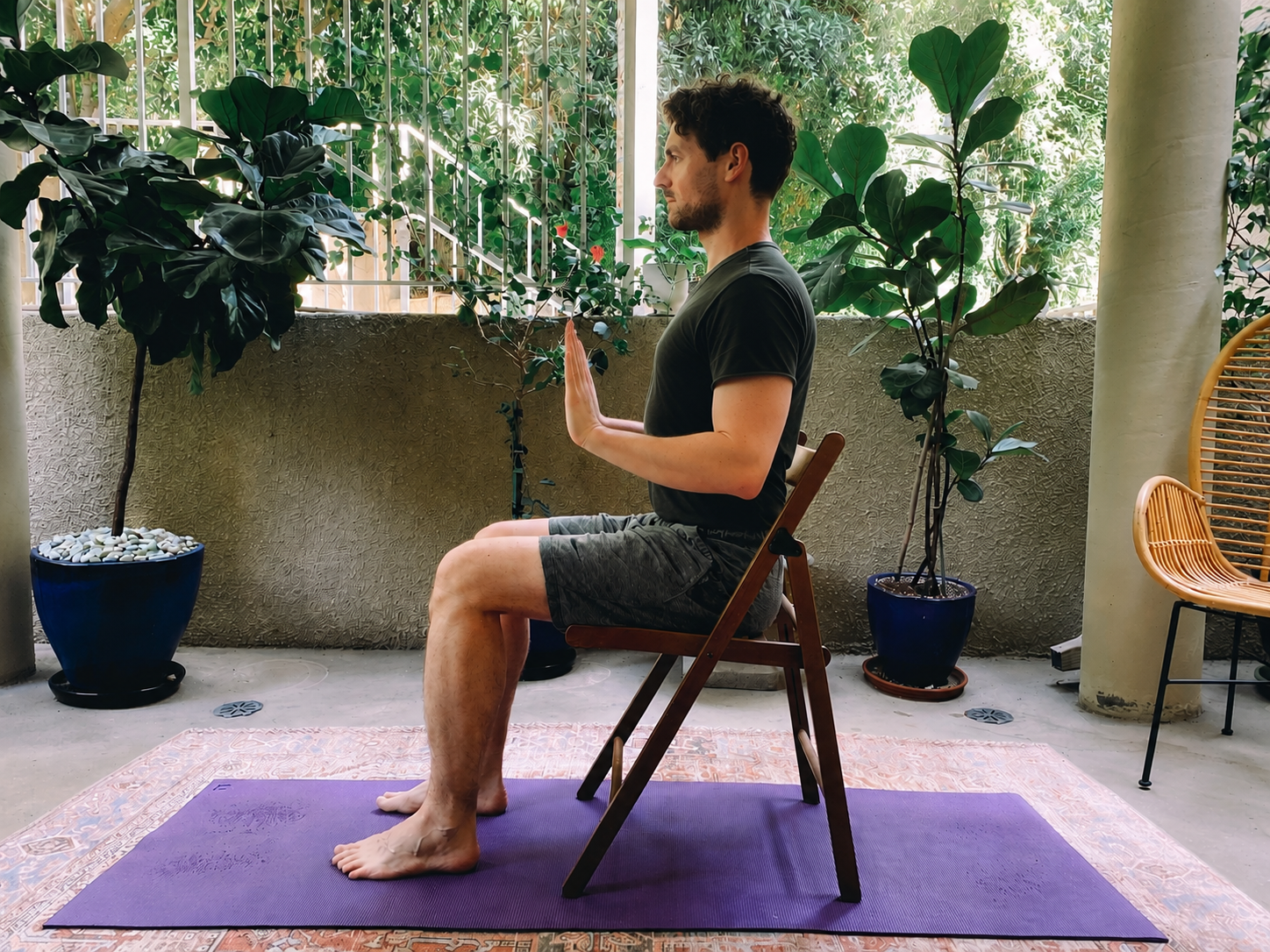
2. Chair Chaturanga
Here, the chair removes the demands of weight-bearing while allowing students to experience many of the actions of the upper body.
● Students can practise pressing through the hands while bending the elbows with control.
● The shoulders and trunk remain active without loading the wrists.
● Particularly useful for chair yoga, rehabilitation or students with wrist discomfort.
This allows students to rehearse the mechanics before introducing upper body loading.
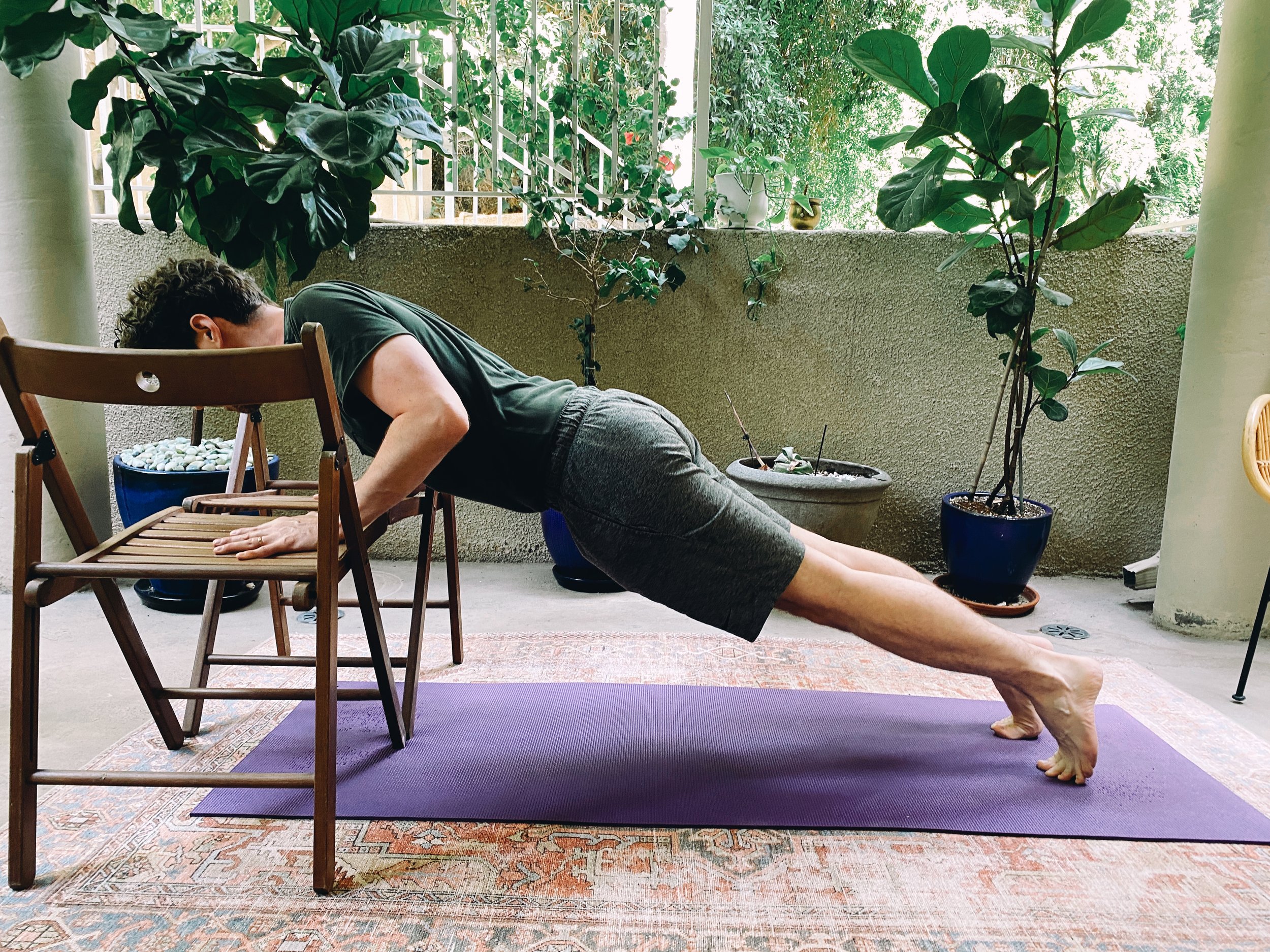
3. Incline Chaturanga
Raising the hands onto a chair, bench or kitchen countertop reduces the load placed on the upper limbs.
● Less loading through the wrists and shoulders.
● Easier to maintain control throughout the lowering phase.
● Excellent for developing strength while maintaining confidence.
For many students, this is one of the most practical stepping stones towards the traditional pose.
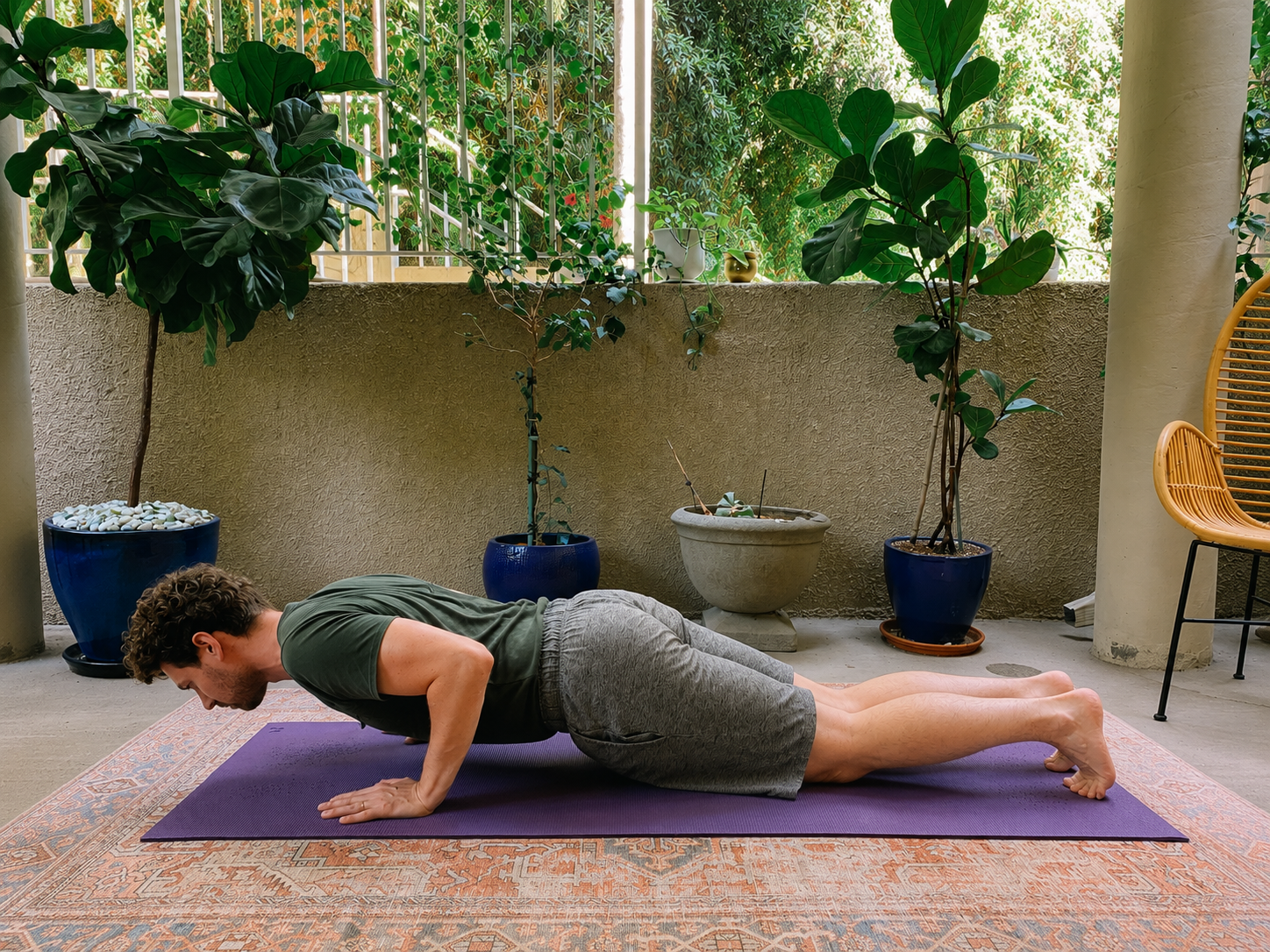
4. Knee-supported Chaturanga
Lowering the knees reduces the overall loading while preserving the overall movement pattern.
● The trunk, shoulders and arms continue to work together.
● Students can focus on controlling the descent rather than simply getting to the floor.
● A useful progression for developing strength and endurance.
This variation maintains many of the qualities of the traditional pose while making the overall task more manageable.
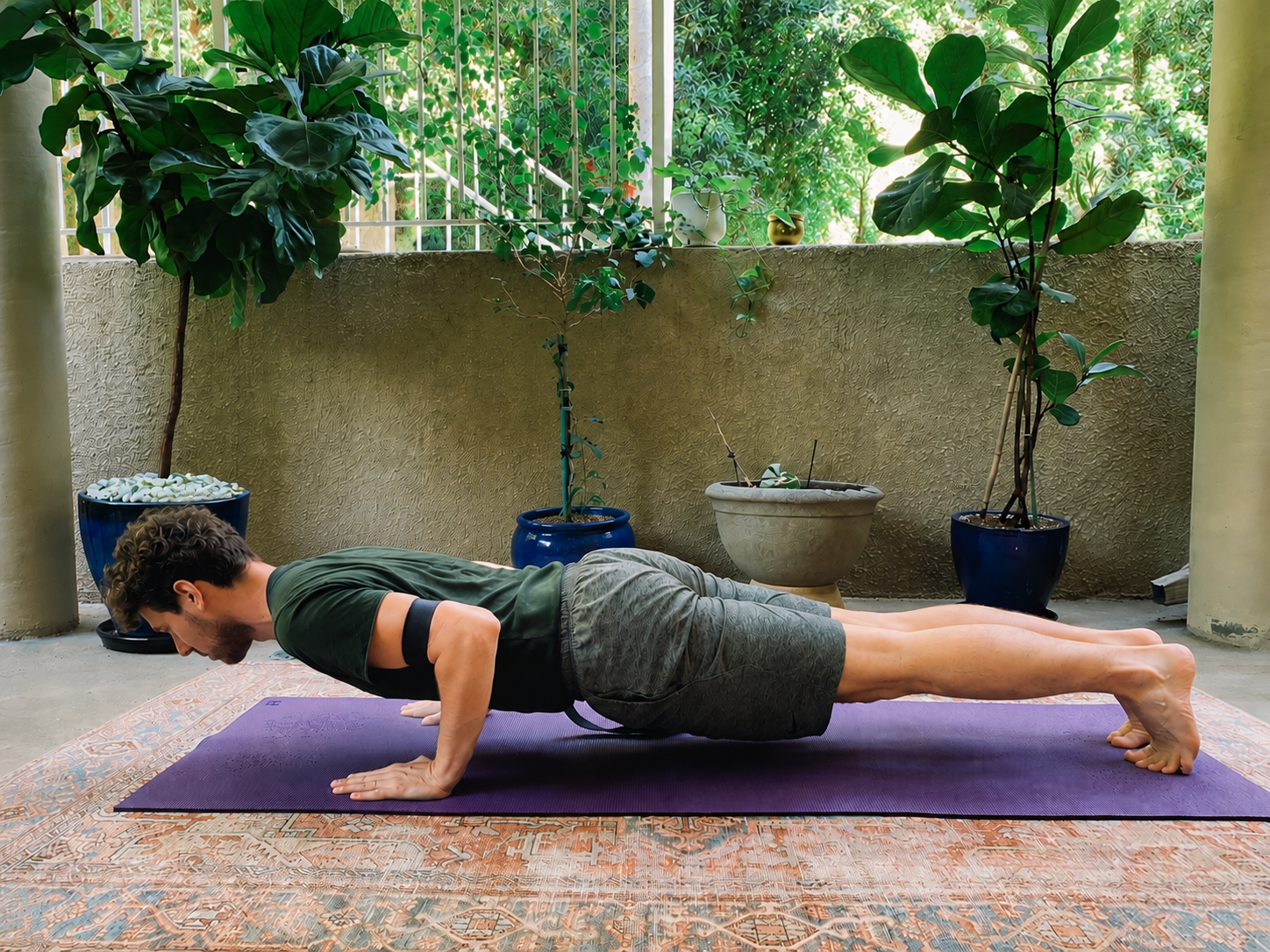
5. Chaturanga with a strap
A looped yoga strap around the upper arms provides gentle feedback throughout the lowering phase.
● The strap helps students experience the relationship between the upper arms and torso.
● It can improve confidence and control during the movement.
● Useful for students refining the pose rather than simply building strength.
The strap doesn't do the work for the student, but it provides valuable feedback as they move.
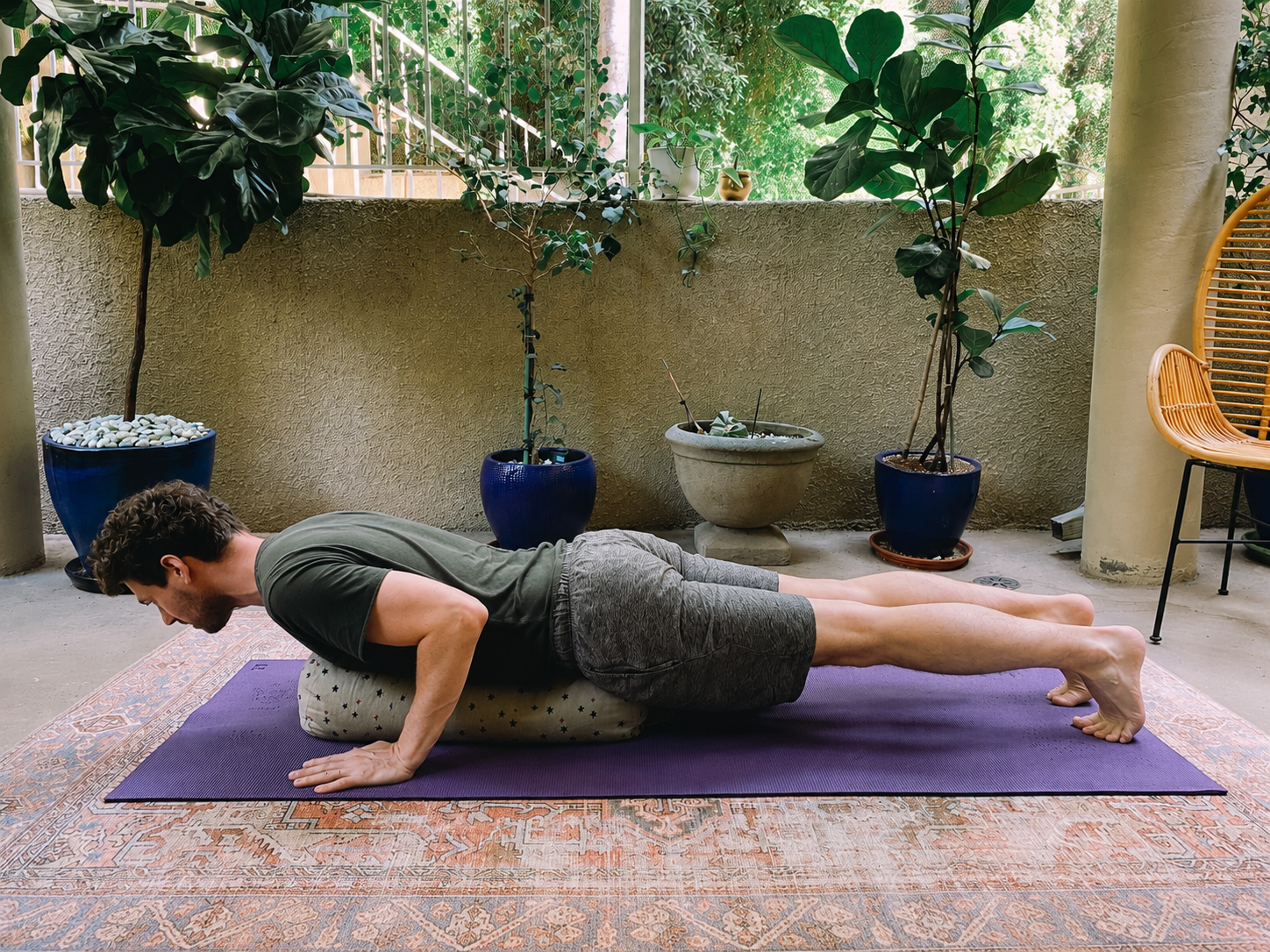
6. Chaturanga with a bolster
This variation is ideal for students who are ready to practise the traditional pose but would benefit from a little extra support.
● Position a bolster beneath the chest so it gently supports the body at the lowest point of the movement.
● Students continue to support almost all of their own weight while gaining reassurance from knowing the bolster is there.
● The bolster encourages a slow, controlled descent and can help build confidence in the transition.
For many students, this is an excellent stepping stone before practising Chaturanga without support.
Why this matters for yoga teachers
Teaching only one version of Chaturanga can unintentionally exclude many students.
By offering progressions, we can:
● Match the challenge to the individual.
● Build confidence alongside strength.
● Encourage success rather than frustration.
● Help students develop capacity over time.
Accessibility is not about making yoga easier. It is about making it appropriate.
Practical takeaways
● Think of Chaturanga as a progression, not a pass-or-fail pose.
● Reduce one demand at a time by adjusting the amount of loading or support involved.
● Use props to provide feedback as well as support.
● Encourage students to build capacity gradually.
● Choose the variation that best matches the individual in front of you.