One of the most common questions I hear surrounding the topic of hypermobility is whether hypermobile students should avoid yin yoga. I can understand why some teachers ask this. Over the last few years, I’ve heard increasing concern about hypermobile people spending lots of time in passive stretching postures, particularly when they already have access to large ranges of movement. From there, it isn’t a huge leap to arrive at a much simpler message: if you’re hypermobile, you shouldn’t do yin yoga.
I think there is something worth paying attention to within that concern. I’m just not convinced that the conclusion tells the whole story.
The problem with blanket advice:
One of the difficulties with talking about hypermobility is that we're describing a characteristic that can show up very differently from one person to another. Some hypermobile people experience pain, fatigue, feelings of instability or recurrent injuries. Others move comfortably through large ranges throughout their lives without experiencing any significant problems (Castori et al., 2017; Tinkle et al., 2017).
So, when someone asks me whether a hypermobile student should practise yin yoga, I find myself wanting to know much more about the person before answering. What does their hypermobility actually look and feel like? Are they experiencing pain or discomfort? What do they enjoy about yin yoga? What else are they doing with their body during the week?
This is where broad rules start to become less useful. Two students could both be described as hypermobile and yet have very different bodies, experiences and reasons for practising yoga. It seems unlikely that exactly the same advice would serve them equally well.
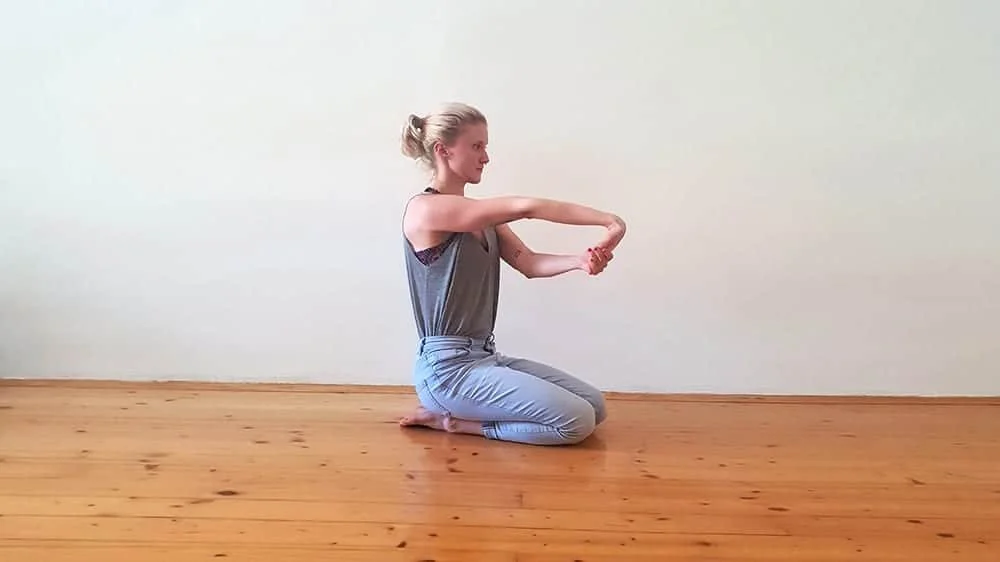
Why are teachers concerned about yin yoga?
The concern itself is worth exploring. Some hypermobile students already spend considerable time towards the end of their available range of movement. If someone has lots of passive flexibility, continually pursuing greater range may not be particularly useful. Depending on the person, developing more strength, control and confidence within the range they already have may offer something that their current movement habits are missing.
This is one reason I've been pleased to see strength becoming a bigger part of conversations around hypermobility. Physiotherapy approaches for symptomatic hypermobility have historically included strengthening and exercises aimed at improving movement control (Palmer et al., 2014). For yoga teachers, this might encourage us to think beyond simply helping a flexible student become even more flexible.
But there is quite a big jump between saying, "This student might benefit from more strength and control," and saying, "This student should stop passive stretching."
I don't think we should make that jump automatically.
What does someone get from yin yoga?
Perhaps part of the problem is that we sometimes talk about yoga practices as though their value can be reduced to a single physical adaptation. If we think of yin yoga primarily as a way of increasing flexibility, then asking whether someone who is already very flexible needs more of it makes perfect sense.
But is that why everyone goes to a yin class?
A student might enjoy the opportunity to slow down after a busy day. They might value the breathing, mindfulness or meditative aspects of the practice. They might simply enjoy being still for a while. Perhaps yin yoga is one of the few places in their week where they aren't trying to achieve anything physically.
None of these experiences depends on increasing joint range of movement.
This is something I think yoga teachers sometimes underestimate when discussing whether a particular practice is "good" or "bad" for someone. We understandably focus on what a pose might be doing to muscles, joints and connective tissues, but our students aren't coming to class as collections of tissues. They have reasons for practising that may have very little to do with changing their flexibility.
For a hypermobile student who loves yin yoga, feels comfortable during the practice and feels good afterwards, I'd want a compelling reason before telling them that they shouldn't do it.
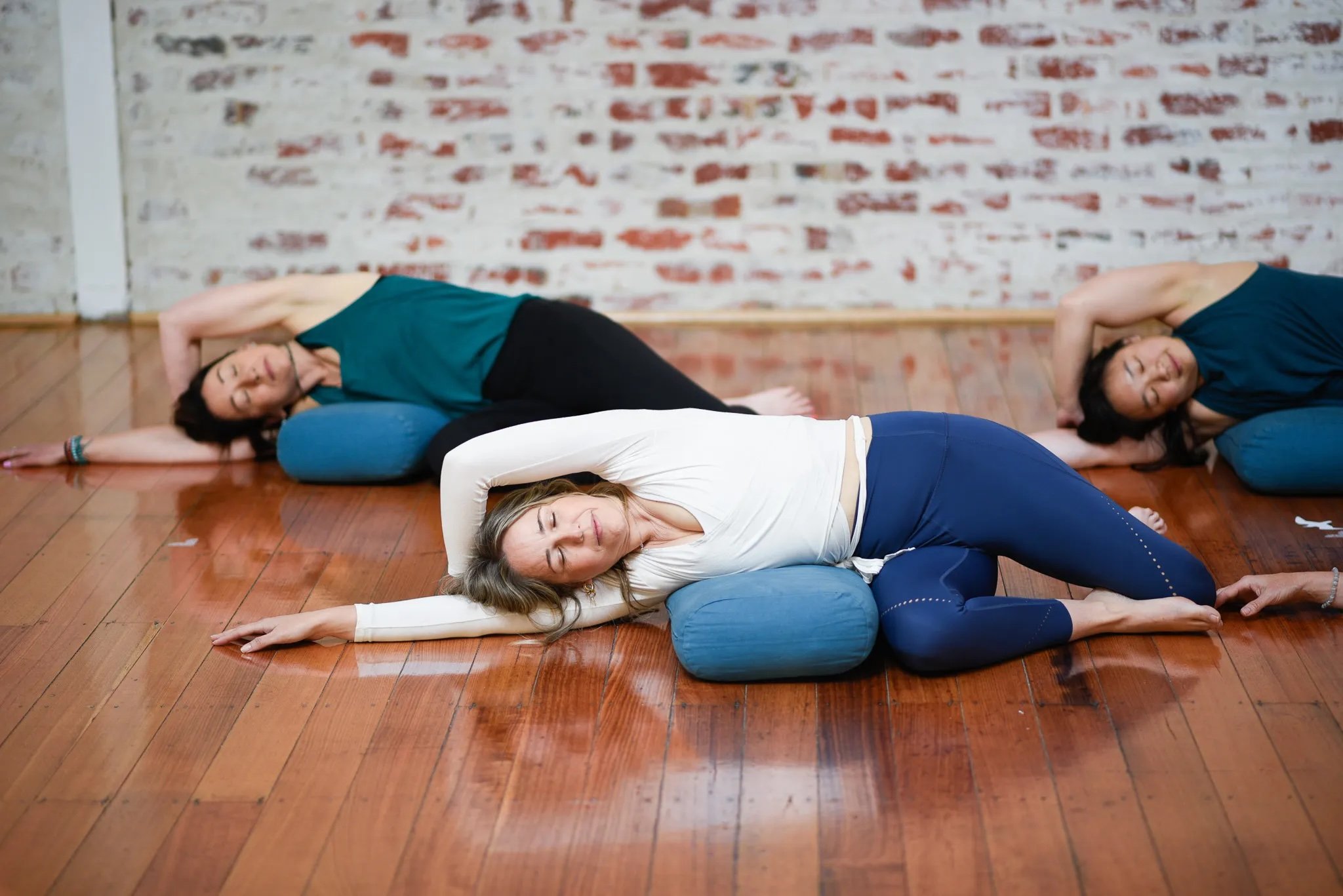
Looking at the bigger picture:
I've started to think that a more interesting question is: What other forms of movement are part of this person’s life?
Imagine a hypermobile student who goes to a yin class once or twice a week. They also walk regularly, lift weights, perhaps attend a more active yoga class and generally expose their body to a variety of movements and loads. Now compare them with someone who spends most of their movement time pursuing ever-deeper stretches because they believe greater flexibility is always better.
Both students practise yin yoga. Both are hypermobile. But I'm not sure that tells us very much about what either of them needs.
This shifts our attention away from trying to decide whether a particular pose or style of yoga is universally appropriate and towards looking at the broader context. How much variety does someone have in their movement? Are they always pursuing more range, or are they also exploring strength and control? Are there particular positions that consistently leave them uncomfortable? How do they actually feel during and after the practice?
These are questions yoga teachers can work with.

From rules to curiosity:
I understand the appeal of simple rules, particularly when we're teaching students with conditions or characteristics that we don't feel completely confident about. "Hypermobile students shouldn't do yin yoga" gives us a clear answer. We know what to recommend and what to avoid.
The difficulty is that human bodies rarely cooperate with rules that tidy.
Hypermobile students aren't automatically fragile. Yin yoga isn't automatically harmful. Strength training isn't automatically the answer. Some hypermobile students may decide that reducing the amount of passive stretching they do makes them feel considerably better. Others may continue to enjoy yin yoga without any obvious problems.
Perhaps our role as teachers isn't to decide whether yin yoga is good or bad for hypermobile people. We can instead become more curious about the person in front of us. What are they experiencing? What do they want from their practice? What makes them feel better or worse? What other ways are they moving their body?
The more I teach about hypermobility, the less interested I become in universal rules about what hypermobile students should and shouldn't do. I'd much rather help teachers become confident enough to ask better questions.
Perhaps whether a hypermobile student should practise yin yoga isn't the most interesting question after all.
References:
Castori, M., Tinkle, B., Levy, H., Grahame, R., Malfait, F., & Hakim, A. (2017). A framework for the classification of joint hypermobility and related conditions. American Journal of Medical Genetics Part C: Seminars in Medical Genetics, 175(1), 148–157.
Palmer, S., Cramp, F., Lewis, R., Muhammad, S., & Clark, E. (2014). Diagnosis, management and assessment of adults with joint hypermobility syndrome: A UK-wide survey of physiotherapy practice. Musculoskeletal Care, 13(2), 101–111.
Tinkle, B., Castori, M., Berglund, B., Cohen, H., Grahame, R., Kazkaz, H., & Levy, H. (2017). Hypermobile Ehlers-Danlos syndrome and hypermobility spectrum disorders: Clinical description and natural history. American Journal of Medical Genetics Part C: Seminars in Medical Genetics, 175(1), 48–69.