I imagine that you’ve heard the phrase “wear and tear” used to describe the process involved in osteoarthritis. But did you know that this crude “bone-on-bone” model is being completely challenged and redefined by research that has been emerging over the past couple of decades? Scroll on to find out more, including why “wear and repair” might be a more appropriate phrase for describing the way our bodies respond to physical stress.
Osteoarthritis is no longer viewed as a quintessential degenerative disease resulting from exposure to average bodily wear and tear, but rather as a multifactorial disorder in which low-grade, chronic inflammation has a central role (Tramś et al 2022). Inflammation weakens the cartilage and its ability to withstand stress, which can in turn lead to joint pain and reduced function.
Understanding Osteoarthritis
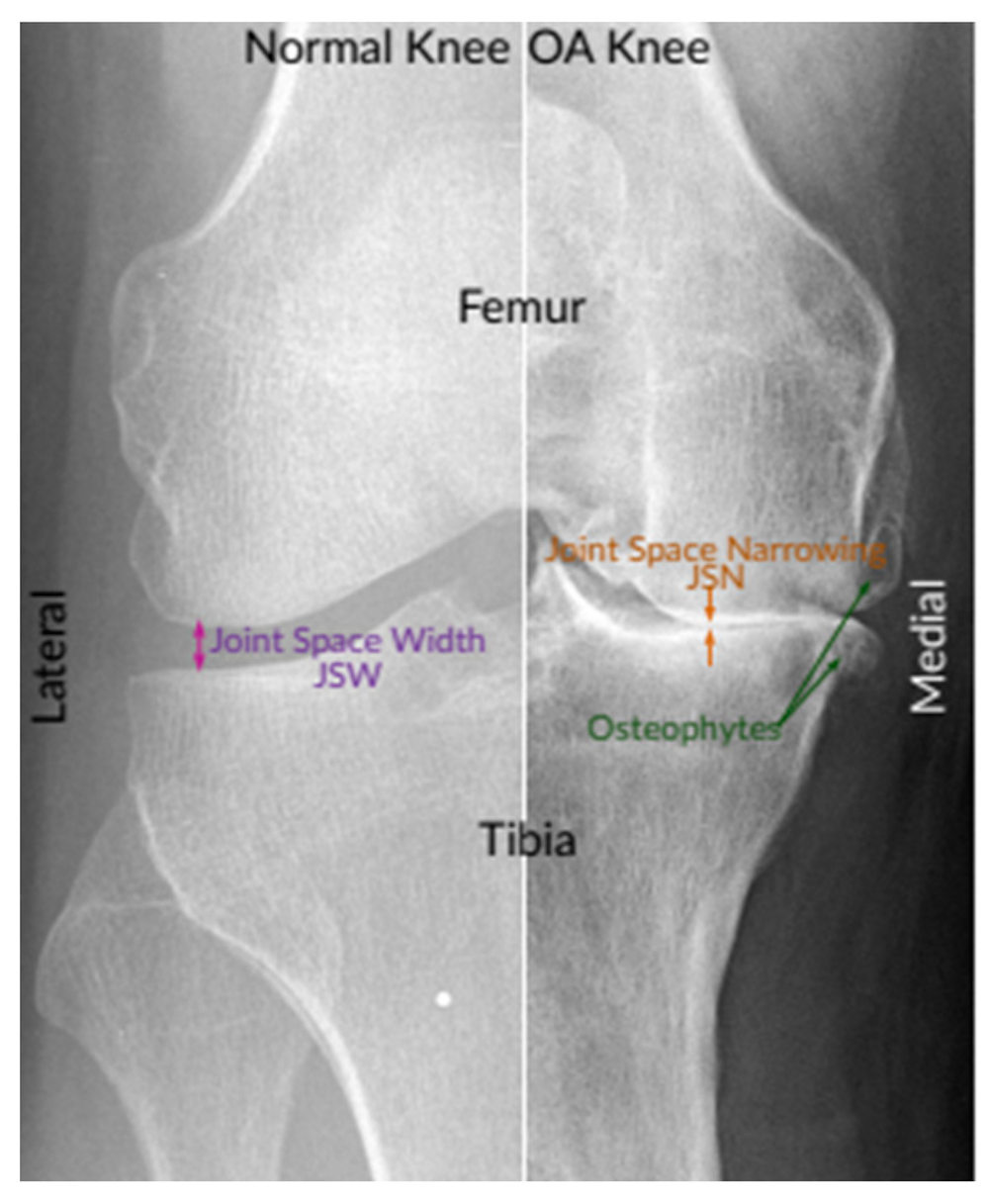
Currently, x-rays are often used to confirm the diagnosis of osteoarthritis. Three signs that clinicians look for on x-ray are joint space narrowing, formation of osteophytes (bony lumps, or bone spurs, that grow on the bones of the spine or around the joints), and joint destruction.
Clinicians are now beginning to think of these x-ray findings as normal age-related structural changes. Having these structural changes only increase the chance of experiencing pain: It does not guarantee pain. Between 19% and 40% of people with structural changes on an x-ray don’t have pain (Culvenor et al 2019).
If someone with osteoarthritis does experience pain, these structural changes are only one factor in the bigger picture. Someone can have structural changes on an x-ray and their pain can decrease over time while their x-ray looks the same.
It's important to note that people with osteoarthritis still have synovial fluid in the affected joints even though they might have these structural changes.
And things don’t have to get worse. Knee osteoarthritis is characterised by persistent rather than inexorably worsening symptoms even when the x-rays show more joint changes.
The Evidence Supports Movement
Body weight and some structural joint changes are associated with knee osteoarthritis and sometimes pain. Similar to joint changes, weight doesn’t necessarily have to change to decrease pain. Losing weight is often helpful but not entirely necessary: Exercise alone can reduce pain (Messier et al 2015). Aerobic, strengthening, aquatic and Tai Chi exercises are beneficial for improving pain and function in people with OA with benefits seen across a range of disease severities.
And here’s the big one! Being active doesn't wear out your joints! Moderate exercise may be a good treatment not only to improve joint symptoms and function, but also to improve the knee cartilage glycosaminoglycans content in patients at high risk of developing OA (Roos and Dahlberg 2005). Running does not increase symptoms or structural progression in people with knee OA (Lo et al 2018).
The same goes for yoga. There is a lot of chatter online that yoga can cause osteoarthritis but there is no evidence of this and the concept makes very little sense biomechanically or physiologically. A systematic review of 15 randomized controlled trials found that yoga practice may downregulate proinflammatory markers, suggesting it can be a supportive intervention for people with inflammatory conditions including osteoarthritis (Falkenberg, Eising & Peters, 2018).
Wear and Repair, Not Wear and Tear
A study by Ackerman et al in 2020 reported that a 12-week non-surgical knee OA management program (including exercise therapy, education, insoles, dietary advice and analgesia) can prevent total knee replacement surgery in people deemed candidates for this in 68%-74% of people with knee OA!
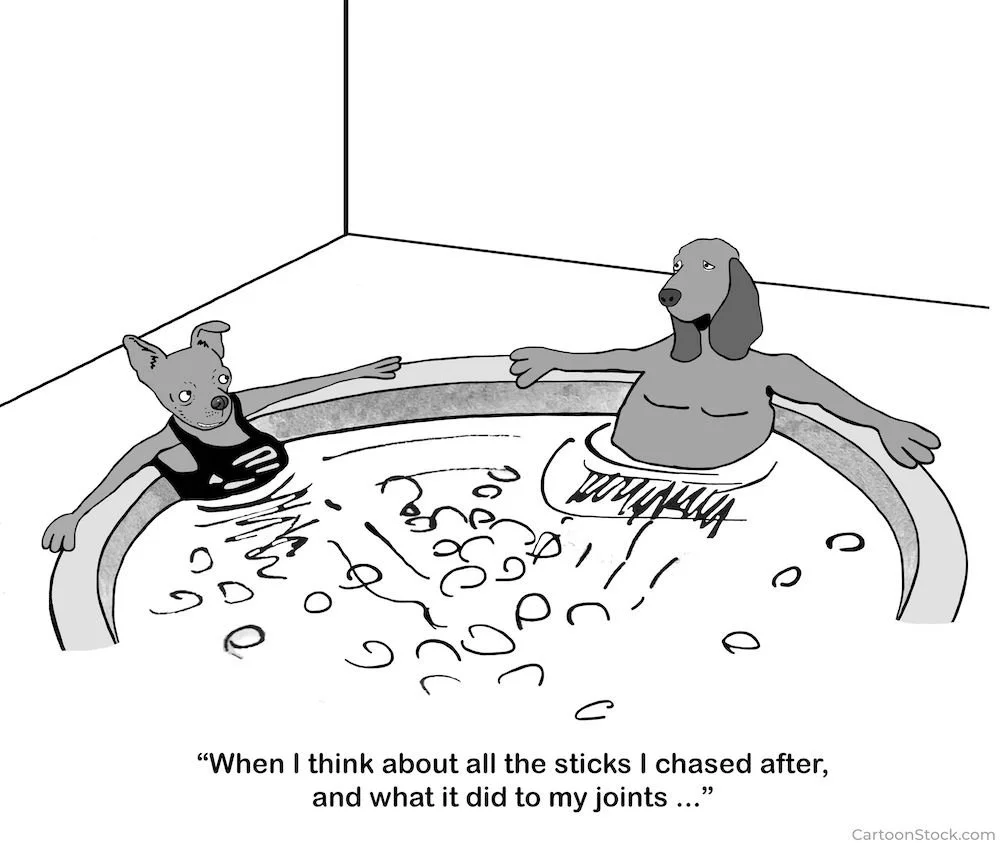
We must remember that the human body is strong and adaptable and is capable of wear and repair rather than wear and tear.
References:
Ackerman, I., Skou, S., Roos, E., Barton, C. (2020) ‘Implementing a national first-line management program for moderate-severe knee osteoarthritis in Australia: A budget impact analysis focusing on knee replacement avoidance.’ Osteoarthritis and Cartilage Open, 2, 3.
Culvenor, A., Øiestad, B., Hart, H. (2019) ‘Prevalence of knee osteoarthritis features on magnetic resonance imaging in asymptomatic uninjured adults: a systematic review and meta-analysis.’ British Journal of Sports Medicine 53, 1268-1278.
Falkenberg, R., Eising, C., & Peters, M. (2018). Yoga and Immune System Functioning: A Systematic Review of Randomized Controlled Trials. Journal of Behavioral Medicine, 41, 467–482.
Lo, G., Musa, S., Driban, J., Kriska, A., McAlindon, T., Souza, R. (2018) ‘Running does not increase symptoms or structural progression in people with knee osteoarthritis: data from the osteoarthritis initiative.’ Clinical rheumatology 37, 9, 2497–2504.
Messier, S., Mihalko, S., Legault, C., Miller, G., Nicklas, B., DeVita, P., Beavers, D., and Hunter, D. (2013) ‘Effects of intensive diet and exercise on knee joint loads, inflammation, and clinical outcomes among overweight and obese adults with knee osteoarthritis: the IDEA randomized clinical trial.’ JAMA, 310, 12, 1263–1273.
Roos, E. and Dahlberg, L. (2005) ‘Positive Effects of Moderate Exercise on Glycosaminoglycan Content in Knee Cartilage: A Four-Month, Randomized, Controlled Trial in Patients at Risk of Osteoarthritis.’ Arthritis and rheumatism 52, 3507-14.
Tramś, E., Malesa, K., Pomianowski, S., Kamiński, R. Role of Platelets in Osteoarthritis—Updated Systematic Review and Meta-Analysis on the Role of Platelet-Rich Plasma in Osteoarthritis. Cells. 2022; 11(7):1080.