I’ve been teaching yoga in some shape or form since 2009 and I’ve talked to a lot of students who have hypermobility along the way. One surprising topic that kept coming up was that many of these students often described feeling tightness in their body. In the past I had assumed that if someone had a greater than average range of movement in their joints, they couldn’t possible feel tight. (Lesson number one – never assume!)
This topic challenges one of the most deeply rooted assumptions in yoga culture, the idea that tightness automatically means tissues are physically short. Part of the answer is that the sensation of tightness is far more complex than simple muscle length.
Tightness Is a sensation
The first thing we need to realise about tightness is that it is not something we directly measure inside a muscle. It is a subjective sensation generated by the nervous system. Students may describe tightness as pulling, gripping, resistance, stiffness, or discomfort, but those sensations are influenced by many interacting factors, including stress, fatigue, previous experiences, movement history, and perceived stability.
This means that someone can have very mobile joints and still experience strong sensations of restriction or tension.
Just because tightness is a sensation, it doesn’t mean that this experience is “all in the head”. Muscles can genuinely feel tense or protective. The important point is simply that feeling tight does not always mean tissues are physically shortened.
This distinction matters because it can be easy to assume that every sensation of stiffness should be solved with more stretching. The human body is far more dynamic and responsive than that.

Why might hypermobile people feel tight?
One possible reason hypermobile students might experience persistent sensations of tightness is that their nervous system is increasing muscular activity to create a greater sense of support or control.
If joints move very easily into large ranges, the nervous system can respond by creating additional tension around those areas. This is not necessarily a sign that something is damaged or “wrong”. It may simply reflect the nervous system trying to create predictability, coordination, and stability.
Research also suggests that some hypermobile people may experience differences in proprioception (the internal ability to know where your body parts are, how they are moving, and how much force to use, all without needing to look), autonomic nervous system regulation, and sensory processing (Scheper et al. 2017; Celletti et al. 2017). In other words, the way movement, effort, balance, and bodily sensations are perceived will differ from person to person.
This does not mean hypermobile students are fragile or dysfunctional. Hypermobile people are an incredibly diverse group, and many people who fall into this category are strong, resilient, and physically capable. However, these differences may help explain why highly mobile people can still experience strong sensations of stiffness, guarding, fatigue, or instability.
This can also help explain why many hypermobile students report constantly craving stretching. Stretching can temporarily reduce sensations of tension or restriction, but the feeling often returns relatively quickly afterwards. Research increasingly suggests that improvements in flexibility are not explained solely by permanent increases in tissue length. Instead, changes in stretch tolerance and altered perception of sensation appear to play an important role (Weppler & Magnusson 2010). This helps explain why stretching can genuinely feel beneficial without necessarily producing dramatic structural changes within the tissues themselves.
The Yin Yoga conversation
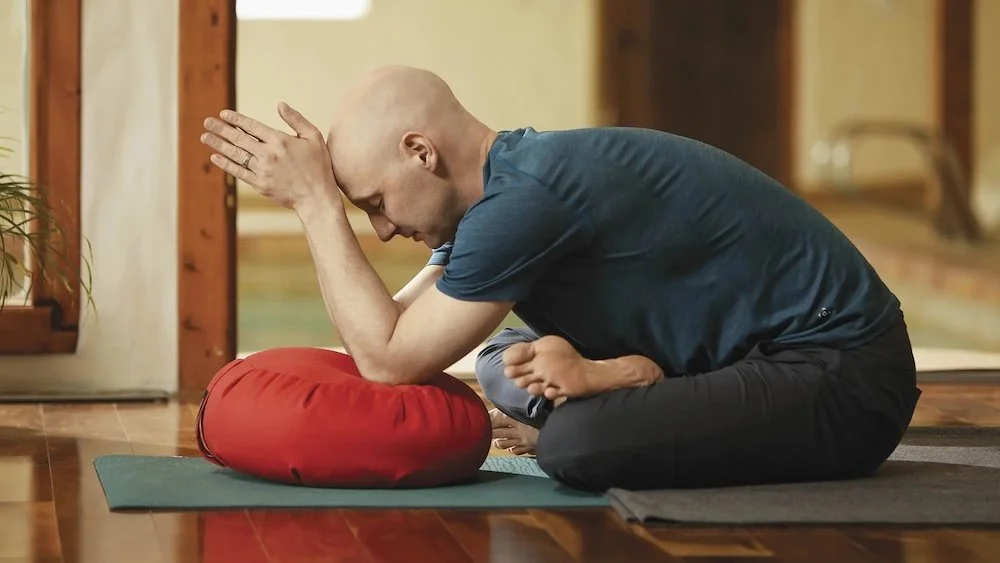
Another important topic that I get asked about all the time is around hypermobility, yin yoga and passive stretching. There is currently a growing narrative online suggesting that all hypermobile students should avoid yin yoga (or even passive stretching) completely.
Things are rarely black or white, good or bad. There’s always nuance. Passive stretching is not inherently harmful. Many hypermobile students genuinely enjoy yin yoga and find it calming, regulating, grounding, or psychologically supportive. Slow, less effortful forms of movement can absolutely have value. The more useful question is probably not “Is yin yoga bad?”, but rather “How does this fit into the bigger picture of this student’s life and movement habits?”
For example, if someone is already spending large amounts of time hanging passively into end range, constantly chasing sensation, and struggling with fatigue or instability, then adding even more end-range loading without other forms of training may not always be the most supportive approach. However, that is very different from saying hypermobile people should never practise yin yoga.
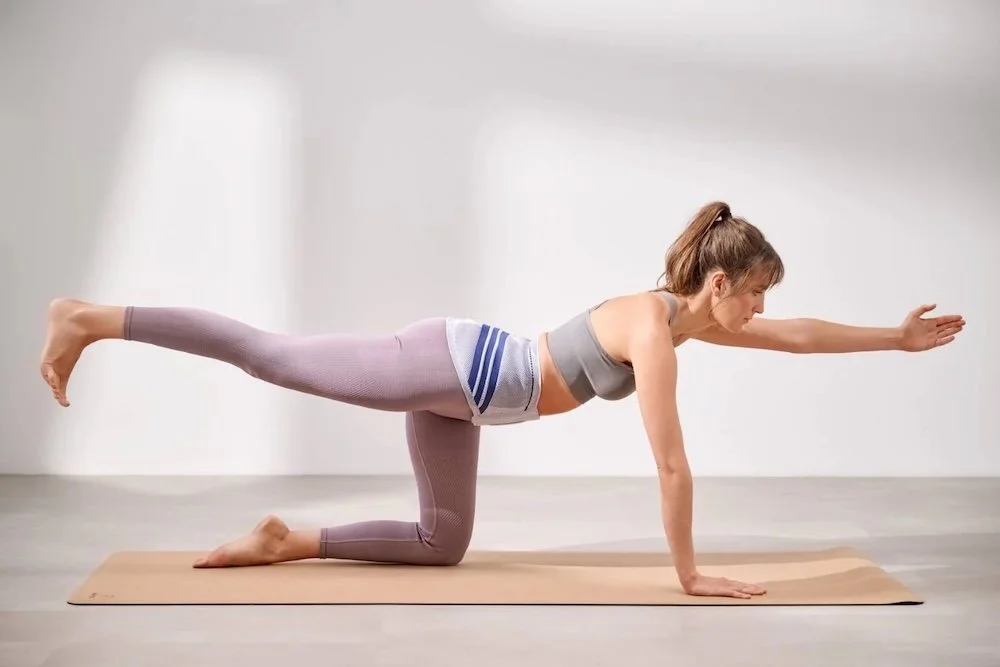
Many hypermobile students may benefit from a broader movement toolkit that includes strength training, balance work, isometrics, slower controlled movement, and load tolerance work alongside flexibility-based practices.
As yoga teachers, we do not need to frame stretching as either universally good or universally bad. A more nuanced approach is probably more helpful, one that recognises that different students may need different things at different times.
The goal does not need to be removing stretching entirely. It can simply be about increasing variety, capacity, and confidence within the ranges that already exist.
Practical takeaways
Tightness is a sensation, not a direct measurement of muscle length. Hypermobile students can absolutely experience persistent feelings of stiffness and restriction, even when they have large ranges of movement.
Stretching may help change sensation and improve tolerance to movement, but that does not necessarily mean tissues were physically short in the first place.
Yin yoga is not automatically harmful for hypermobile students. For some people it may feel supportive and enjoyable. However, many hypermobile students may also benefit from developing strength, control, and confidence within their existing range of movement.
In summary, the goal shouldn’t be about limiting someone's range of movement. It should be about helping students feel more supported and comfortable within the range they already have.
References:
Afonso, J., Ramirez-Campillo, R., Moscão, J., Rocha, T., Zacca, R., Martins, A., Mil-Homens, P., & Clemente, F. M. (2021). Strength training versus stretching for improving range of motion: A systematic review and meta-analysis. Healthcare, 9(4), 427.
Bulbena, A., Duro, J. C., Porta, M., Martín-Santos, R., Mateo, A., Molina, L., Vallejo, J., & Vilarroya, O. (1992). Clinical assessment of hypermobility of joints: Assembling criteria. Journal of Rheumatology, 19(1), 115–122.
Celletti, C., Castori, M., Morlino, S., Celletti, C., Camerota, F., & Grammatico, P. (2013). Evaluation of kinesiophobia and its correlations with fatigue and pain in joint hypermobility syndrome/Ehlers-Danlos syndrome hypermobility type. BioMed Research International, 2013, 580460.
Magnusson, S. P., Simonsen, E. B., Aagaard, P., Dyhre-Poulsen, P., McHugh, M. P., & Kjaer, M. (1996). Mechanical and physiological responses to stretching with and without preisometric contraction in human skeletal muscle. Archives of Physical Medicine and Rehabilitation, 77(4), 373–378.
Scheper, M. C., de Vries, J. E., de Vos, R., Verbunt, J., Nollet, F., & Engelbert, R. H. (2013). Generalised joint hypermobility in professional dancers: A sign of talent or vulnerability? Rheumatology, 52(4), 651–658.
Weppler, C. H., & Magnusson, S. P. (2010). Increasing muscle extensibility: A matter of increasing length or modifying sensation? Physical Therapy, 90(3), 438–449.