How I approach “subtle anatomy” as an evidence-based teacher
If you teach yoga, you’ve almost certainly taught about chakras, nadis, koshas, or bandhas, all commonly grouped together under the term subtle anatomy.
You may also have felt some tension around these topics. On one hand, they sit within a long-standing yogic philosophical tradition. On the other, they are often taught as if they were literal anatomical structures, something that does not align with modern anatomy or physiology.
Rather than dismissing subtle anatomy or presenting it as biological fact, I find it more useful to clarify what these frameworks were actually designed to do.
Where do these concepts actually come from?
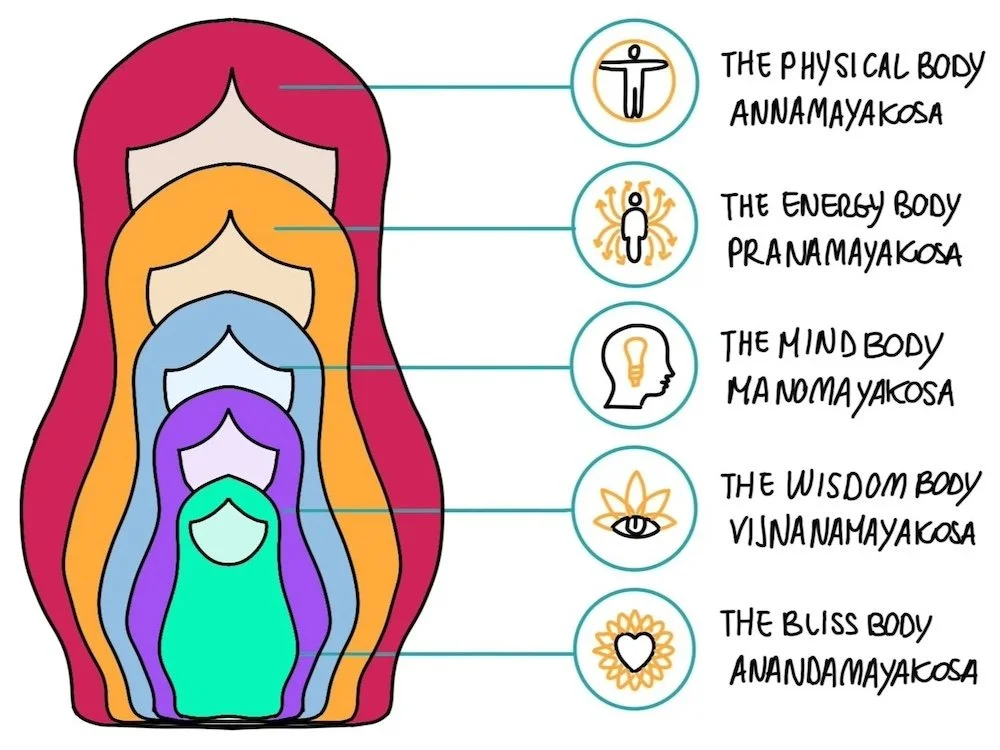
When we talk about subtle anatomy in yoga, we are usually referring to chakras, nadis, koshas, vayus, and bandhas. These concepts do not come from a single text or a single moment in yoga’s history, and they were never intended to function as a unified anatomical system in the modern sense.
Most of these concepts emerge from Tantric and Hatha yoga traditions, roughly between the first and second millennium CE, where the body was explored as a site of meditation, transformation, and liberation rather than as a structure to be dissected or measured.
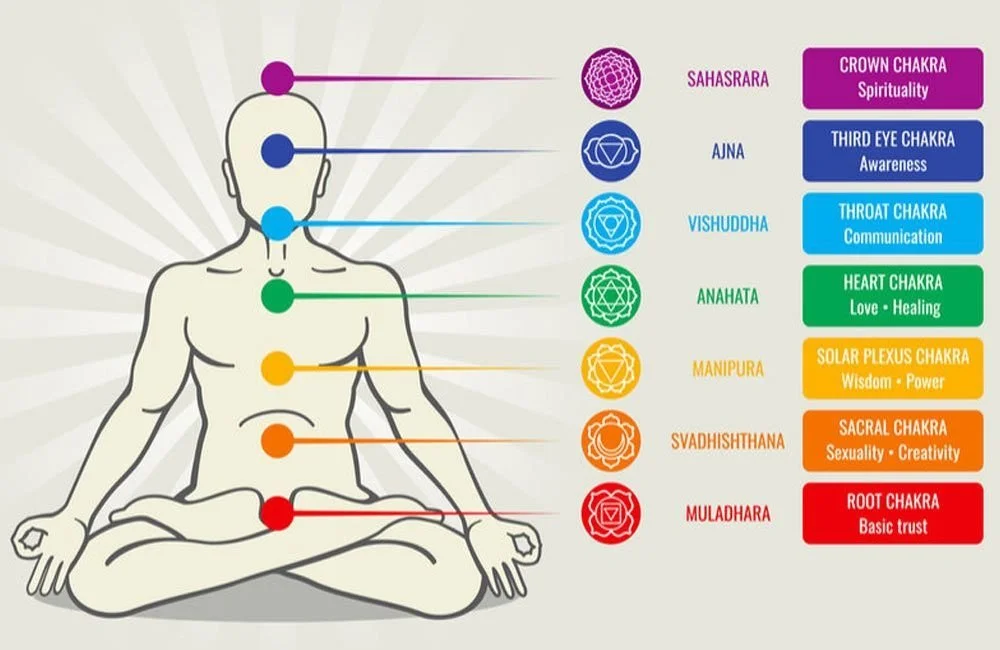
• Chakras appear in a variety of forms across later Tantric texts, often described symbolically as centres of awareness or power rather than fixed physical locations.
• Nadis are described as channels for prana, forming a subtle network that maps patterns of vitality, sensation, and awareness, not nerves or blood vessels.
• Koshas appear primarily in philosophical texts, such as the Taittiriya Upanishad, offering a layered model of human experience rather than a map of internal structures.
• Vayus describe directional movements or functions of prana, used as organising principles for breath, action, and attention.
What unites these ideas is not anatomy as we understand it today, but an attempt to describe lived, inner experience, using symbolic and contemplative language.
The yogic framework: the three shariras
A helpful way to understand subtle anatomy is through the classical yogic concept of the three shariras, or bodies.
Rather than describing different physical layers, the shariras offer a way of organising different ways of knowing and experiencing the body.
Sthula Sharira – the gross/physical body.
This is the body we can measure, image, and study scientifically, including muscles, bones, connective tissue, organs, breath mechanics, circulation, and the nervous system.
This is the domain of modern anatomy and physiology.
(Corresponds to Annamaya Kosha)
Sukshma Sharira – the subtle body.
This includes concepts such as chakras, nadis, and vayus, along with mind, emotion, perception, and prana.
From a modern perspective, this layer maps closely onto what we might call experiential anatomy, how the body feels from the inside. This includes sensations of tension or ease, breath quality, emotional tone, and interoceptive awareness, our capacity to sense internal bodily states (Mehling, 2016).
Importantly, the subtle body was never meant to describe literal structures. It provides a symbolic framework for noticing patterns in experience, attention, and vitality.
(Corresponds to Pranamaya, Manomaya and Vijnanamaya koshas)
Karana Sharira – the causal body.
This is described as the deepest layer of being, associated with conditioning, meaning-making, and consciousness itself. It is not anatomical in any sense, but philosophical and contemplative.
(Corresponds to Anandamaya Kosha)

What did “subtle anatomy” likely mean?
Seen through this lens, subtle anatomy was never intended to replace physical anatomy.
Instead, it functioned as a symbolic and contemplative framework for understanding sensation, breath, attention, and the inner landscape of the body.
A useful way to translate this into modern language is to distinguish between three overlapping domains:
• Physical anatomy and physiology, which deals with measurable structures and functions.
• Experiential anatomy, which deals with felt sense, emotion, and interoceptive awareness.
• Symbolic or contemplative anatomy, which uses models like chakras and nadis as conceptual tools rather than literal maps (Flood, 2006).
Problems arise only when these domains are collapsed into one another, particularly when symbolic models are presented as biological fact.

How to teach this from an evidence-based perspective
If, like me, you value scientific rigour but also respect yogic tradition, here are some principles that can guide your teaching.
1) Be clear about categories
You can tell students plainly:
“When we talk about chakras, we are not talking about physical structures like muscles or nerves. They are part of a symbolic map that yogis used to explore sensation, emotion, and attention in the body.”
This clarity prevents confusion and avoids unintentionally presenting subtle anatomy as biomedical fact.
2) Use chakras as psychological or somatic metaphors
Instead of saying, “your heart chakra is blocked,” you might say:
“In the traditional chakra model, the heart centre is associated with connection and empathy. Notice what you feel in your chest, breath, and posture as you reflect on that idea.”
This approach preserves the richness of the tradition while staying grounded and responsible.
3) Frame nadis as a lens for noticing patterns
Rather than claiming that prāṇa flows through invisible channels, ida and piṅgalā can be framed as symbolic ways of noticing changes in breath, attention, and overall state.
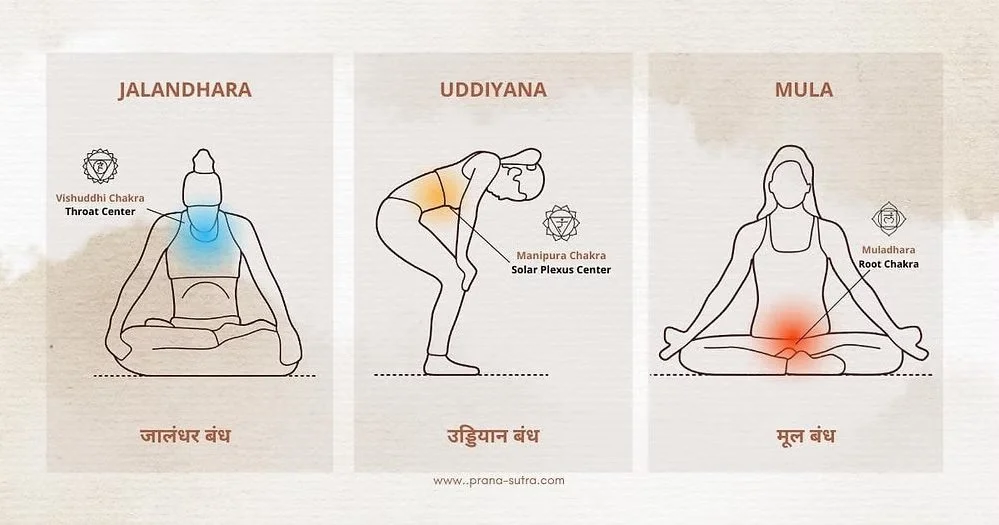
4) Teach bandhas with both lenses
Here is where subtle and physical anatomy intersect most clearly.
You can acknowledge the traditional language of “energy locks” while also explaining the real muscular actions involved and their effects on breath, stability, and load transfer through the body (Singleton & Goldberg, 2014).
Holding both perspectives at once
Ultimately, yoga offers two complementary ways of understanding the body.
Physical anatomy helps us move with clarity, safety, and precision. Subtle anatomy offers a poetic, introspective, and symbolic way of exploring inner experience.
Problems arise only when we mistake one for the other.
As teachers, our job is not to discard tradition, nor to abandon evidence, but to help students navigate both with curiosity, critical thinking, and respect.
That balance is where subtle anatomy becomes meaningful rather than confusing.
References:
• Flood, G. (2006). The Tantric Body: The Secret Tradition of Hindu Religion. I.B. Tauris.
• Mallinson, J., & Singleton, M. (2017). Roots of Yoga. Penguin Classics.
• Mehling, W. E. (2016). Differentiating attention styles and regulatory aspects of interoceptive body awareness. Philosophical Transactions of the Royal Society B, 371(1708).
• Singleton, M. (2010). Yoga Body: The Origins of Modern Posture Practice. Oxford University Press.
• Singleton, M., & Goldberg, E. (2014). Yogic Tradition and the Anatomy of Movement. Oxford University Press.
• White, D. G. (1996). The Alchemical Body: Siddha Traditions in Medieval India. University of Chicago Press.
(Classical yogic sources such as the Hatha Yoga Pradipika are referenced in Mallinson & Singleton, 2017.)